Amazon Highlights Three Shopping Trends Sellers Can Use to Compete in 2026

Mobile commerce, international demand and flexible payment options are creating new opportunities for brands to improve conversion and increase average order values
By ChannelMAX Staff Writer
July-2026#16
Shopping behavior is changing rapidly as customers move between devices, compare products across borders and look for more flexibility at checkout. For Amazon sellers, these shifts can influence listing design, pricing, inventory planning and fulfillment decisions.
A recent update published on Amazon US Seller Central, titled “Explore 3 trends shaping how customers shop in 2026,” highlights three developments sellers should watch. These are the dominance of mobile shopping, the growth of cross-border purchases and the wider adoption of buy now, pay later services.
Mobile Shopping Grows, But Conversion Remains a Challenge
Smartphones have become the primary shopping device for many customers. According to the Seller Central update, 91% of shoppers now use smartphones to browse or buy products. However, mobile traffic does not always translate into sales. Amazon cited a mobile conversion rate of 1.53%, compared with 3.4% on desktop. Smaller screens, lengthy product pages and friction during checkout can cause customers to abandon a purchase.
This gap gives sellers a clear opportunity to improve the mobile shopping experience. Main product images should communicate the product quickly, even when viewed on a small screen. Titles should place the most relevant information near the beginning because mobile users may not see the full title immediately.
Bullet points should also be concise and easy to scan. A+ Content should use clear headings, readable text and images that remain understandable on smaller displays.
Sellers with eligible products can use Manage Your Experiments to compare different versions of titles, main images, bullet points, descriptions and A+ Content. Amazon says an ASIN generally needs to belong to the seller’s registered brand and receive sufficient traffic to qualify for testing.
Instead of changing several listing elements at once, sellers should test one important difference at a time. This makes it easier to identify which image, title or content layout contributed to improved performance. Sellers can then monitor sessions, unit session percentage, cart additions and sales before applying successful changes across similar products.
Also Read: Reduce Return Costs with Amazon's New Returnless Resolutions Program for FBA Sellers
Cross-Border Shopping Becomes Mainstream
International shopping is no longer limited to a small group of customers. Three in five shoppers worldwide now purchase from retailers outside their home market, according to the Seller Central announcement. Mobile devices are also playing a major role in this expansion. More than half of global cross-border purchases are reportedly made through mobile devices.
Amazon is encouraging sellers to consider Amazon Global Selling, which can help businesses offer products in more than 19 international marketplaces. Depending on the marketplace and account structure, sellers may have access to tools for translating listings, converting prices and managing international offers.
However, international expansion requires more than copying an existing US listing into another marketplace. Customer search terms, product preferences, sizing conventions and purchasing power can vary considerably. Sellers should localize titles, bullet points and product descriptions instead of relying entirely on direct translation.
Prices should account for referral fees, fulfillment charges, currency movements, import duties, taxes, returns and advertising costs. Product compliance requirements should also be reviewed before inventory is shipped or an offer is activated.
A practical approach is to begin with one or two marketplaces that already show demand for the seller’s product category. Sellers can test a limited selection of proven ASINs before committing significant inventory. Performance should be measured at the marketplace level. A product that performs well in the US may require different keywords, pricing or packaging in the UK, Canada, Europe or another international market.
Buy Now, Pay Later Influences Checkout Decisions
Flexible payment options are becoming an increasingly important part of online shopping. Amazon’s Seller Central update states that more than one-third of US shoppers made a buy now, pay later purchase during the previous 90 days. That represents an increase of five percentage points from the previous year. The update also says that more than half of adults in the UK have used buy now, pay later.
These services allow eligible customers to spread the cost of qualifying purchases over several payments. Eligibility can depend on the customer, order value, payment provider and other conditions. Sellers do not directly approve customers for installment plans.
Amazon suggests that Brand Registered sellers consider Virtual Product Bundles to combine complementary products and increase cart value. This may help an order reach the minimum amount required for certain installment options, although payment eligibility is not guaranteed.
Virtual Bundles allow eligible sellers to offer two to five complementary FBA products through one product detail page without physically packaging them together as a new unit. The products must belong to a brand enrolled in Amazon Brand Registry and meet Amazon’s program requirements.
For example, a seller could combine a coffee maker with reusable filters, a camera with accessories or a skincare product with related items. The bundle should solve a clear customer need rather than simply group unrelated products.
Amazon Brand Analytics can help sellers identify products customers frequently purchase together. Its Market Basket Analysis dashboard can provide useful evidence for deciding which bundle combinations to test.
Sellers should still protect their margins when creating bundles. The bundle price, fulfillment costs, advertising expenses and possible discounts should be calculated before launch. Increasing the order value is only beneficial when the bundle remains profitable.
What Sellers Should Do Next
The three trends point toward a connected selling strategy.
i) Sellers should first review their highest-traffic listings on a smartphone. Images, titles and key benefits should be understandable without extensive scrolling.
ii) Eligible brands can then run controlled experiments on important ASINs rather than making listing decisions based only on assumptions.
iii) Businesses considering international expansion should analyze demand, competition, compliance requirements and landed costs for each target marketplace. Starting with a small group of established products can reduce risk.
iv) Brand Registered sellers can also study Market Basket Analysis and test Virtual Bundles built around genuine customer buying patterns. Bundle performance should be evaluated through conversion, average order value, profit and return rates.
Amazon’s 2026 shopping trends show that attracting traffic is no longer enough. Sellers must create listings that work effectively on mobile devices, prepare products for international customers and respond to growing demand for flexible checkout options.
The Seller Central update gives sellers several practical directions. They can use Manage Your Experiments to improve listing conversion, Global Selling tools to explore international markets and Virtual Product Bundles to increase product discovery and order value.
Sellers who test changes carefully and monitor profitability can use these trends to make better catalog, pricing and fulfillment decisions. The strongest results are likely to come from combining customer behavior data with gradual, measurable improvements.
Also Read: Amazon UK Launches FBM Ship+ to Boost Sales With Faster Delivery and Cashback
Disclaimer:
Amazon is the registered trademark of the company.
About ChannelMAX.NET:
ChannelMAX offers Amazon Repricer that runs on the latest AI Repricing algorithm to do Amazon Pricing Management or Amazon Repricing. Based on Amazon SP API, the repricing engine or repricer runs 24/7 and efficiently manages Amazon prices to maximize your BuyBox with profit optimization. Established in 2005, ChannelMAX has been integrated with Amazon technology since 2007, helping thousands of third-party sellers on various eCommerce platforms. Some of the eCommerce platforms, aka marketplaces, supported by ChannelMAX.NET, are Amazon, Walmart, eBay, and Shopify. Some of ChannelMAX key offerings include ChannelMAX Amazon Repricer, 2ndly, ChannelMAX Amazon FBA Audits and FBA Refunds management, an offering for managing Amazon FBA Refunds Reimbursement management for lost or damaged or misplaced inventory for which Amazon is responsible and for which sellers deserve appropriate credit reimbursement from Amazon. ChannelMAX Services offer Remote (aka Virtual) Full-Time eCommerce Assistant to help 3P sellers run their daytoday business.
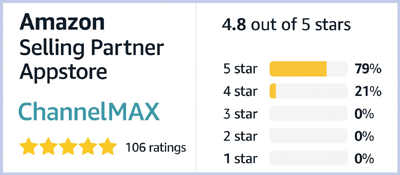
Check ChannelMAX at Amazon Selling Partner Appstore, an application with a 5 star rating.
By ChannelMAX Staff Writer
July-2026#16
Shopping behavior is changing rapidly as customers move between devices, compare products across borders and look for more flexibility at checkout. For Amazon sellers, these shifts can influence listing design, pricing, inventory planning and fulfillment decisions.
A recent update published on Amazon US Seller Central, titled “Explore 3 trends shaping how customers shop in 2026,” highlights three developments sellers should watch. These are the dominance of mobile shopping, the growth of cross-border purchases and the wider adoption of buy now, pay later services.
Mobile Shopping Grows, But Conversion Remains a Challenge
Smartphones have become the primary shopping device for many customers. According to the Seller Central update, 91% of shoppers now use smartphones to browse or buy products. However, mobile traffic does not always translate into sales. Amazon cited a mobile conversion rate of 1.53%, compared with 3.4% on desktop. Smaller screens, lengthy product pages and friction during checkout can cause customers to abandon a purchase.
This gap gives sellers a clear opportunity to improve the mobile shopping experience. Main product images should communicate the product quickly, even when viewed on a small screen. Titles should place the most relevant information near the beginning because mobile users may not see the full title immediately.
Bullet points should also be concise and easy to scan. A+ Content should use clear headings, readable text and images that remain understandable on smaller displays.
Sellers with eligible products can use Manage Your Experiments to compare different versions of titles, main images, bullet points, descriptions and A+ Content. Amazon says an ASIN generally needs to belong to the seller’s registered brand and receive sufficient traffic to qualify for testing.
Instead of changing several listing elements at once, sellers should test one important difference at a time. This makes it easier to identify which image, title or content layout contributed to improved performance. Sellers can then monitor sessions, unit session percentage, cart additions and sales before applying successful changes across similar products.
Also Read: Reduce Return Costs with Amazon's New Returnless Resolutions Program for FBA Sellers
Cross-Border Shopping Becomes Mainstream
International shopping is no longer limited to a small group of customers. Three in five shoppers worldwide now purchase from retailers outside their home market, according to the Seller Central announcement. Mobile devices are also playing a major role in this expansion. More than half of global cross-border purchases are reportedly made through mobile devices.
Amazon is encouraging sellers to consider Amazon Global Selling, which can help businesses offer products in more than 19 international marketplaces. Depending on the marketplace and account structure, sellers may have access to tools for translating listings, converting prices and managing international offers.
However, international expansion requires more than copying an existing US listing into another marketplace. Customer search terms, product preferences, sizing conventions and purchasing power can vary considerably. Sellers should localize titles, bullet points and product descriptions instead of relying entirely on direct translation.
Prices should account for referral fees, fulfillment charges, currency movements, import duties, taxes, returns and advertising costs. Product compliance requirements should also be reviewed before inventory is shipped or an offer is activated.
A practical approach is to begin with one or two marketplaces that already show demand for the seller’s product category. Sellers can test a limited selection of proven ASINs before committing significant inventory. Performance should be measured at the marketplace level. A product that performs well in the US may require different keywords, pricing or packaging in the UK, Canada, Europe or another international market.
Buy Now, Pay Later Influences Checkout Decisions
Flexible payment options are becoming an increasingly important part of online shopping. Amazon’s Seller Central update states that more than one-third of US shoppers made a buy now, pay later purchase during the previous 90 days. That represents an increase of five percentage points from the previous year. The update also says that more than half of adults in the UK have used buy now, pay later.
These services allow eligible customers to spread the cost of qualifying purchases over several payments. Eligibility can depend on the customer, order value, payment provider and other conditions. Sellers do not directly approve customers for installment plans.
Amazon suggests that Brand Registered sellers consider Virtual Product Bundles to combine complementary products and increase cart value. This may help an order reach the minimum amount required for certain installment options, although payment eligibility is not guaranteed.
Virtual Bundles allow eligible sellers to offer two to five complementary FBA products through one product detail page without physically packaging them together as a new unit. The products must belong to a brand enrolled in Amazon Brand Registry and meet Amazon’s program requirements.
For example, a seller could combine a coffee maker with reusable filters, a camera with accessories or a skincare product with related items. The bundle should solve a clear customer need rather than simply group unrelated products.
Amazon Brand Analytics can help sellers identify products customers frequently purchase together. Its Market Basket Analysis dashboard can provide useful evidence for deciding which bundle combinations to test.
Sellers should still protect their margins when creating bundles. The bundle price, fulfillment costs, advertising expenses and possible discounts should be calculated before launch. Increasing the order value is only beneficial when the bundle remains profitable.
What Sellers Should Do Next
The three trends point toward a connected selling strategy.
i) Sellers should first review their highest-traffic listings on a smartphone. Images, titles and key benefits should be understandable without extensive scrolling.
ii) Eligible brands can then run controlled experiments on important ASINs rather than making listing decisions based only on assumptions.
iii) Businesses considering international expansion should analyze demand, competition, compliance requirements and landed costs for each target marketplace. Starting with a small group of established products can reduce risk.
iv) Brand Registered sellers can also study Market Basket Analysis and test Virtual Bundles built around genuine customer buying patterns. Bundle performance should be evaluated through conversion, average order value, profit and return rates.
Amazon’s 2026 shopping trends show that attracting traffic is no longer enough. Sellers must create listings that work effectively on mobile devices, prepare products for international customers and respond to growing demand for flexible checkout options.
The Seller Central update gives sellers several practical directions. They can use Manage Your Experiments to improve listing conversion, Global Selling tools to explore international markets and Virtual Product Bundles to increase product discovery and order value.
Sellers who test changes carefully and monitor profitability can use these trends to make better catalog, pricing and fulfillment decisions. The strongest results are likely to come from combining customer behavior data with gradual, measurable improvements.
Also Read: Amazon UK Launches FBM Ship+ to Boost Sales With Faster Delivery and Cashback
Disclaimer:
Amazon is the registered trademark of the company.
About ChannelMAX.NET:
ChannelMAX offers Amazon Repricer that runs on the latest AI Repricing algorithm to do Amazon Pricing Management or Amazon Repricing. Based on Amazon SP API, the repricing engine or repricer runs 24/7 and efficiently manages Amazon prices to maximize your BuyBox with profit optimization. Established in 2005, ChannelMAX has been integrated with Amazon technology since 2007, helping thousands of third-party sellers on various eCommerce platforms. Some of the eCommerce platforms, aka marketplaces, supported by ChannelMAX.NET, are Amazon, Walmart, eBay, and Shopify. Some of ChannelMAX key offerings include ChannelMAX Amazon Repricer, 2ndly, ChannelMAX Amazon FBA Audits and FBA Refunds management, an offering for managing Amazon FBA Refunds Reimbursement management for lost or damaged or misplaced inventory for which Amazon is responsible and for which sellers deserve appropriate credit reimbursement from Amazon. ChannelMAX Services offer Remote (aka Virtual) Full-Time eCommerce Assistant to help 3P sellers run their daytoday business.
Check ChannelMAX at Amazon Selling Partner Appstore, an application with a 5 star rating.