Amazon Pumps $4 Billion into Rural Delivery Network

A Game-Changing Expansion Promises Faster Shipping and 100,000 New Jobs Across Small-Town America
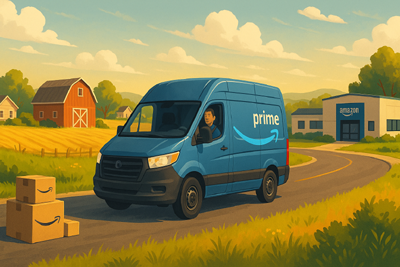
In an official blog post penned by Udit Madan, Senior Vice President of Amazon Worldwide Operations, the e-commerce giant confirmed a fresh investment of more than four billion dollars to triple the size of its rural delivery network by the end of 2026. The move will grow Amazon’s footprint to over 200 delivery stations, slash average delivery times in small towns by half, and unlock an extra billion-plus package deliveries each year across 13,000 ZIP codes.
Why Sellers Should Pay Attention
For third-party merchants, Amazon’s rural push is more than a feel-good infrastructure story. Faster “last-mile” service into America’s heartland broadens the buyer base for every Fulfilled by Amazon (FBA) or Seller-Fulfilled Prime offer. Customers in previously slow-served regions—from North Pole, Alaska to Milton, Florida—will soon expect the same two-day (or better) shipping speeds metro shoppers enjoy today. Listings that meet rural Prime promises will gain a competitive edge, higher Buy Box share, and stronger conversion rates.
Also Read: What Is the Amazon Flex Program?
Key Elements of the Expansion
Delivery Stations Close to Customers
Each new building is projected to add roughly 170 on-site jobs and hundreds more local driving opportunities through Delivery Service Partner (DSP) companies and Amazon Flex. Those partners already number 2,600 U.S. businesses, supporting 210,000 drivers. Sellers can expect extra capacity during peak seasons and fewer “carrier delay” complaints.
Technology-Driven Route Density
Amazon’s data scientists are re-mapping sparse delivery routes to cluster stops, allowing vans to cover greater geographic spread efficiently. That density lowers shipping costs per package—savings the company often channels into lower FBA fees or wider free-shipping eligibility.
Economic Halo Effect
Independent research cited in the announcement shows median household incomes rising by about 1,200 dollars and poverty rates falling up to 3.3 percent in counties where Amazon opens facilities. Sellers focused on local-made products, agricultural goods, or handcrafted items can leverage the goodwill and spending power that follow new jobs into rural towns.
Action Steps for Marketplace Sellers
1. Revisit Inventory Placement
Ensure popular SKUs are positioned in fulfillment centers closest to rural demand clusters. Amazon’s automated inventory management normally handles this, but keep an eye on stranded or low-stock alerts as new stations go live.
2. Optimize for Fast-Track Programs
Enroll eligible ASINs in Seller-Fulfilled Prime or regional FBA programs that prioritize rural coverage. Meeting the stricter on-time-delivery metrics now will pay dividends once the rollout accelerates.
3. Update Listing Copy
Highlight quicker delivery promises in product descriptions and A+ Content. Shoppers value speed; mentioning “Prime fast delivery available even in rural areas” can lift click-through rates.
4. Monitor Fee Updates
Amazon periodically adjusts FBA and transportation fees when logistics efficiencies improve. Stay tuned to Seller Central news for potential cost reductions tied to this investment.
The Bigger Picture
At a time when some carriers retreat from high-cost rural routes, Amazon is doubling down—turning remote regions into high-value markets overnight. For brands and small businesses already selling on Amazon, the message is clear: align your logistics strategy with Prime’s expanding map, and you will ride the wave of new demand. For merchants still on the fence, the four-billion-dollar commitment signals that Amazon views rural America as the next frontier of e-commerce growth.
Amazon’s rural network expansion is not merely a corporate milestone; it is a reshaping of the U.S. online retail landscape. Faster shipping, broader reach, and local economic uplift form a powerful trio that sellers can harness immediately. By preparing inventory, fine-tuning delivery options, and marketing the new speed advantage, marketplace businesses of every size can convert this headline investment into tangible revenue gains.
Also Read: How to Increase Conversion Rate on Amazon?
By ChannelMAX Staff Writer
May-2025#25
In an official blog post penned by Udit Madan, Senior Vice President of Amazon Worldwide Operations, the e-commerce giant confirmed a fresh investment of more than four billion dollars to triple the size of its rural delivery network by the end of 2026. The move will grow Amazon’s footprint to over 200 delivery stations, slash average delivery times in small towns by half, and unlock an extra billion-plus package deliveries each year across 13,000 ZIP codes.
Why Sellers Should Pay Attention
For third-party merchants, Amazon’s rural push is more than a feel-good infrastructure story. Faster “last-mile” service into America’s heartland broadens the buyer base for every Fulfilled by Amazon (FBA) or Seller-Fulfilled Prime offer. Customers in previously slow-served regions—from North Pole, Alaska to Milton, Florida—will soon expect the same two-day (or better) shipping speeds metro shoppers enjoy today. Listings that meet rural Prime promises will gain a competitive edge, higher Buy Box share, and stronger conversion rates.
Also Read: What Is the Amazon Flex Program?
Key Elements of the Expansion
Delivery Stations Close to Customers
Each new building is projected to add roughly 170 on-site jobs and hundreds more local driving opportunities through Delivery Service Partner (DSP) companies and Amazon Flex. Those partners already number 2,600 U.S. businesses, supporting 210,000 drivers. Sellers can expect extra capacity during peak seasons and fewer “carrier delay” complaints.
Technology-Driven Route Density
Amazon’s data scientists are re-mapping sparse delivery routes to cluster stops, allowing vans to cover greater geographic spread efficiently. That density lowers shipping costs per package—savings the company often channels into lower FBA fees or wider free-shipping eligibility.
Economic Halo Effect
Independent research cited in the announcement shows median household incomes rising by about 1,200 dollars and poverty rates falling up to 3.3 percent in counties where Amazon opens facilities. Sellers focused on local-made products, agricultural goods, or handcrafted items can leverage the goodwill and spending power that follow new jobs into rural towns.
Action Steps for Marketplace Sellers
1. Revisit Inventory Placement
Ensure popular SKUs are positioned in fulfillment centers closest to rural demand clusters. Amazon’s automated inventory management normally handles this, but keep an eye on stranded or low-stock alerts as new stations go live.
2. Optimize for Fast-Track Programs
Enroll eligible ASINs in Seller-Fulfilled Prime or regional FBA programs that prioritize rural coverage. Meeting the stricter on-time-delivery metrics now will pay dividends once the rollout accelerates.
3. Update Listing Copy
Highlight quicker delivery promises in product descriptions and A+ Content. Shoppers value speed; mentioning “Prime fast delivery available even in rural areas” can lift click-through rates.
4. Monitor Fee Updates
Amazon periodically adjusts FBA and transportation fees when logistics efficiencies improve. Stay tuned to Seller Central news for potential cost reductions tied to this investment.
The Bigger Picture
At a time when some carriers retreat from high-cost rural routes, Amazon is doubling down—turning remote regions into high-value markets overnight. For brands and small businesses already selling on Amazon, the message is clear: align your logistics strategy with Prime’s expanding map, and you will ride the wave of new demand. For merchants still on the fence, the four-billion-dollar commitment signals that Amazon views rural America as the next frontier of e-commerce growth.
Amazon’s rural network expansion is not merely a corporate milestone; it is a reshaping of the U.S. online retail landscape. Faster shipping, broader reach, and local economic uplift form a powerful trio that sellers can harness immediately. By preparing inventory, fine-tuning delivery options, and marketing the new speed advantage, marketplace businesses of every size can convert this headline investment into tangible revenue gains.
Also Read: How to Increase Conversion Rate on Amazon?
Disclaimer:
Amazon is the registered trademark of the e-commerce brand.
About ChannelMAX.NET:
ChannelMAX offers Amazon Repricer that runs on the latest AI Repricing algorithm to do Amazon Pricing Management or Amazon Repricing. Based on Amazon SP API, the repricing engine or repricer runs 24/7 and efficiently manages Amazon prices to maximize your BuyBox with profit optimization. Established in 2005, ChannelMAX has been integrated with Amazon technology since 2007, helping thousands of third-party sellers on various eCommerce platforms. Some of the eCommerce platforms, aka marketplaces, supported by ChannelMAX.NET, are Amazon, Walmart, eBay, and Shopify. Some of ChannelMAX key offerings include ChannelMAX Amazon Repricer, 2ndly, ChannelMAX Amazon FBA Audits and FBA Refunds management, an offering for managing Amazon FBA Refunds Reimbursement management for lost or damaged or misplaced inventory for which Amazon is responsible and for which sellers deserve appropriate credit reimbursement from Amazon. ChannelMAX Services offer Remote (aka Virtual) Full-Time eCommerce Assistant to help 3P sellers run their daytoday business.
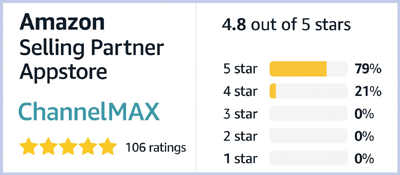
Check ChannelMAX at Amazon Selling Partner Appstore, an application with a 5 star rating.
ChannelMAX offers Amazon Repricer that runs on the latest AI Repricing algorithm to do Amazon Pricing Management or Amazon Repricing. Based on Amazon SP API, the repricing engine or repricer runs 24/7 and efficiently manages Amazon prices to maximize your BuyBox with profit optimization. Established in 2005, ChannelMAX has been integrated with Amazon technology since 2007, helping thousands of third-party sellers on various eCommerce platforms. Some of the eCommerce platforms, aka marketplaces, supported by ChannelMAX.NET, are Amazon, Walmart, eBay, and Shopify. Some of ChannelMAX key offerings include ChannelMAX Amazon Repricer, 2ndly, ChannelMAX Amazon FBA Audits and FBA Refunds management, an offering for managing Amazon FBA Refunds Reimbursement management for lost or damaged or misplaced inventory for which Amazon is responsible and for which sellers deserve appropriate credit reimbursement from Amazon. ChannelMAX Services offer Remote (aka Virtual) Full-Time eCommerce Assistant to help 3P sellers run their daytoday business.
Check ChannelMAX at Amazon Selling Partner Appstore, an application with a 5 star rating.