Amazon urges sellers to protect account health and fix issues ahead of US holiday rush

New Seller Central updates focus on Account Health Rating, deals, coupons and customer service to give shoppers a smoother peak season experience
Amazon has issued fresh guidance on its US Seller Central platform to help marketplace sellers prepare for the year’s busiest shopping period. Through two updates, titled “Maintain a good Account Health Rating during the holiday season” and “Fix common issues to prepare for holiday shopping events”, the company is asking sellers to focus on account health, pricing accuracy, deals, coupons and customer service so that shoppers face fewer problems during the holiday rush.
Account Health Rating push
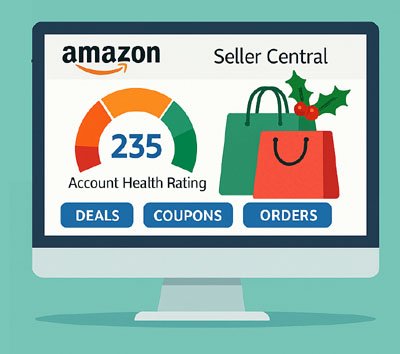
In its first update on Seller Central, Amazon reminds sellers that the Account Health Rating, or AHR, is a key indicator of whether an account is at risk of deactivation. The AHR is a colour coded score from 0 to 1,000. It reflects how well a seller follows Amazon’s policies, how many violations remain unresolved, how serious they are and how much they hurt customer experience.
If the AHR falls below 100 points, the seller account is considered at high risk of deactivation. Sellers lose points when new policy issues are detected, such as policy violations or repeated customer complaints. They can recover points after they successfully address those violations and Amazon confirms the fixes. Amazon also notes that sellers can gain four AHR points for every 200 orders fulfilled, which rewards consistent operations and on time performance.
The Seller Central notice advises sellers to monitor their Account Health Rating regularly through performance notifications. It also urges them to ensure that product detail pages have accurate titles, images and descriptions, and to run quality checks before shipping, so that defective or wrong items do not reach customers. For many sellers, this may mean tightening warehouse checks, improving labelling and giving extra attention to new holiday season listings.
Also Read: FBM Ship+ brings faster and cheaper merchant shipping for global sellers
Deals, coupons and pricing under the scanner
The second Seller Central update focuses on common issues that often appear during major sales events such as Black Friday, Cyber Monday and the wider holiday period. One of the main areas is deal suppression. Sellers are advised to watch their Deals dashboard closely for “Needs attention” alerts. Typical problems include deal prices that are higher than the maximum allowed price, or deal quantities that fall below Amazon’s minimum requirements for promotions.
The update also highlights coupon and price discount management. Amazon asks sellers to review common coupon validation errors and their solutions in the “Understand coupon errors” help section. Pricing conflicts and warnings should be resolved using the “Troubleshooting price discounts” resources. For those who upload large coupon files, Amazon directs them to the “Fix spreadsheet errors in coupon uploads” guidance to avoid technical mistakes that can delay or cancel promotions.
These steps are important because mispriced offers, invalid coupons or broken deals can be suppressed, which means shoppers may never see them. In a crowded holiday marketplace, that can translate into lost traffic and sales for sellers and confusion for customers who click through from email or app notifications expecting a discount.
Handling higher order volumes and customer service pressure
Amazon’s guidance also stresses the need for better order and customer service management during peak shopping weeks. Sellers are encouraged to set up order handling capacity so they can manage spikes in demand without missing handling or shipping deadlines. For some, this may involve adjusting same day handling promises, planning extra staff or temporarily limiting certain offers if capacity is tight.
On the service side, the Seller Central update recommends checking A to z Guarantee claims and the Feedback Manager daily throughout the holiday season. A sudden rise in late deliveries, defective items or incorrect products can quickly lead to negative feedback, claim approvals and policy violations, which in turn pull down the Account Health Rating. By reviewing claims and feedback every day, sellers can spot patterns early, contact customers, offer solutions and update listings or processes before problems become serious.
While the new guidance is aimed at sellers, shoppers also stand to benefit. When sellers keep a strong Account Health Rating, maintain accurate listings and manage their offers carefully, customers are more likely to receive the right products on time, at the advertised price. There is also a lower chance of last minute order cancellations, misleading deals or unexpected product quality issues.
For shoppers, this should mean more reliable deals, clearer information on product pages and a better chance of fast resolution if something goes wrong. For Amazon, strict monitoring of AHR and holiday related issues is a way to keep trust in the marketplace at a time when millions of new and returning customers are browsing and buying.
Practical steps sellers can take now
Based on the latest Seller Central updates, Amazon sellers preparing for the US holiday season can start with a simple checklist. They can review their Account Health dashboard and resolve any open policy issues. They can verify that titles, images and bullets on their key listings are accurate and match what they ship. Before running big promotions, they can test a few sample deals and coupons, check for warnings in the Deals dashboard and confirm that bulk coupon files upload without errors.
Sellers can also review their handling time promises and shipping settings in light of expected order volumes. Many may choose to build small buffers into delivery estimates to avoid late shipments. Monitoring A to z claims, returns and feedback on a daily basis can help them respond quickly and protect both their rating and their brand image. New or smaller sellers may also find it useful to read the Account Health Rating program policy and help pages linked in the Seller Central announcements, to understand how each type of violation affects their score.
With holiday shopping events approaching, Amazon’s new guidance on Seller Central is a clear signal that account health and operational readiness will be under close watch. By maintaining a strong Account Health Rating, fixing common deal and coupon issues, and staying on top of orders and customer feedback, sellers can reduce the risk of deactivation and offer a better experience to shoppers.
For sellers, the message is simple: take time now to clean up your account and offers, rather than reacting to problems in the peak of the season. For shoppers, the result should be smoother buying, more dependable deals and improved service across the Amazon marketplace during the crucial holiday period.
Also Read: Amazon Announces 2026 Fee Changes for Sellers: What You Need to Know
Disclaimer:
Amazon is the registered trademark of the e-commerce brand.
About ChannelMAX.NET:
ChannelMAX offers Amazon Repricer that runs on the latest AI Repricing agents to do Amazon Pricing Management or Amazon Repricing. Based on Amazon SP API, the repricing engine or repricer runs 24/7 and efficiently manages Amazon prices to maximize your BuyBox with profit optimization. Established in 2005, ChannelMAX has been integrated with Amazon technology since 2007, helping thousands of third-party sellers on various eCommerce platforms. Some of the eCommerce platforms, aka marketplaces, supported by ChannelMAX.NET, are Amazon, Walmart, eBay, and Shopify. Some of ChannelMAX key offerings include ChannelMAX Amazon Repricer, 2ndly, ChannelMAX Amazon FBA Audits and FBA Refunds management, an offering for managing Amazon FBA Refunds Reimbursement management for lost or damaged or misplaced inventory for which Amazon is responsible and for which sellers deserve appropriate credit reimbursement from Amazon. ChannelMAX Services offer Remote (aka Virtual) Full-Time eCommerce Assistant to help 3P sellers run their daytoday business.
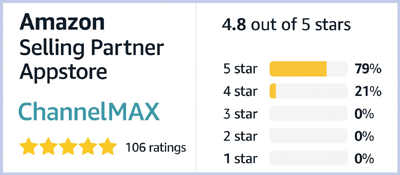
Check ChannelMAX at Amazon Selling Partner Appstore, an application with a 5 star rating.
By ChannelMAX Staff Writer
Nov-2025#08
Amazon has issued fresh guidance on its US Seller Central platform to help marketplace sellers prepare for the year’s busiest shopping period. Through two updates, titled “Maintain a good Account Health Rating during the holiday season” and “Fix common issues to prepare for holiday shopping events”, the company is asking sellers to focus on account health, pricing accuracy, deals, coupons and customer service so that shoppers face fewer problems during the holiday rush.
Account Health Rating push
In its first update on Seller Central, Amazon reminds sellers that the Account Health Rating, or AHR, is a key indicator of whether an account is at risk of deactivation. The AHR is a colour coded score from 0 to 1,000. It reflects how well a seller follows Amazon’s policies, how many violations remain unresolved, how serious they are and how much they hurt customer experience.
If the AHR falls below 100 points, the seller account is considered at high risk of deactivation. Sellers lose points when new policy issues are detected, such as policy violations or repeated customer complaints. They can recover points after they successfully address those violations and Amazon confirms the fixes. Amazon also notes that sellers can gain four AHR points for every 200 orders fulfilled, which rewards consistent operations and on time performance.
The Seller Central notice advises sellers to monitor their Account Health Rating regularly through performance notifications. It also urges them to ensure that product detail pages have accurate titles, images and descriptions, and to run quality checks before shipping, so that defective or wrong items do not reach customers. For many sellers, this may mean tightening warehouse checks, improving labelling and giving extra attention to new holiday season listings.
Also Read: FBM Ship+ brings faster and cheaper merchant shipping for global sellers
Deals, coupons and pricing under the scanner
The second Seller Central update focuses on common issues that often appear during major sales events such as Black Friday, Cyber Monday and the wider holiday period. One of the main areas is deal suppression. Sellers are advised to watch their Deals dashboard closely for “Needs attention” alerts. Typical problems include deal prices that are higher than the maximum allowed price, or deal quantities that fall below Amazon’s minimum requirements for promotions.
The update also highlights coupon and price discount management. Amazon asks sellers to review common coupon validation errors and their solutions in the “Understand coupon errors” help section. Pricing conflicts and warnings should be resolved using the “Troubleshooting price discounts” resources. For those who upload large coupon files, Amazon directs them to the “Fix spreadsheet errors in coupon uploads” guidance to avoid technical mistakes that can delay or cancel promotions.
These steps are important because mispriced offers, invalid coupons or broken deals can be suppressed, which means shoppers may never see them. In a crowded holiday marketplace, that can translate into lost traffic and sales for sellers and confusion for customers who click through from email or app notifications expecting a discount.
Handling higher order volumes and customer service pressure
Amazon’s guidance also stresses the need for better order and customer service management during peak shopping weeks. Sellers are encouraged to set up order handling capacity so they can manage spikes in demand without missing handling or shipping deadlines. For some, this may involve adjusting same day handling promises, planning extra staff or temporarily limiting certain offers if capacity is tight.
On the service side, the Seller Central update recommends checking A to z Guarantee claims and the Feedback Manager daily throughout the holiday season. A sudden rise in late deliveries, defective items or incorrect products can quickly lead to negative feedback, claim approvals and policy violations, which in turn pull down the Account Health Rating. By reviewing claims and feedback every day, sellers can spot patterns early, contact customers, offer solutions and update listings or processes before problems become serious.
While the new guidance is aimed at sellers, shoppers also stand to benefit. When sellers keep a strong Account Health Rating, maintain accurate listings and manage their offers carefully, customers are more likely to receive the right products on time, at the advertised price. There is also a lower chance of last minute order cancellations, misleading deals or unexpected product quality issues.
For shoppers, this should mean more reliable deals, clearer information on product pages and a better chance of fast resolution if something goes wrong. For Amazon, strict monitoring of AHR and holiday related issues is a way to keep trust in the marketplace at a time when millions of new and returning customers are browsing and buying.
Practical steps sellers can take now
Based on the latest Seller Central updates, Amazon sellers preparing for the US holiday season can start with a simple checklist. They can review their Account Health dashboard and resolve any open policy issues. They can verify that titles, images and bullets on their key listings are accurate and match what they ship. Before running big promotions, they can test a few sample deals and coupons, check for warnings in the Deals dashboard and confirm that bulk coupon files upload without errors.
Sellers can also review their handling time promises and shipping settings in light of expected order volumes. Many may choose to build small buffers into delivery estimates to avoid late shipments. Monitoring A to z claims, returns and feedback on a daily basis can help them respond quickly and protect both their rating and their brand image. New or smaller sellers may also find it useful to read the Account Health Rating program policy and help pages linked in the Seller Central announcements, to understand how each type of violation affects their score.
With holiday shopping events approaching, Amazon’s new guidance on Seller Central is a clear signal that account health and operational readiness will be under close watch. By maintaining a strong Account Health Rating, fixing common deal and coupon issues, and staying on top of orders and customer feedback, sellers can reduce the risk of deactivation and offer a better experience to shoppers.
For sellers, the message is simple: take time now to clean up your account and offers, rather than reacting to problems in the peak of the season. For shoppers, the result should be smoother buying, more dependable deals and improved service across the Amazon marketplace during the crucial holiday period.
Also Read: Amazon Announces 2026 Fee Changes for Sellers: What You Need to Know
Disclaimer:
Amazon is the registered trademark of the e-commerce brand.
About ChannelMAX.NET:
ChannelMAX offers Amazon Repricer that runs on the latest AI Repricing agents to do Amazon Pricing Management or Amazon Repricing. Based on Amazon SP API, the repricing engine or repricer runs 24/7 and efficiently manages Amazon prices to maximize your BuyBox with profit optimization. Established in 2005, ChannelMAX has been integrated with Amazon technology since 2007, helping thousands of third-party sellers on various eCommerce platforms. Some of the eCommerce platforms, aka marketplaces, supported by ChannelMAX.NET, are Amazon, Walmart, eBay, and Shopify. Some of ChannelMAX key offerings include ChannelMAX Amazon Repricer, 2ndly, ChannelMAX Amazon FBA Audits and FBA Refunds management, an offering for managing Amazon FBA Refunds Reimbursement management for lost or damaged or misplaced inventory for which Amazon is responsible and for which sellers deserve appropriate credit reimbursement from Amazon. ChannelMAX Services offer Remote (aka Virtual) Full-Time eCommerce Assistant to help 3P sellers run their daytoday business.
Check ChannelMAX at Amazon Selling Partner Appstore, an application with a 5 star rating.