How to Find Competitors Keywords on Amazon?

Discover the keywords your competitors rank for and use them to boost your Amazon ranking and sales.
By ChannelMAX Staff Writer
May-2025#21
If you sell on Amazon, one smart way to increase your sales is by understanding what your competitors are doing, especially the keywords they’re ranking for. Keywords play an important role in improving product visibility on Amazon's search results. When you identify the right keywords and use them to improve your product listings, your listing can drive more traffic and increase conversions.
Finding your competitors’ keywords gives you an advantage. You can see what terms shoppers use to find similar products. It also helps you find new keyword ideas and ways to improve your rankings. In this article, you’ll learn effective ways and tools to find the top keywords your competitors use and how you can use them to improve your own Amazon SEO.
Why Competitor Keyword Research Matters?
Amazon is a keyword-driven marketplace. Shoppers search for products by typing search terms, and the sellers who rank for the right ones win the clicks and conversions. That’s why knowing which keywords your competitors are targeting can give you a big advantage.
Here’s why it matters:
a. Find High-Value Keywords: Identify which search terms are bringing traffic and sales to your competitors’ listings.
b. Discover New Opportunities: Find keywords you’re not using yet and add them to improve your listings.
c. Improve Your SEO: Use high-performing keywords in your titles, bullet points, and backend to boost your product’s visibility.
d. Track Trends Early: Notice changes in keyword use and adjust your listings faster to stay ahead of the competition.
e. Boost Visibility & Sales: By targeting the right keywords, you improve your ranking, increase traffic, and drive more sales.
Competitor keyword research isn’t about copying—it’s about learning what works and using that to do even better.
Steps to Find Competitors' Keywords on Amazon
1. Analyze Competitor Listings Manually
You don’t always need tools to find what keywords your competitors use. Even without tools, you can do it just by looking at their product pages.
How to Do It:
a. Look at Product Titles: Titles often include the main keywords. Identify repeated words in the top listings in your niche.
b. Check Bullet Points & Descriptions: Many sellers often add long-tail keywords here. Look for words about product features, use cases, or customer benefits that are frequently mentioned.
c. Look at Backend Keywords: These keywords aren’t shown on the page, but they help products show up in searches. Some tools can help you find them.
Pro Tip: Check the “Customers also bought” section on Amazon. It can give you ideas for related products and new keyword ideas.
2. Use Keyword Research Tools
After you have manually gathered insights, now it's time to use keyword research tools to go deeper. These tools can help you find the exact keywords your competitors rank for, both organic and paid ads.
How to Do It:
a. Enter Competitor ASINs: Type in your top competitor’s ASINs (Amazon product codes). The tool will show the keywords their products rank for on Amazon.
b. Analyze Keyword Metrics: Look at useful data like how often people search for the keyword, how hard it is to rank for it, and where the product shows up in search results.
c. Identify Gaps & Opportunities: Look for high-performing keywords your competitors rank for but you are not using. These can help you improve your own product listing.
d. Choose the Right Keywords: Not every keyword is helpful. Pick the ones that match your product and what your customers are really looking for.
ChannelMAX has a powerful Amazon Search Tool that helps sellers find profitable keywords and ASINs, check search trends, and stay ahead of competitors in real time. It makes it easier to understand what customers are searching for and which products are popular. This helps sellers improve their listings and increase sales.
Pro Tip: Watch how keywords change over time. This helps you update your strategy to match seasonal trends and customer needs.
3. Do a Reverse ASIN Lookup
A reverse ASIN lookup is one of the most effective ways to find the keywords that drive traffic to your competitor's product listings. It shows you what words they use, so you can use them for your own products.
How to Do It:
a. Collect Competitor ASINs: Identify the ASINs of top-performing products in your niche.
b. Run a Reverse Lookup: Enter the ASIN into a keyword analysis tool that can do reverse ASIN lookups. The tool will give you a list of keywords that the product ranks for.
c. Analyze the Results: Focus on high-volume, high-ranking keywords. These are the terms that help your competitor get more visibility and conversions.
d. Shortlist Relevant Keywords: Remove any unrelated terms and make a list of relevant keywords to use in your product listing and ad campaigns.
Pro Tip: Don’t just check one ASIN. Run reverse lookups on multiple competitors to build a bigger and more competitive keyword list of keywords.
4. Leverage Amazon Search Autocomplete
Amazon’s search bar is a powerful, free tool for finding popular and relevant keywords your competitors might be using.
How to Do It:
a. Start typing a product keyword: Enter your product category, competitor brand names, or related terms in Amazon’s search bar.
b. Observe the suggestion: Look at the autocomplete suggestions that show up below—these are actual search phrases shoppers often use.
c. Write down any keywords or long-tail phrases that seem relevant to your product. These are ideal for targeting niche traffic.
d. Use these keywords to enhance your product titles, bullet points, descriptions, and backend keywords.
Pro Tip: Try different word combinations or even common spelling mistakes. These can help you find more useful keywords that others might miss.
5. Monitor Sponsored Product Ads
Sponsored ads on Amazon reveal a lot about which keywords your competitors are actively bidding on—these are keywords they consider valuable enough to pay for.
How to Do It:
a. Search for Your Product Keywords: Type your main keywords into Amazon and look at the sponsored product ads that appear at the top, middle, and bottom of the page.
b. Identify Repeating Competitors: If certain brands or listings often show up in sponsored placements, they are likely bidding on those keywords.
c. Analyze Ad Copy & Placement: Notice the words used in the ad titles and descriptions, which often show what keywords they are targeting on.
d. Make a List of Keywords: Based on the competitor ads you see and the keywords you searched, you can guess which words your competitors are targeting.
Pro Tip: Check the sponsored ads on both desktop and mobile devices. Ads may appear differently and give you more keyword ideas.
6. Track & Refine Your Keyword Strategy
Finding your competitors’ keywords is just the first step. To stay ahead, you need to regularly monitor your keyword performance and make data-driven adjustments.
How to Do It:
a. Track Keyword Rankings: Monitor how your product listings show up in Amazon search for the keywords you’re using. Are they moving up in the search results?
b. Measure Traffic & Conversions: Use your Amazon reports to find out which keywords are driving traffic and converting into sales.
c. Update Listings Regularly: Based on performance, update your product title, bullet points, and backend keywords to better align with keywords that are working well.
d. Repeat Competitor Analysis: Look at what your competitors are doing from time to time. Amazon trends change, and so should your keyword plan.
Pro Tip: Set a monthly reminder to review your keyword data and check competitor rankings. Continuous optimization helps you stay ahead in the fast-moving Amazon marketplace.
7. Read Customer Questions and Reviews
Customer feedback on your competitors’ products can help you find new keyword ideas, straight from shoppers themselves. People often use everyday language in their questions and reviews, which can show you useful long-tail keywords.
How to Do It:
a. Go to Competitor Listings: Visit the product pages of top competitors in your niche.
b. Check the Q&A Section: Read the questions customers are asking. They often include phrases related to product features, use cases, or problems that matter to them.
c. Read the Reviews: Focus on reviews with detailed feedback. Customers often talk about what they liked, didn’t like, or were expecting, often using keywords you might not have considered.
d. Make a Keyword List: Write down phrases or words that come up often. These can help you improve your own product listings.
Pro Tip: Focus on fewer star reviews. These often include helpful feedback about what buyers wanted but didn’t quite get. This can lead to great keyword ideas.
Best Practices for Using Competitor Keywords
Finding out what keywords your competitors use is just the first step. To really grow your sales, you need to use those keywords smartly. Here are some easy and effective ways to get the best results:
1. Prioritize Relevance Over Volume
Some keywords get a lot of searches, but that doesn’t always mean they’re right for your product. Don’t go after those keywords because lots of people search for them. Pick the ones that match your product and speak to your target customers. This helps attract people who are more likely to buy, not just browse.
Example: If you sell eco-friendly water bottles, a keyword like “eco-friendly water bottle” is better than just “bottle.”
2. Add Keywords Naturally
Don’t try to stuff too many keywords into your listing, it can make your content sound weird or robotic. Instead, add them in a smooth and natural way that makes your title and description easy to read. A natural flow makes your listing more appealing and helps it rank better.
Tip: Read your listing out loud to make sure it sounds clear and smooth.
3. Use a Mix of Broad and Long-Tail Keywords
Use broad keywords to get more views and detailed (long-tail) keywords to attract buyers specific buyer intent and increase conversion chances. Using a mix of both helps you reach more people and increases your chances of making a sale.
Why it matters: Long-tail keywords often have less competition and higher conversion rates.
4. Update Your Listings Regularly
Things change quickly on Amazon—new trends, new products, and shifting customer interests. Check and update your listings every few weeks to stay competitive and improve performance. Remove the ones that don’t work and add new ones that are performing well.
How to do it: Use tools like Amazon Brand Analytics or keyword tracking software to see what’s working.
5. Apply Keywords Across All Channels
Don’t just use top-performing keywords in your product listing. Use them in your Amazon PPC ads, A+ content, storefront, and even your emails and social media posts. This keeps your message consistent and improves your chances of being found everywhere.
Bonus: Using the same keywords in ads can also improve your organic ranking over time.
Common Mistakes to Avoid
Even if you find good keywords, some mistakes can still affect your success. Here are some common mistakes and how you can avoid them:
1. Copying Competitors Exactly
It’s common to look at top sellers for ideas, but don’t copy their listings word-for-word. Copying the title, bullet points, or product description can affect your brand’s image and lower your chances of ranking well on Amazon. Buyers want to see what makes your product unique. Get ideas from others, but write your own unique content. Focus on your product’s strengths, features, and benefits. Being original also helps build trust with customers.
2. Using Unrelated Keywords
Just because a keyword is popular doesn’t mean it fits your product. Using unrelated keywords can confuse Amazon’s algorithm and bring in customers who aren’t looking for your product. These visitors usually leave quickly without buying, which can increase your bounce rate and lower your conversion rate. Choose keywords that clearly describe your product, its use, or its features.
3. Using Too Many Keywords (Keyword Stuffing)
Trying to stuff too many keywords into your listing can make your title or bullet points look messy or hard to read. It may trigger Amazon’s algorithm to flag your listing or lower your rank. Focus on using important keywords naturally in your content. Keep your content clear and easy to understand. Quality matters more than quantity.
4. Skipping Backend Keywords
Amazon gives you a backend section where you can add hidden keywords. Many sellers forget to use this. This space is great for adding alternative spellings or secondary keywords that didn’t fit naturally in your listing. These keywords still help your product appear in search results. It’s a smart way to boost visibility without cluttering the customer-facing part of your page.
5. Relying on One-Time Research
Keyword trends change over time. A keyword that worked last year may not be popular today. If you only do keyword research once, your listing may start to drop in search rankings. Regularly review your keywords to see what’s working and what’s not. Look at your competition, new trends, and customer search behavior. Updating your listings every few months can help keep your product visible and competitive.
Conclusion
Knowing and using the keywords your competitors use on Amazon can give you a big advantage. It helps you identify what helps them succeed, what you might be missing, and how you can improve your own listings to get better visibility and conversions.
You can do this by checking their listings, using reverse ASIN tools, and reading customer reviews. Each step helps you learn something useful to stay ahead in the crowded Amazon marketplace. Just remember, it's not about using lots of keywords, but using the right ones smartly. Start using these tips today to help your product rank higher, sell better, and win the Buy Box more often.
Also Read: How to Join the Amazon Vine Program?
Disclaimer:
Amazon is the registered trademark of the e-commerce brand.
About ChannelMAX.NET:
ChannelMAX offers Amazon Repricer that runs on the latest AI Repricing algorithm to do Amazon Pricing Management or Amazon Repricing. Based on Amazon SP API, the repricing engine or repricer runs 24/7 and efficiently manages Amazon prices to maximize your BuyBox with profit optimization. Established in 2005, ChannelMAX has been integrated with Amazon technology since 2007, helping thousands of third-party sellers on various eCommerce platforms. Some of the eCommerce platforms, aka marketplaces, supported by ChannelMAX.NET, are Amazon, Walmart, eBay, and Shopify. Some of ChannelMAX key offerings include ChannelMAX Amazon Repricer, 2ndly, ChannelMAX Amazon FBA Audits and FBA Refunds management, an offering for managing Amazon FBA Refunds Reimbursement management for lost or damaged or misplaced inventory for which Amazon is responsible and for which sellers deserve appropriate credit reimbursement from Amazon. ChannelMAX Services offer Remote (aka Virtual) Full-Time eCommerce Assistant to help 3P sellers run their daytoday business.
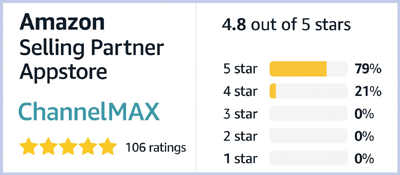
Check ChannelMAX at Amazon Selling Partner Appstore, an application with a 5 star rating.