UK Consumers Tighten Belts in 2026 as Luxury Sales Falter and Resale Market Strengthens

Festive spending fails to loosen purse strings; shoppers shift to value and second-hand purchases
By ChannelMAX Staff Writer
Feb-2026#24
UK consumers tightened their purse strings over the Christmas period and into the start of 2026, opting for smaller shopping baskets, cautious spending and a rising appetite for resale platforms as traditional luxury goods lose traction, according to the latest consumer spending data.
Also Read: Top 2026 marketing trends Amazon sellers must watch to grow their business
New analysis from Cardlytics, which looked at transaction data from more than 23 million UK bank accounts, shows that rather than splurging on celebratory purchases during the festive season, households adopted a more deliberate and value-led approach to retail spending.
Luxury Declines, Resale Grows
Despite the Christmas shopping window traditionally lighting up discretionary spending, the data reveal a structural reset in consumer behaviour. In December 2025:
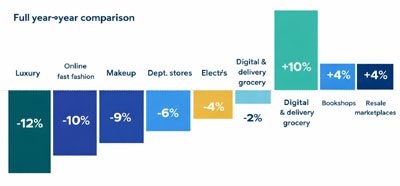
* Luxury and designer fashion spending fell about 12 % year-on-year, while department store sales slipped 6 %.
* Even fast-fashion online sales declined around 10 %.
* By contrast, resale marketplaces such as Depop and Vinted recorded growth of approximately 4 % as “new-to-me” purchases gained traction among budget-conscious shoppers.
The trend reflects a growing shift away from impulse luxury purchases toward platforms that offer affordable access to branded goods, while reducing overall spend.
“Christmas is traditionally when spending rules soften, but this year we saw the opposite. Consumers did not disengage; they recalibrated. They are questioning defaults, stepping away from automatic brand loyalty, and choosing formats that feel easier to justify,” said Lucy Whittemore, Senior Vice President of UK Partnerships at Cardlytics.
Across the period analysed, groceries at discount retailers rose modestly, while “big grocer” spending dipped and non-essential categories such as makeup and electrical goods saw declines.
The Rise of Resale and Value-Driven Shopping
Industry research highlights that the second-hand luxury market is not just a fleeting trend but a deeply fast-growing segment, expected to expand at nearly triple the pace of traditional luxury retail through 2027. The global luxury resale ecosystem is projected to reach over USD 40 billion in 2026, propelled by affordability, sustainability and digital marketplace growth.
Analysts say younger shoppers — especially Gen Z — are major drivers of this shift, often choosing resale as a first stop before aspirational purchases, helping build brand affinity without the high entry costs of new luxury goods.
Economic Pressures and Consumer Confidence
The leaner spending patterns come amid persistent cost-of-living pressures and inflationary concerns, which have kept many households prioritising essentials and value offerings over big-ticket items. UK inflation still hovered above target toward the end of 2025, prompting a more controlled consumer approach as 2026 began.
Retail experts say the shift also underscores broader changes in shopping culture, with consumers more willing to explore alternative retail formats, including resale and discount channels, even in categories traditionally dominated by new products.
Outlook for 2026
While the luxury market is not expected to disappear entirely — with affluent buyers still showing selective interest — the mainstream trend points toward greater cost consciousness and value-led behaviour over the coming year. Brands that adapt by integrating resale partnerships, loyalty incentives and omnichannel value propositions may be better positioned to ride the continuing shift in consumer preferences.
Also Read: Amazon Updates Business Solutions Agreement, Introduces New AI Agent Policy from March 4
Disclaimer:
Cardlytics is the registered trademark of the company.
About ChannelMAX.NET:
ChannelMAX offers Amazon Repricer that runs on the latest AI Repricing algorithm to do Amazon Pricing Management or Amazon Repricing. Based on Amazon SP API, the repricing engine or repricer runs 24/7 and efficiently manages Amazon prices to maximize your BuyBox with profit optimization. Established in 2005, ChannelMAX has been integrated with Amazon technology since 2007, helping thousands of third-party sellers on various eCommerce platforms. Some of the eCommerce platforms, aka marketplaces, supported by ChannelMAX.NET, are Amazon, Walmart, eBay, and Shopify. Some of ChannelMAX key offerings include ChannelMAX Amazon Repricer, 2ndly, ChannelMAX Amazon FBA Audits and FBA Refunds management, an offering for managing Amazon FBA Refunds Reimbursement management for lost or damaged or misplaced inventory for which Amazon is responsible and for which sellers deserve appropriate credit reimbursement from Amazon. ChannelMAX Services offer Remote (aka Virtual) Full-Time eCommerce Assistant to help 3P sellers run their daytoday business.
Check ChannelMAX at Amazon Selling Partner Appstore, an application with a 5 star rating.
By ChannelMAX Staff Writer
Feb-2026#24
UK consumers tightened their purse strings over the Christmas period and into the start of 2026, opting for smaller shopping baskets, cautious spending and a rising appetite for resale platforms as traditional luxury goods lose traction, according to the latest consumer spending data.
Also Read: Top 2026 marketing trends Amazon sellers must watch to grow their business
New analysis from Cardlytics, which looked at transaction data from more than 23 million UK bank accounts, shows that rather than splurging on celebratory purchases during the festive season, households adopted a more deliberate and value-led approach to retail spending.
Luxury Declines, Resale Grows
Despite the Christmas shopping window traditionally lighting up discretionary spending, the data reveal a structural reset in consumer behaviour. In December 2025:
* Luxury and designer fashion spending fell about 12 % year-on-year, while department store sales slipped 6 %.
* Even fast-fashion online sales declined around 10 %.
* By contrast, resale marketplaces such as Depop and Vinted recorded growth of approximately 4 % as “new-to-me” purchases gained traction among budget-conscious shoppers.
The trend reflects a growing shift away from impulse luxury purchases toward platforms that offer affordable access to branded goods, while reducing overall spend.
“Christmas is traditionally when spending rules soften, but this year we saw the opposite. Consumers did not disengage; they recalibrated. They are questioning defaults, stepping away from automatic brand loyalty, and choosing formats that feel easier to justify,” said Lucy Whittemore, Senior Vice President of UK Partnerships at Cardlytics.
Across the period analysed, groceries at discount retailers rose modestly, while “big grocer” spending dipped and non-essential categories such as makeup and electrical goods saw declines.
The Rise of Resale and Value-Driven Shopping
Industry research highlights that the second-hand luxury market is not just a fleeting trend but a deeply fast-growing segment, expected to expand at nearly triple the pace of traditional luxury retail through 2027. The global luxury resale ecosystem is projected to reach over USD 40 billion in 2026, propelled by affordability, sustainability and digital marketplace growth.
Analysts say younger shoppers — especially Gen Z — are major drivers of this shift, often choosing resale as a first stop before aspirational purchases, helping build brand affinity without the high entry costs of new luxury goods.
Economic Pressures and Consumer Confidence
The leaner spending patterns come amid persistent cost-of-living pressures and inflationary concerns, which have kept many households prioritising essentials and value offerings over big-ticket items. UK inflation still hovered above target toward the end of 2025, prompting a more controlled consumer approach as 2026 began.
Retail experts say the shift also underscores broader changes in shopping culture, with consumers more willing to explore alternative retail formats, including resale and discount channels, even in categories traditionally dominated by new products.
Outlook for 2026
While the luxury market is not expected to disappear entirely — with affluent buyers still showing selective interest — the mainstream trend points toward greater cost consciousness and value-led behaviour over the coming year. Brands that adapt by integrating resale partnerships, loyalty incentives and omnichannel value propositions may be better positioned to ride the continuing shift in consumer preferences.
Also Read: Amazon Updates Business Solutions Agreement, Introduces New AI Agent Policy from March 4
Disclaimer:
Cardlytics is the registered trademark of the company.
About ChannelMAX.NET:
ChannelMAX offers Amazon Repricer that runs on the latest AI Repricing algorithm to do Amazon Pricing Management or Amazon Repricing. Based on Amazon SP API, the repricing engine or repricer runs 24/7 and efficiently manages Amazon prices to maximize your BuyBox with profit optimization. Established in 2005, ChannelMAX has been integrated with Amazon technology since 2007, helping thousands of third-party sellers on various eCommerce platforms. Some of the eCommerce platforms, aka marketplaces, supported by ChannelMAX.NET, are Amazon, Walmart, eBay, and Shopify. Some of ChannelMAX key offerings include ChannelMAX Amazon Repricer, 2ndly, ChannelMAX Amazon FBA Audits and FBA Refunds management, an offering for managing Amazon FBA Refunds Reimbursement management for lost or damaged or misplaced inventory for which Amazon is responsible and for which sellers deserve appropriate credit reimbursement from Amazon. ChannelMAX Services offer Remote (aka Virtual) Full-Time eCommerce Assistant to help 3P sellers run their daytoday business.
Check ChannelMAX at Amazon Selling Partner Appstore, an application with a 5 star rating.