Amazon FBM Explained: A Complete Guide to Selling & Shipping Yourself
A step-by-step guide to selling on Amazon while managing your own storage, packing, and shipping.
By ChannelMAX Staff Writer
Aug-2025#10
When you sell on Amazon, you need to choose how your products will be stored, packed, and shipped. Many sellers use Fulfilled by Amazon (FBA), where Amazon does everything for them. But there’s another option called Fulfilled by Merchant (FBM).
With FBM, you handle your own inventory and take care of packing and sending it to customers yourself. You don’t use Amazon’s warehouses for this. FBM gives you more control over your costs, how your business runs, and how you handle customers.
In this article, we’ll explain what Amazon FBM is, how it works, the benefits and challenges, and some tips for success. Whether you are new to selling or thinking about switching from FBA, this guide will help you decide if FBM is the right choice for you.
What is Amazon FBM?
Amazon FBM (Fulfillment by Merchant) is a fulfillment method on Amazon where you, the seller, handle everything — keeping your products, packing them, sending them to customers, and managing returns. Instead of paying Amazon to do these jobs, you do it yourself or with the help of a delivery service.
With FBM, you have full control over your stock, packaging, delivery speed, and how you talk to customers. Many sellers choose FBM if they already have their own warehouse or a reliable shipping system, or if they sell products that need special handling.
FBM works well for sellers with low sales volume, large or heavy products that are costly to store in Amazon warehouses, or slow-selling items. However, remember that with FBM, you are fully responsible for ensuring customer satisfaction. Late deliveries, damaged items, or poor service can lead to bad reviews and affect your Amazon seller account.
Key Points:
a. You list your products for sale on Amazon’s website.
b. The products stay with you or in your own warehouse.
c. You pack and ship the orders directly to customers.
d. You handle customer service and returns.
FBM gives you more control over your business, but it also needs more time, effort, and careful planning compared to using FBA (Fulfillment by Amazon).
How Does FBM Work?
FBM (Fulfilled by Merchant) means you store, pack, and ship the products yourself instead of Amazon doing it for you. Here’s how FBM works:
1. List Your Product
First, you log in to Amazon Seller Central and add your product. You can create a new product listing or add your item to an existing product page. Use clear, high-quality photos and write a short but catchy title. Add important details in the description and set your price. Don’t forget to select “Fulfilled by Merchant” so Amazon knows you will handle the shipping.
2. Store Your Products
You keep your products with you instead of sending them to Amazon’s warehouse. Keep your products in a safe and clean place—this can be your home, office, or a rented storage space. Make sure the items are organized and protected from dust, moisture, and damage so they stay ready to ship at any time.
3. Receive an Order
When a customer places an order, you’ll get a notification on your Amazon seller account, and usually by email too. It’s best to check your account every day so you can pack and ship orders quickly. Amazon will also give you the customer’s shipping details and the deadline to ship.
4. Pack and Ship
You carefully pack the product so it doesn’t get damaged during delivery. Use strong packaging materials like bubble wrap, packing paper, and sturdy boxes. Then choose a trusted courier service that delivers quickly and safely. You can decide the shipping method—standard, express, or any option you offer. Fast and careful shipping can earn you happy reviews.
5. Add Tracking Details
Once your package is shipped, get the tracking number from your courier. Add it to your Amazon order page so the customer can track the delivery in real time. This helps build trust and reduces customer questions about where their package is.
6. Handle Customer Service & Returns
If customers have questions, problems, or want to return an item, it’s your job to respond quickly and politely. If a customer is unhappy or gets a damaged product, you have to arrange a replacement or refund. Good and quick communication helps you get positive reviews and keeps your seller rating high.
Pros of Amazon FBM
1. More Control Over Stock
With FBM, you keep your products in your own storage space—this could be your home, office, or a rented warehouse.
a. You always know how much stock you have and where it is.
b. You can store the fragile, perishable, or temperature-sensitive items in the right conditions.
c. You can also check items for damage before shipping them to customers.
d. If you run out of stock, you can restock anytime without waiting for Amazon to process it.
2. Lower Costs for Packing and Shipping
You don’t pay Amazon’s storage, packing, or fulfillment fees.
a. This means you can save a lot of money, especially if your items are large, heavy, or slow-selling.
b. You can choose your own shipping service and find cheaper rates.
c. Plus, you also avoid Amazon’s extra fees for long-term storage or oversized products.
3. Better for Certain Types of Products
FBM is often the smarter choice if you sell:
a. Large, bulky, or heavy products that cost a lot to store in Amazon’s warehouses.
b. Customized or handmade items that you make after receiving an order.
c. Low-profit products where high FBA fees would cut your earnings.
d. Seasonal products you only sell during certain times of the year (avoiding long-term storage fees).
e. Products that need special handling that Amazon might not manage well
4. Easier Multi-Channel Selling
a. FBM makes it easier to use the same inventory for your Amazon store and other platforms like your own website, eBay, Flipkart, Etsy, or social media stores.
b. You don’t need to split your stock into different warehouses, so it’s easier to manage.
c. Everything is in one place, which gives you better control over your business.
5. Freedom in Packaging and Branding
a. In FBM, you can create a unique unboxing experience for your customers.
b. Use your own branded boxes, add thank-you cards, coupons, or small freebies to encourage repeat purchases.
c. This helps you build your brand identity—something you can’t fully do with FBA packaging.
6. More Flexibility in Shipping
With FBM, you control when and how you ship.
a. You can offer customers multiple delivery options, such as standard, express, or even same-day delivery if available in your area.
b. You can also choose eco-friendly packaging or partner with local couriers for faster and cheaper delivery.
c. This flexibility helps you adjust to customer needs and market trends quickly.
7. No Amazon Storage Limits
a. Amazon often sets limits on how much stock sellers can send to FBA warehouses, especially during busy seasons like holidays.
b. With FBM, you are not restricted by these limits—you can store as much inventory as you want.
c. This means you can prepare for peak seasons well in advance without worrying about space limitations or extra storage fees.
8. Better Handling of Returns
a. With FBM, returns come directly to you instead of going through Amazon.
b. This gives you the chance to check the products before issuing refunds, making sure they are in good condition.
c. You can also decide whether to resell the item, repair it, or offer partial refunds in certain cases.
d. This direct control can help reduce losses and protect your profits.
Cons of Amazon FBM
1. Takes Time and Effort
When you choose FBM, you have to do everything yourself — store the products, pack them, and ship them to customers. You also need to keep track of your stock, print shipping labels, and handle orders. If you get many orders every day, this can take a lot of time. Without help or a proper system, it can feel like too much work.
2. No Prime Badge by Default
Products sold through FBM don’t get the Amazon Prime badge. This means Prime members might buy from other sellers instead. You can only get the badge through Seller Fulfilled Prime (SFP), but it has strict rules like shipping deadlines and top performance, which can be challenging for small sellers.
3. You Handle Customer Service
With FBM, you have to answer to customers, solve problems, and manage returns yourself. This can take a lot of time and sometimes be stressful, especially when dealing with difficult customers. In FBA, Amazon’s team handles all of this for you, which saves you time.
4. Higher Chance of Shipping Delays
Since you are responsible for shipping, even small delays can cause your seller rating go down. Late deliveries may lead to negative reviews and even penalties from Amazon. This means you must be very organized and make sure all orders are shipped on time, even during busy seasons.
5. Extra Costs for Storage and Packaging
Unlike FBA, where Amazon stores your products, with FBM, you need your own storage space. You might need to rent a warehouse or use space at home, which costs money. You also need to buy packaging supplies like boxes, tape, and bubble wrap, which can further increase expenses.
When Should You Use FBM?
FBM is a good choice if:
1. You have your own storage space or delivery setup
If you already have a place to store your products (like a warehouse or shop) and can handle packing and shipping yourself or through a courier, FBM can help you avoid Amazon’s storage fees.
2. Your products don’t sell very fast
If you don’t get many orders, keeping items in Amazon’s warehouse can be expensive. With FBM, you can keep them at your own place without paying monthly storage charges.
3. You sell big or fragile items
Large or breakable products can be costly to store and ship through Amazon. Doing it yourself lets you pack them more carefully and choose cheaper shipping options.
4. You want to control your packaging and branding
With FBM, you can use your own packaging, labels, and inserts so your customers see your brand, not Amazon’s. This is useful if you want to grow your brand name.
5. You sell on other online platforms too
If you also sell on sites like eBay, Shopify, or Etsy, storing and shipping from your own place makes it easier to manage all orders in one place.
How to Set Up FBM on Amazon?
Step 1: Open an Amazon Seller Account
Go to Amazon Seller Central and sign up for a seller account.
a. If you plan to sell only a few items per month, choose Individual Seller. There’s no monthly fee, but you pay a small fee for each item sold.
b. If you will sell a lot of items or want access to more seller tools, like bulk listing uploads and advertising features, choose the Professional Seller plan. It has a monthly fee but lower fees per item.
Make sure to provide accurate personal or business details, tax information, and a valid bank account for payments.
Step 2: Add Your Products
After creating your account, start listing your products on Amazon.
a. Use clear and high-quality photos that show your product from different angles.
b. Write easy-to-read descriptions that explain exactly what the buyer will get.
c. Mention key features like size, color, weight, or usage.
d. Research similar products to set a competitive price that still gives you a profit.
The more accurate and attractive your listing is, the more likely customers will buy from you.
Step 3: Select ‘Fulfilled by Merchant’
While adding your product listing, Amazon will ask how you want to fulfill orders.
a. Choose FBM (Fulfilled by Merchant) if you want to store and ship products yourself.
b. This gives you full control over packing, shipping speed, and inventory.
c. FBM can save you FBA storage fees, but you are responsible for delivering on time.
Step 4: Set Your Shipping Details
Decide where you want to sell: only in your country or worldwide.
a. Go to your shipping settings in Seller Central and choose the regions you will deliver to.
b. Set the correct shipping fees based on package size, weight, and location, so you don’t lose money on shipping.
c. You can also offer free shipping to attract more buyers, but make sure to include the cost in your product price.
Make sure your delivery times are realistic so customers know when to expect their order. Late deliveries can affect your seller rating.
Step 5: Keep Your Products Safe
Since you are storing your own inventory, you must keep them in good condition.
a. Store them in a dry, clean, and organized place.
b. Keep items away from dust, moisture, pests, and direct sunlight to prevent damage.
c. Use proper packaging materials like bubble wrap, sturdy boxes, and sealing tape to protect items during shipping.
d. Check your stock regularly so you don’t run out of products when customers order.
Tips for Success with Amazon FBM
1. Keep Your Stock Organized
If you don’t track your products, you might sell something that’s already out of stock. This makes customers upset and can lead to order cancellations.
a. Use inventory management tools or a simple spreadsheet.
b. Store products neatly so they are easy to find when packing orders.
c. Check stock levels regularly and update them on Amazon.
2. Ship Orders Quickly
Fast delivery is one of the biggest reasons customers choose Amazon. If you take too long, they might buy from someone else.
a. Try to ship on the same day you get the order.
b. Keep packing materials ready so you can pack fast.
c. Offer shipping speeds that match or come close to Prime delivery times.
3. Check Your Seller Performance
Amazon keeps track of how well you handle orders. If your ratings drop, your account can be suspended.
a. Late Shipment Rate – Keep it under 4%.
b. Cancellation Rate – Keep it under 2.5%.
c. Order Defect Rate – Keep it under 1%.
d. Check your performance dashboard every week to spot any issues early.
4. Use a Reliable Courier with Tracking
Tracking helps customers see where their order is, and it protects you if a package is lost.
a. Choose couriers known for delivering on time.
b. Always use tracking and share it with the customer.
c. For expensive items, consider using insured shipping.
5. Optimize Your Product Listings
A good listing helps more people find and buy your product.
a. Use clear titles with important keywords.
b. Add high-quality photos from different angles.
c. Write short, easy-to-read bullet points with product features and benefits.
6. Give Great Customer Service
Good service can lead to more positive reviews and repeat buyers.
a. Reply to messages within 24 hours.
b. Be polite and professional, even if the customer is unhappy.
c. Solve problems quickly, like replacing a damaged item.
7. Price Competitively
If your price is too high, customers will choose another seller.
a. Check competitor prices often.
b. Adjust your price based on demand and competition.
c. Offer bundle deals or discounts when possible.
8. Plan for Returns
Returns are part of selling online. Handling them well can keep customers happy.
a. Have a simple and clear return process.
b. Check returned items quickly and restock if they’re fine.
c. Reduce return costs by using your courier’s return services.
To summarize, Amazon FBM lets you have more control over your online business, but you also have to do more work. It’s best for sellers who already have a good system for packing and shipping orders.
If you are new and want full control, or you sell special or custom products, FBM can be a good choice. But if you want to grow fast and let Amazon handle packing and shipping, FBA might be better. You can also use both – FBA for products that sell quickly and FBM for items that sell slowly or are customized.
Also Read: Is Fulfillment by Amazon (FBA) Worth It? A Comprehensive Guide for Sellers
Disclaimer:
Amazon is the registered trademark of the e-commerce brand.
About ChannelMAX.NET:
ChannelMAX offers Amazon Repricer that runs on the latest AI Repricing agents to do Amazon Pricing Management or Amazon Repricing. Based on Amazon SP API, the repricing engine or repricer runs 24/7 and efficiently manages Amazon prices to maximize your BuyBox with profit optimization. Established in 2005, ChannelMAX has been integrated with Amazon technology since 2007, helping thousands of third-party sellers on various eCommerce platforms. Some of the eCommerce platforms, aka marketplaces, supported by ChannelMAX.NET, are Amazon, Walmart, eBay, and Shopify. Some of ChannelMAX key offerings include ChannelMAX Amazon Repricer, 2ndly, ChannelMAX Amazon FBA Audits and FBA Refunds management, an offering for managing Amazon FBA Refunds Reimbursement management for lost or damaged or misplaced inventory for which Amazon is responsible and for which sellers deserve appropriate credit reimbursement from Amazon. ChannelMAX Services offer Remote (aka Virtual) Full-Time eCommerce Assistant to help 3P sellers run their daytoday business.
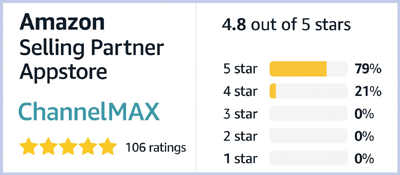
Check ChannelMAX at Amazon Selling Partner Appstore, an application with a 5 star rating.