Amazon Seller Central Introduces Multichannel Selling Tools for eBay, Shopify, TikTok and Walmart
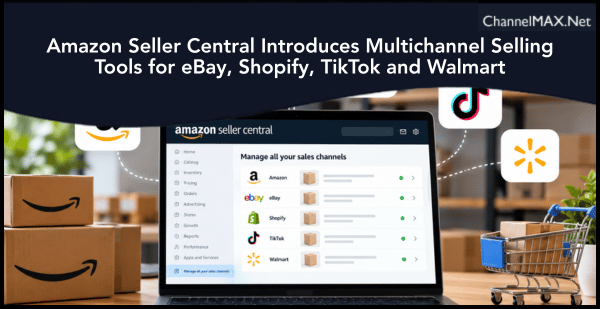
New tools allow US sellers to manage product listings, orders, fulfillment and profitability across multiple marketplaces from a single Seller Central dashboard, with no additional cost during the gradual rollout
By ChannelMAX Staff Writer
Oct-2026#09
Managing sales across several online marketplaces could soon become easier for Amazon sellers in the United States. New multichannel selling tools in Seller Central are designed to bring Amazon, eBay, Shopify, TikTok and Walmart operations into one workspace, reducing the need to switch between multiple platforms.
According to an update published on Amazon Seller Central, the new functionality allows sellers to connect their accounts on supported platforms and manage product listings, customer orders and profitability from the dashboard they already use for their Amazon business. The tools are being rolled out gradually to US sellers at no additional cost. However, access may not be available to every seller immediately.
One Dashboard for Multiple Sales Channels
Sellers operating across Amazon and other e-commerce platforms often face the challenge of maintaining separate accounts, updating product information and tracking orders through different systems. Amazon's new multichannel selling tools aim to simplify these tasks by connecting supported sales channels directly to Seller Central.
Once their accounts are connected, sellers can manage several aspects of their business from a central location. The integration currently covers four external platforms: eBay, Shopify, TikTok and Walmart, alongside Amazon's own marketplace. For sellers expanding beyond Amazon, this could reduce administrative work and make it easier to coordinate daily operations across different channels.
Also Read: Amazon Introduces Up to 25 Percent MCF Fulfillment Fee Savings and Prime Delivery for US Online Stores
Update Product Listings Across Multiple Marketplaces
One of the major features is centralized product listing management. Sellers can enhance a product description on the Manage Products page in Seller Central, and the updated information can be distributed to connected channels where the product is listed.
Amazon says the system automatically formats product content to meet the requirements of each supported channel. The integration also uses Amazon's AI-powered listing tools to help sellers create product descriptions and other channel-ready content.
This functionality could be particularly useful for businesses managing large product catalogs. Instead of manually editing the same product description across multiple marketplaces, sellers can make changes through a central workflow. However, sellers should continue checking their published listings to ensure product information, images and other details meet each marketplace's requirements.
Manage Orders and Fulfillment From One Screen
Order management is another important part of the update. The new tools allow sellers to view and manage orders from connected sales channels through a single Seller Central interface. For example, a seller receiving an order through Shopify can select that order in Seller Central and choose to fulfill it through Amazon.
Amazon says tracking information will then be sent back automatically to the originating sales channel. This can reduce manual order processing and help sellers keep customers informed about shipment progress. For businesses using Amazon's Multi-Channel Fulfillment service, the integration may provide a more convenient way to manage eligible orders from external sales channels.
Sellers should note that fulfillment charges, service eligibility and delivery options may still vary depending on the order and fulfillment arrangement. The announcement does not indicate that existing fulfillment fees are being waived.
Track Profitability Across Different Sales Channels
Understanding profitability becomes more complicated when a business sells the same products through multiple marketplaces. Each platform may have different selling fees, advertising expenses, fulfillment costs and customer acquisition costs.
Amazon's new tools aim to address this challenge by providing a consolidated view of product profitability across connected channels. According to the Seller Central announcement, the system brings together information about sales, advertising spending and traffic to help sellers understand how individual products perform across marketplaces.
This could help sellers answer important business questions, such as which channel generates the highest returns, where advertising budgets should be increased and which products may need pricing adjustments.
For example, a product may generate more sales on Amazon but deliver better margins through Shopify because of differences in selling fees and other expenses. Having this information in one place could help sellers make more informed decisions without manually combining reports from several platforms. However, sellers should verify which fees, expenses and other costs are included in the profitability calculations before treating the displayed figures as final net profit.
How Amazon Sellers Can Get Started
US sellers interested in using the new tools can check whether the feature is available in their Seller Central accounts.
Amazon has directed sellers to the Manage all your sales channels section in Seller Central.
Sellers can follow these steps:
1. Sign in to their Amazon US Seller Central account.
2. Locate the Manage all your sales channels option.
3. Check whether multichannel selling functionality is available for their account.
4. Connect eligible eBay, Shopify, TikTok or Walmart accounts using the available setup process.
5. Review product listings, order management and profitability features after completing the connections.
6. Visit Multichannel Settings for additional configuration information.
Because the rollout is gradual, sellers who cannot find the feature may need to wait until Amazon enables access for their accounts.
What Sellers Should Check Before Connecting Accounts
Although centralized management offers operational advantages, sellers should review several factors before relying on the integration for their entire business. Inventory synchronization is particularly important. Sellers need to ensure that stock quantities remain accurate across marketplaces to reduce the risk of overselling.
The announcement highlights listing updates, order management and profitability reporting, but it does not fully explain how inventory synchronization works in every supported channel. Sellers should therefore confirm the available inventory controls before changing existing stock management workflows.
It is also important to check how the system handles marketplace-specific product requirements, shipping policies, returns and order cancellations. Businesses already using third-party multichannel management software should assess whether the new Seller Central tools duplicate existing functionality or offer additional benefits.
What Does the No-Additional-Cost Offer Mean?
Amazon says the new multichannel selling tools are being introduced to eligible US sellers at no additional cost. This makes the integration particularly attractive to small and medium-sized sellers who want to expand across multiple marketplaces without adding another software subscription.
However, no additional cost for the new management tools should not be confused with fee-free selling. Existing marketplace referral fees, fulfillment charges, advertising costs, subscription fees and other applicable service charges may continue to apply. Sellers should review the pricing and service terms of each connected marketplace before calculating the financial benefits of using the integration.
Why This Update Matters for Multichannel Sellers
The introduction of centralized selling tools reflects the growing importance of managing e-commerce operations across multiple platforms. For Amazon sellers, expanding to eBay, Walmart, Shopify or TikTok can create opportunities to reach different customer groups and reduce dependence on a single sales channel.
However, selling across multiple platforms also increases operational complexity. A centralized dashboard could make this expansion more manageable by reducing repetitive tasks, improving visibility into orders and bringing performance information together.
The integration could be especially useful for sellers with established product catalogs who want to test additional marketplaces without significantly increasing their administrative workload. It may also help sellers compare channel performance more effectively and identify opportunities to improve product profitability.
Conclusion
Amazon's new multichannel selling tools could simplify how US sellers manage businesses operating across Amazon, eBay, Shopify, TikTok and Walmart. By bringing listing management, order fulfillment and profitability reporting into Seller Central, the company aims to reduce repetitive work and give sellers a clearer picture of their overall e-commerce operations.
The gradual rollout and no-additional-cost access make the tools worth exploring, particularly for sellers seeking to expand beyond Amazon while keeping operations manageable. Sellers should check their Seller Central accounts for availability, review the integration settings and test the functionality with a limited number of products or orders before making major workflow changes.
For multichannel businesses, the biggest potential benefit is not simply managing more marketplaces from one screen. It is gaining better control over daily operations while making more informed decisions about where to invest time, inventory and advertising budgets.
Also Read: Amazon Extends Holiday Return Window for 2026 Purchases, Giving Shoppers Until January 31, 2027
Disclaimer:
Amazon is the registered trademark of the e-commerce brand.
About ChannelMAX.NET:
ChannelMAX offers Amazon Repricer that runs on the latest AI Repricing algorithm to do Amazon Pricing Management or Amazon Repricing. Based on Amazon SP API, the repricing engine or repricer runs 24/7 and efficiently manages Amazon prices to maximize your BuyBox with profit optimization. Established in 2005, ChannelMAX has been integrated with Amazon technology since 2007, helping thousands of third-party sellers on various eCommerce platforms. Some of the eCommerce platforms, aka marketplaces, supported by ChannelMAX.NET, are Amazon, Walmart, eBay, and Shopify. Some of ChannelMAX key offerings include ChannelMAX Amazon Repricer, 2ndly, ChannelMAX Amazon FBA Audits and FBA Refunds management, an offering for managing Amazon FBA Refunds Reimbursement management for lost or damaged or misplaced inventory for which Amazon is responsible and for which sellers deserve appropriate credit reimbursement from Amazon. ChannelMAX Services offer Remote (aka Virtual) Full-Time eCommerce Assistant to help 3P sellers run their daytoday business.
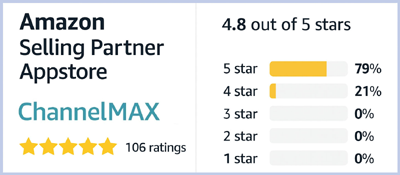
Check ChannelMAX at Amazon Selling Partner Appstore, an application with a 5 star rating.
By ChannelMAX Staff Writer
Oct-2026#09
Managing sales across several online marketplaces could soon become easier for Amazon sellers in the United States. New multichannel selling tools in Seller Central are designed to bring Amazon, eBay, Shopify, TikTok and Walmart operations into one workspace, reducing the need to switch between multiple platforms.
According to an update published on Amazon Seller Central, the new functionality allows sellers to connect their accounts on supported platforms and manage product listings, customer orders and profitability from the dashboard they already use for their Amazon business. The tools are being rolled out gradually to US sellers at no additional cost. However, access may not be available to every seller immediately.
One Dashboard for Multiple Sales Channels
Sellers operating across Amazon and other e-commerce platforms often face the challenge of maintaining separate accounts, updating product information and tracking orders through different systems. Amazon's new multichannel selling tools aim to simplify these tasks by connecting supported sales channels directly to Seller Central.
Once their accounts are connected, sellers can manage several aspects of their business from a central location. The integration currently covers four external platforms: eBay, Shopify, TikTok and Walmart, alongside Amazon's own marketplace. For sellers expanding beyond Amazon, this could reduce administrative work and make it easier to coordinate daily operations across different channels.
Also Read: Amazon Introduces Up to 25 Percent MCF Fulfillment Fee Savings and Prime Delivery for US Online Stores
Update Product Listings Across Multiple Marketplaces
One of the major features is centralized product listing management. Sellers can enhance a product description on the Manage Products page in Seller Central, and the updated information can be distributed to connected channels where the product is listed.
Amazon says the system automatically formats product content to meet the requirements of each supported channel. The integration also uses Amazon's AI-powered listing tools to help sellers create product descriptions and other channel-ready content.
This functionality could be particularly useful for businesses managing large product catalogs. Instead of manually editing the same product description across multiple marketplaces, sellers can make changes through a central workflow. However, sellers should continue checking their published listings to ensure product information, images and other details meet each marketplace's requirements.
Manage Orders and Fulfillment From One Screen
Order management is another important part of the update. The new tools allow sellers to view and manage orders from connected sales channels through a single Seller Central interface. For example, a seller receiving an order through Shopify can select that order in Seller Central and choose to fulfill it through Amazon.
Amazon says tracking information will then be sent back automatically to the originating sales channel. This can reduce manual order processing and help sellers keep customers informed about shipment progress. For businesses using Amazon's Multi-Channel Fulfillment service, the integration may provide a more convenient way to manage eligible orders from external sales channels.
Sellers should note that fulfillment charges, service eligibility and delivery options may still vary depending on the order and fulfillment arrangement. The announcement does not indicate that existing fulfillment fees are being waived.
Track Profitability Across Different Sales Channels
Understanding profitability becomes more complicated when a business sells the same products through multiple marketplaces. Each platform may have different selling fees, advertising expenses, fulfillment costs and customer acquisition costs.
Amazon's new tools aim to address this challenge by providing a consolidated view of product profitability across connected channels. According to the Seller Central announcement, the system brings together information about sales, advertising spending and traffic to help sellers understand how individual products perform across marketplaces.
This could help sellers answer important business questions, such as which channel generates the highest returns, where advertising budgets should be increased and which products may need pricing adjustments.
For example, a product may generate more sales on Amazon but deliver better margins through Shopify because of differences in selling fees and other expenses. Having this information in one place could help sellers make more informed decisions without manually combining reports from several platforms. However, sellers should verify which fees, expenses and other costs are included in the profitability calculations before treating the displayed figures as final net profit.
How Amazon Sellers Can Get Started
US sellers interested in using the new tools can check whether the feature is available in their Seller Central accounts.
Amazon has directed sellers to the Manage all your sales channels section in Seller Central.
Sellers can follow these steps:
1. Sign in to their Amazon US Seller Central account.
2. Locate the Manage all your sales channels option.
3. Check whether multichannel selling functionality is available for their account.
4. Connect eligible eBay, Shopify, TikTok or Walmart accounts using the available setup process.
5. Review product listings, order management and profitability features after completing the connections.
6. Visit Multichannel Settings for additional configuration information.
Because the rollout is gradual, sellers who cannot find the feature may need to wait until Amazon enables access for their accounts.
What Sellers Should Check Before Connecting Accounts
Although centralized management offers operational advantages, sellers should review several factors before relying on the integration for their entire business. Inventory synchronization is particularly important. Sellers need to ensure that stock quantities remain accurate across marketplaces to reduce the risk of overselling.
The announcement highlights listing updates, order management and profitability reporting, but it does not fully explain how inventory synchronization works in every supported channel. Sellers should therefore confirm the available inventory controls before changing existing stock management workflows.
It is also important to check how the system handles marketplace-specific product requirements, shipping policies, returns and order cancellations. Businesses already using third-party multichannel management software should assess whether the new Seller Central tools duplicate existing functionality or offer additional benefits.
What Does the No-Additional-Cost Offer Mean?
Amazon says the new multichannel selling tools are being introduced to eligible US sellers at no additional cost. This makes the integration particularly attractive to small and medium-sized sellers who want to expand across multiple marketplaces without adding another software subscription.
However, no additional cost for the new management tools should not be confused with fee-free selling. Existing marketplace referral fees, fulfillment charges, advertising costs, subscription fees and other applicable service charges may continue to apply. Sellers should review the pricing and service terms of each connected marketplace before calculating the financial benefits of using the integration.
Why This Update Matters for Multichannel Sellers
The introduction of centralized selling tools reflects the growing importance of managing e-commerce operations across multiple platforms. For Amazon sellers, expanding to eBay, Walmart, Shopify or TikTok can create opportunities to reach different customer groups and reduce dependence on a single sales channel.
However, selling across multiple platforms also increases operational complexity. A centralized dashboard could make this expansion more manageable by reducing repetitive tasks, improving visibility into orders and bringing performance information together.
The integration could be especially useful for sellers with established product catalogs who want to test additional marketplaces without significantly increasing their administrative workload. It may also help sellers compare channel performance more effectively and identify opportunities to improve product profitability.
Conclusion
Amazon's new multichannel selling tools could simplify how US sellers manage businesses operating across Amazon, eBay, Shopify, TikTok and Walmart. By bringing listing management, order fulfillment and profitability reporting into Seller Central, the company aims to reduce repetitive work and give sellers a clearer picture of their overall e-commerce operations.
The gradual rollout and no-additional-cost access make the tools worth exploring, particularly for sellers seeking to expand beyond Amazon while keeping operations manageable. Sellers should check their Seller Central accounts for availability, review the integration settings and test the functionality with a limited number of products or orders before making major workflow changes.
For multichannel businesses, the biggest potential benefit is not simply managing more marketplaces from one screen. It is gaining better control over daily operations while making more informed decisions about where to invest time, inventory and advertising budgets.
Also Read: Amazon Extends Holiday Return Window for 2026 Purchases, Giving Shoppers Until January 31, 2027
Disclaimer:
Amazon is the registered trademark of the e-commerce brand.
About ChannelMAX.NET:
ChannelMAX offers Amazon Repricer that runs on the latest AI Repricing algorithm to do Amazon Pricing Management or Amazon Repricing. Based on Amazon SP API, the repricing engine or repricer runs 24/7 and efficiently manages Amazon prices to maximize your BuyBox with profit optimization. Established in 2005, ChannelMAX has been integrated with Amazon technology since 2007, helping thousands of third-party sellers on various eCommerce platforms. Some of the eCommerce platforms, aka marketplaces, supported by ChannelMAX.NET, are Amazon, Walmart, eBay, and Shopify. Some of ChannelMAX key offerings include ChannelMAX Amazon Repricer, 2ndly, ChannelMAX Amazon FBA Audits and FBA Refunds management, an offering for managing Amazon FBA Refunds Reimbursement management for lost or damaged or misplaced inventory for which Amazon is responsible and for which sellers deserve appropriate credit reimbursement from Amazon. ChannelMAX Services offer Remote (aka Virtual) Full-Time eCommerce Assistant to help 3P sellers run their daytoday business.
Check ChannelMAX at Amazon Selling Partner Appstore, an application with a 5 star rating.