Amazon Tightens Seller Insurance Rules From November 2, Adds Mandatory Coverage for Safety-Sensitive Products
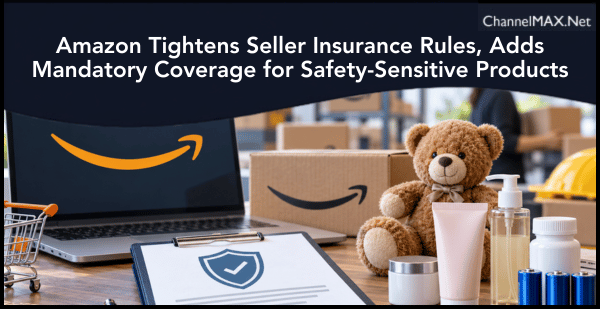
Sellers of certain higher-safety-risk products will need at least $1 million in commercial liability coverage regardless of sales volume, while Mainland China sellers face a new Amazon Insurance Accelerator requirement
By ChannelMAX Staff Writer
Sept-2026#02
Amazon sellers offering certain products with enhanced safety listing requirements will face stricter commercial liability insurance rules beginning November 2, 2026. The changes are particularly important because some sellers will need insurance even if their Amazon.com sales never reach the existing $10,000 monthly threshold.
The updated requirements were disclosed in an official announcement on Amazon Seller Central. Amazon said the changes are intended to help protect customers while helping sellers protect their businesses against financial losses arising from product-related incidents.
Two major changes are being introduced. The first expands mandatory insurance coverage to sellers listing products in categories with enhanced safety requirements. The second requires sellers based in Mainland China to obtain qualifying insurance through the Amazon Insurance Accelerator program.
The changes take effect November 2, giving affected sellers a limited period to review their products, existing insurance policies and compliance status.
Also Read: Amazon Offers 35 Percent Off MCF Fulfillment Fees for TikTok Shop Orders
Existing $10,000 Monthly Sales Threshold Remains
Amazon is not removing its existing commercial liability insurance requirement. Under the current policy, sellers must obtain and maintain commercial liability insurance if their gross proceeds from Amazon.com sales exceed $10,000 in any month.
Once the threshold is exceeded, the seller must obtain the required insurance within 30 days. The policy must provide at least $1 million in coverage per occurrence and $1 million in aggregate coverage.
This sales-based requirement will continue after November 2. The important difference is that Amazon is adding another route through which a seller can become subject to mandatory insurance requirements.
Insurance Now Required for Certain Products Regardless of Sales
The biggest change affects sellers offering products in categories subject to enhanced safety listing requirements. Beginning November 2, these sellers must maintain a commercial liability insurance policy covering those products with at least $1 million of coverage per occurrence and in aggregate.
Crucially, the requirement applies regardless of whether the seller reaches $10,000 in monthly gross proceeds.
That means a relatively small seller could now be required to carry commercial liability insurance based on the type of product being sold rather than the amount of revenue generated. The requirement applies to both new and existing listings.
This makes the change relevant not only to sellers preparing to launch new products but also to businesses with ASINs that have been selling on Amazon for some time.
Which Product Categories Are Affected?
Amazon said categories with enhanced safety listing requirements include, but are not limited to, children's products, cosmetic and ingestible products, and lithium battery products.
The wording "include, but are not limited to" is important for sellers. It means sellers should not assume they are exempt simply because their products do not fall within those three examples. Amazon maintains a broader list of product categories with enhanced safety listing requirements.
Sellers should review the current category list in Seller Central and compare it against their catalog before the November 2 effective date. Businesses managing large catalogs may want to conduct this review at the ASIN or product-category level rather than relying only on their primary selling category.
Why the Change Matters for Smaller Sellers
Previously, a smaller seller that remained below the $10,000 gross proceeds threshold in every month might not have triggered Amazon's sales-based commercial liability insurance requirement. The new policy changes that calculation for affected products.
For example, a seller offering an eligible product subject to enhanced safety listing requirements could be required to maintain the specified insurance even with monthly Amazon.com gross proceeds well below $10,000.
This effectively creates a product-risk-based insurance requirement alongside Amazon's existing sales-based requirement. Sellers entering affected categories should therefore consider insurance costs as part of their product economics before launching.
Insurance premiums can become another operating expense that needs to be included when calculating margins, alongside referral fees, FBA fees, advertising, storage, freight and other costs.
Mainland China Sellers Face Separate AIA Requirement
Amazon is also changing how sellers based in Mainland China can obtain qualifying insurance. Starting November 2, 2026, these sellers must obtain their insurance through the Amazon Insurance Accelerator, or AIA, program.
Amazon describes AIA as a program that connects sellers with a network of pre-vetted insurers familiar with Amazon's insurance requirements.
According to the Seller Central announcement, the program is intended to make it easier for sellers to obtain compliant insurance, reduce policy rejections and ensure claims are supported when they arise.
This requirement is separate from the expanded insurance rule for enhanced-safety categories and will be particularly important for China-based businesses selling on Amazon.com.
Amazon Will Reject Certain New Policies From November 2
The November 2 deadline has another important implication for Mainland China sellers. Amazon said newly submitted insurance policies obtained outside the Amazon Insurance Accelerator will be rejected beginning on that date.
However, Amazon has provided a transition arrangement for existing coverage. A Mainland China seller with a valid third-party insurance policy that meets Amazon's coverage requirements and was submitted to Amazon before November 2 can continue using that policy until it expires. Once that policy expires, the seller will need to obtain insurance through AIA.
This distinction means sellers with existing third-party policies should pay close attention to both the submission date and expiration date of their current coverage. They should not assume that an existing third-party policy can simply be renewed outside AIA after the new requirement takes effect.
What Is Amazon Insurance Accelerator?
Amazon Insurance Accelerator is designed to simplify the process of finding commercial insurance that meets Amazon's requirements. Rather than requiring sellers to independently identify an insurer and determine whether the resulting policy satisfies Amazon's specifications, AIA provides access to participating insurance providers familiar with the marketplace's requirements.
For Mainland China sellers, this will move from being an insurance option to a mandatory route for newly submitted policies beginning November 2. Sellers should still review the policy terms, premiums, exclusions, deductibles and actual scope of coverage offered by an insurer before purchasing a policy.
Compliance with Amazon's marketplace requirements and the suitability of insurance for a seller's broader business risks are related but not necessarily identical considerations.
What Sellers Should Do Before November 2
The first step should be a catalog review. Sellers should identify whether any current or planned products fall under Amazon's enhanced safety listing requirements. This is particularly important for sellers dealing with children's products, cosmetics, ingestible goods and products containing lithium batteries.
Next, determine whether existing commercial liability insurance covers the affected products and meets Amazon's minimum $1 million per-occurrence and aggregate requirements. Sellers without qualifying insurance should investigate their coverage options well before the deadline rather than waiting until November.
Mainland China sellers should separately review the Amazon Insurance Accelerator requirement. Those currently relying on third-party insurance should check when the policy was submitted to Amazon and when it expires.
Sellers should also monitor Seller Central notifications and Account Health for any insurance-related requests or compliance issues.
Do Not Confuse Insurance With Product Compliance
Commercial liability insurance should not be treated as a replacement for Amazon's underlying product safety and compliance requirements. A product may still need testing reports, certifications, compliance documents or other information before it can be listed or continue being sold.
Insurance deals with financial protection against covered liabilities. Product compliance deals with whether a product satisfies applicable Amazon policies, safety standards and regulatory requirements. Sellers operating in safety-sensitive categories therefore need to manage both areas.
Why Sellers Should Act Early
Waiting until the November 2 effective date could create unnecessary compliance risk. Insurance applications can require business information, product details and other documentation. Sellers may also need time to determine whether a policy properly covers all relevant products.
For businesses with many ASINs, identifying which products fall under enhanced safety listing requirements could itself require a detailed catalog review. Early preparation gives sellers more time to resolve discrepancies before the new requirements become enforceable.
It also allows sellers to incorporate insurance expenses into their product profitability calculations instead of treating the cost as an unexpected compliance expense.
Insurance Is Becoming a Product-Level Consideration
Amazon's November 2 update represents an important change in how some sellers should think about commercial liability insurance.
The existing $10,000 monthly gross proceeds trigger remains in place, but sales volume will no longer be the only factor determining whether insurance is required. Sellers of products subject to enhanced safety listing requirements can face mandatory coverage regardless of how much they sell.
For smaller businesses, that makes product selection increasingly important. Entering certain categories may now bring insurance costs and compliance responsibilities from the beginning rather than only after the business reaches a particular sales level.
Mainland China sellers face an additional change because newly submitted policies must be obtained through Amazon Insurance Accelerator from November 2, subject to the transition arrangement for qualifying policies submitted earlier.
Sellers should use the period before November 2 to identify affected ASINs, verify existing coverage, understand their insurance costs and address any gaps.
Doing so is not only about meeting an Amazon requirement. Appropriate commercial liability coverage can also help protect a seller's business from potentially significant financial exposure when a covered product-related incident occurs.
Also Read: Amazon Expands Global Warehousing and Distribution Network With New Ningbo Facility
Disclaimer:
Amazon is the registered trademark of the company.
About ChannelMAX.NET:
ChannelMAX offers Amazon Repricer that runs on the latest AI Repricing algorithm to do Amazon Pricing Management or Amazon Repricing. Based on Amazon SP API, the repricing engine or repricer runs 24/7 and efficiently manages Amazon prices to maximize your BuyBox with profit optimization. Established in 2005, ChannelMAX has been integrated with Amazon technology since 2007, helping thousands of third-party sellers on various eCommerce platforms. Some of the eCommerce platforms, aka marketplaces, supported by ChannelMAX.NET, are Amazon, Walmart, eBay, and Shopify. Some of ChannelMAX key offerings include ChannelMAX Amazon Repricer, 2ndly, ChannelMAX Amazon FBA Audits and FBA Refunds management, an offering for managing Amazon FBA Refunds Reimbursement management for lost or damaged or misplaced inventory for which Amazon is responsible and for which sellers deserve appropriate credit reimbursement from Amazon. ChannelMAX Services offer Remote (aka Virtual) Full-Time eCommerce Assistant to help 3P sellers run their daytoday business.
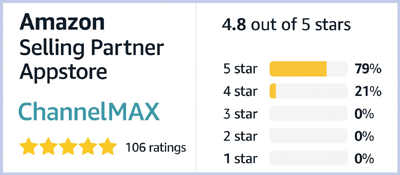
Check ChannelMAX at Amazon Selling Partner Appstore, an application with a 5 star rating.
By ChannelMAX Staff Writer
Sept-2026#02
Amazon sellers offering certain products with enhanced safety listing requirements will face stricter commercial liability insurance rules beginning November 2, 2026. The changes are particularly important because some sellers will need insurance even if their Amazon.com sales never reach the existing $10,000 monthly threshold.
The updated requirements were disclosed in an official announcement on Amazon Seller Central. Amazon said the changes are intended to help protect customers while helping sellers protect their businesses against financial losses arising from product-related incidents.
Two major changes are being introduced. The first expands mandatory insurance coverage to sellers listing products in categories with enhanced safety requirements. The second requires sellers based in Mainland China to obtain qualifying insurance through the Amazon Insurance Accelerator program.
The changes take effect November 2, giving affected sellers a limited period to review their products, existing insurance policies and compliance status.
Also Read: Amazon Offers 35 Percent Off MCF Fulfillment Fees for TikTok Shop Orders
Existing $10,000 Monthly Sales Threshold Remains
Amazon is not removing its existing commercial liability insurance requirement. Under the current policy, sellers must obtain and maintain commercial liability insurance if their gross proceeds from Amazon.com sales exceed $10,000 in any month.
Once the threshold is exceeded, the seller must obtain the required insurance within 30 days. The policy must provide at least $1 million in coverage per occurrence and $1 million in aggregate coverage.
This sales-based requirement will continue after November 2. The important difference is that Amazon is adding another route through which a seller can become subject to mandatory insurance requirements.
Insurance Now Required for Certain Products Regardless of Sales
The biggest change affects sellers offering products in categories subject to enhanced safety listing requirements. Beginning November 2, these sellers must maintain a commercial liability insurance policy covering those products with at least $1 million of coverage per occurrence and in aggregate.
Crucially, the requirement applies regardless of whether the seller reaches $10,000 in monthly gross proceeds.
That means a relatively small seller could now be required to carry commercial liability insurance based on the type of product being sold rather than the amount of revenue generated. The requirement applies to both new and existing listings.
This makes the change relevant not only to sellers preparing to launch new products but also to businesses with ASINs that have been selling on Amazon for some time.
Which Product Categories Are Affected?
Amazon said categories with enhanced safety listing requirements include, but are not limited to, children's products, cosmetic and ingestible products, and lithium battery products.
The wording "include, but are not limited to" is important for sellers. It means sellers should not assume they are exempt simply because their products do not fall within those three examples. Amazon maintains a broader list of product categories with enhanced safety listing requirements.
Sellers should review the current category list in Seller Central and compare it against their catalog before the November 2 effective date. Businesses managing large catalogs may want to conduct this review at the ASIN or product-category level rather than relying only on their primary selling category.
Why the Change Matters for Smaller Sellers
Previously, a smaller seller that remained below the $10,000 gross proceeds threshold in every month might not have triggered Amazon's sales-based commercial liability insurance requirement. The new policy changes that calculation for affected products.
For example, a seller offering an eligible product subject to enhanced safety listing requirements could be required to maintain the specified insurance even with monthly Amazon.com gross proceeds well below $10,000.
This effectively creates a product-risk-based insurance requirement alongside Amazon's existing sales-based requirement. Sellers entering affected categories should therefore consider insurance costs as part of their product economics before launching.
Insurance premiums can become another operating expense that needs to be included when calculating margins, alongside referral fees, FBA fees, advertising, storage, freight and other costs.
Mainland China Sellers Face Separate AIA Requirement
Amazon is also changing how sellers based in Mainland China can obtain qualifying insurance. Starting November 2, 2026, these sellers must obtain their insurance through the Amazon Insurance Accelerator, or AIA, program.
Amazon describes AIA as a program that connects sellers with a network of pre-vetted insurers familiar with Amazon's insurance requirements.
According to the Seller Central announcement, the program is intended to make it easier for sellers to obtain compliant insurance, reduce policy rejections and ensure claims are supported when they arise.
This requirement is separate from the expanded insurance rule for enhanced-safety categories and will be particularly important for China-based businesses selling on Amazon.com.
Amazon Will Reject Certain New Policies From November 2
The November 2 deadline has another important implication for Mainland China sellers. Amazon said newly submitted insurance policies obtained outside the Amazon Insurance Accelerator will be rejected beginning on that date.
However, Amazon has provided a transition arrangement for existing coverage. A Mainland China seller with a valid third-party insurance policy that meets Amazon's coverage requirements and was submitted to Amazon before November 2 can continue using that policy until it expires. Once that policy expires, the seller will need to obtain insurance through AIA.
This distinction means sellers with existing third-party policies should pay close attention to both the submission date and expiration date of their current coverage. They should not assume that an existing third-party policy can simply be renewed outside AIA after the new requirement takes effect.
What Is Amazon Insurance Accelerator?
Amazon Insurance Accelerator is designed to simplify the process of finding commercial insurance that meets Amazon's requirements. Rather than requiring sellers to independently identify an insurer and determine whether the resulting policy satisfies Amazon's specifications, AIA provides access to participating insurance providers familiar with the marketplace's requirements.
For Mainland China sellers, this will move from being an insurance option to a mandatory route for newly submitted policies beginning November 2. Sellers should still review the policy terms, premiums, exclusions, deductibles and actual scope of coverage offered by an insurer before purchasing a policy.
Compliance with Amazon's marketplace requirements and the suitability of insurance for a seller's broader business risks are related but not necessarily identical considerations.
What Sellers Should Do Before November 2
The first step should be a catalog review. Sellers should identify whether any current or planned products fall under Amazon's enhanced safety listing requirements. This is particularly important for sellers dealing with children's products, cosmetics, ingestible goods and products containing lithium batteries.
Next, determine whether existing commercial liability insurance covers the affected products and meets Amazon's minimum $1 million per-occurrence and aggregate requirements. Sellers without qualifying insurance should investigate their coverage options well before the deadline rather than waiting until November.
Mainland China sellers should separately review the Amazon Insurance Accelerator requirement. Those currently relying on third-party insurance should check when the policy was submitted to Amazon and when it expires.
Sellers should also monitor Seller Central notifications and Account Health for any insurance-related requests or compliance issues.
Do Not Confuse Insurance With Product Compliance
Commercial liability insurance should not be treated as a replacement for Amazon's underlying product safety and compliance requirements. A product may still need testing reports, certifications, compliance documents or other information before it can be listed or continue being sold.
Insurance deals with financial protection against covered liabilities. Product compliance deals with whether a product satisfies applicable Amazon policies, safety standards and regulatory requirements. Sellers operating in safety-sensitive categories therefore need to manage both areas.
Why Sellers Should Act Early
Waiting until the November 2 effective date could create unnecessary compliance risk. Insurance applications can require business information, product details and other documentation. Sellers may also need time to determine whether a policy properly covers all relevant products.
For businesses with many ASINs, identifying which products fall under enhanced safety listing requirements could itself require a detailed catalog review. Early preparation gives sellers more time to resolve discrepancies before the new requirements become enforceable.
It also allows sellers to incorporate insurance expenses into their product profitability calculations instead of treating the cost as an unexpected compliance expense.
Insurance Is Becoming a Product-Level Consideration
Amazon's November 2 update represents an important change in how some sellers should think about commercial liability insurance.
The existing $10,000 monthly gross proceeds trigger remains in place, but sales volume will no longer be the only factor determining whether insurance is required. Sellers of products subject to enhanced safety listing requirements can face mandatory coverage regardless of how much they sell.
For smaller businesses, that makes product selection increasingly important. Entering certain categories may now bring insurance costs and compliance responsibilities from the beginning rather than only after the business reaches a particular sales level.
Mainland China sellers face an additional change because newly submitted policies must be obtained through Amazon Insurance Accelerator from November 2, subject to the transition arrangement for qualifying policies submitted earlier.
Sellers should use the period before November 2 to identify affected ASINs, verify existing coverage, understand their insurance costs and address any gaps.
Doing so is not only about meeting an Amazon requirement. Appropriate commercial liability coverage can also help protect a seller's business from potentially significant financial exposure when a covered product-related incident occurs.
Also Read: Amazon Expands Global Warehousing and Distribution Network With New Ningbo Facility
Disclaimer:
Amazon is the registered trademark of the company.
About ChannelMAX.NET:
ChannelMAX offers Amazon Repricer that runs on the latest AI Repricing algorithm to do Amazon Pricing Management or Amazon Repricing. Based on Amazon SP API, the repricing engine or repricer runs 24/7 and efficiently manages Amazon prices to maximize your BuyBox with profit optimization. Established in 2005, ChannelMAX has been integrated with Amazon technology since 2007, helping thousands of third-party sellers on various eCommerce platforms. Some of the eCommerce platforms, aka marketplaces, supported by ChannelMAX.NET, are Amazon, Walmart, eBay, and Shopify. Some of ChannelMAX key offerings include ChannelMAX Amazon Repricer, 2ndly, ChannelMAX Amazon FBA Audits and FBA Refunds management, an offering for managing Amazon FBA Refunds Reimbursement management for lost or damaged or misplaced inventory for which Amazon is responsible and for which sellers deserve appropriate credit reimbursement from Amazon. ChannelMAX Services offer Remote (aka Virtual) Full-Time eCommerce Assistant to help 3P sellers run their daytoday business.
Check ChannelMAX at Amazon Selling Partner Appstore, an application with a 5 star rating.