Amazon Urges Sellers to Check Importer Status Ahead of Potential U.S. Customs Changes
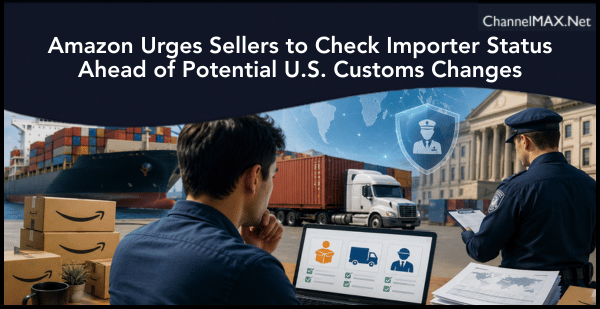
New U.S. customs rules could bring additional requirements for foreign Importers of Record, making it important for Amazon sellers to review their current import arrangements before the regulations take effect
By ChannelMAX Staff Writer
Aug-2026#08
Sellers importing inventory into the United States may want to check an important part of their supply chain now: who is officially acting as their Importer of Record.
In an update titled “Check import status ahead of potential U.S. import changes” posted on Seller Central, Amazon alerted sellers to potential changes stemming from U.S. Executive Order 14411, which directs federal agencies to strengthen customs enforcement and revise requirements for companies and individuals importing goods into the United States.
Amazon stressed that sellers do not need to change their operations immediately. According to the Seller Central announcement, implementation details have not yet been finalized and sellers’ current import operations are not affected by the announcement.
However, reviewing Importer of Record arrangements now could help sellers identify potential compliance issues before new requirements are implemented.
Also Read: Reach More Global Customers as Amazon Auto-Translates Product Images Across Multiple Stores
What is Executive Order 14411?
Executive Order 14411, titled “Strengthening Customs Enforcement,” was issued on June 3, 2026. It directs the U.S. Department of Homeland Security and U.S. Customs and Border Protection to strengthen several customs and importer requirements.
The order focuses heavily on Importers of Record, commonly known as IORs.
Among other measures, it directs authorities to revise importer eligibility requirements, strengthen bonding requirements and require additional information from IORs. The order also calls for enhanced vetting and a system under which importers would need to remain in “good standing” with CBP.
Some measures are particularly significant for foreign IORs.
Why the Importer of Record matters to Amazon sellers
The Importer of Record is the person or entity legally responsible for the customs entry of imported merchandise.
For Amazon sellers, the IOR may vary depending on how the seller has structured shipping and customs clearance. Amazon’s Seller Central update notes that the IOR could be the seller itself, a freight forwarder or a customs broker.
This distinction could become increasingly important because Executive Order 14411 provides different treatment for foreign and U.S. IORs.
The order directs authorities to prohibit foreign IORs from filing informal entries and establishes heightened requirements for foreign IORs making formal entries.
For formal entries, the order says a foreign IOR generally may not rely on a continuous bond unless CBP permits it under specified circumstances. It also provides that eligible foreign IORs would need to be validated under the Customs Trade Partnership Against Terrorism program, known as CTPAT, or use a CTPAT-validated and licensed customs broker to file entries.
More information could be required from importers
The executive order also calls for CBP to collect additional information about IORs.
Potential requirements include anticipated import volumes, the year the business was organized, ownership and beneficial ownership information, business affiliations and disclosures concerning domestic assets.
The government is also moving toward greater supply-chain disclosure. The order calls for information concerning imported products and their production, potentially including manufacturer product identifiers and specifications such as composition, grade or size.
These provisions could be particularly relevant to Amazon sellers that source products overseas and send inventory directly into the U.S.
What Amazon sellers should do now
Amazon is not telling sellers to immediately restructure their importing arrangements. Instead, the Seller Central notice encourages sellers to determine whether their current IOR is considered a U.S. entity or a foreign entity.
Sellers working with a freight forwarder or customs broker can contact the provider and ask a simple question: “Is my Importer of Record a U.S. entity or a foreign entity?”
That answer can give sellers an early indication of whether the foreign-IOR provisions may eventually affect their shipments.
Sellers should also consider reviewing customs documentation, importer identification details, customs bonds, broker arrangements and the information maintained about overseas suppliers and manufacturers.
Businesses using direct-to-consumer, marketplace, delivered-duty-paid or similar cross-border structures may have greater reason to review their IOR arrangements because changes affecting foreign IORs could influence customs procedures, clearance times and compliance costs.
No immediate change, but preparation could reduce disruption
One important point for sellers is that the Seller Central notice should not be interpreted as an announcement that all of these potential requirements are already being enforced against their Amazon shipments.
Executive Order 14411 establishes the policy direction and instructs U.S. authorities to develop or revise regulations, policies and procedures. Several provisions direct DHS and CBP to take action within specified implementation periods.
The order also directs authorities to update the IOR registry, remove inactive importers, confirm compliance by active IORs and establish risk-based tiers based on factors including compliance history, enforcement actions and audits. Enhanced and recurring vetting is also contemplated for IORs, brokers, freight forwarders and other parties involved in importing goods.
Why sellers should pay attention
For Amazon sellers sourcing from China, India and other overseas manufacturing markets, customs compliance can directly affect inventory availability.
A shipment delayed at the border can create downstream problems such as low FBA inventory, stockouts, lost Buy Box opportunities, missed sales and higher logistics costs.
Knowing who serves as the IOR therefore gives sellers a useful starting point for assessing their exposure to future U.S. customs requirements.
Sellers should monitor subsequent Seller Central notices and official guidance from U.S. Customs and Border Protection rather than making major changes based solely on preliminary interpretations.
Executive Order 14411 does not mean Amazon sellers need to overhaul their import operations today. It does, however, provide a reason to understand those operations more clearly.
By confirming whether their IOR is a U.S. or foreign entity, reviewing customs and broker arrangements and keeping supplier documentation organized, sellers can put themselves in a stronger position to respond when final implementation requirements become clear. Early preparation could help reduce customs delays, unexpected compliance costs and inventory disruptions once the new rules take shape.
Also Read: Amazon urges sellers to optimize listings with built-in tools to improve visibility and sales
Disclaimer:
Amazon is the registered trademark of the company.
About ChannelMAX.NET:
ChannelMAX offers Amazon Repricer that runs on the latest AI Repricing algorithm to do Amazon Pricing Management or Amazon Repricing. Based on Amazon SP API, the repricing engine or repricer runs 24/7 and efficiently manages Amazon prices to maximize your BuyBox with profit optimization. Established in 2005, ChannelMAX has been integrated with Amazon technology since 2007, helping thousands of third-party sellers on various eCommerce platforms. Some of the eCommerce platforms, aka marketplaces, supported by ChannelMAX.NET, are Amazon, Walmart, eBay, and Shopify. Some of ChannelMAX key offerings include ChannelMAX Amazon Repricer, 2ndly, ChannelMAX Amazon FBA Audits and FBA Refunds management, an offering for managing Amazon FBA Refunds Reimbursement management for lost or damaged or misplaced inventory for which Amazon is responsible and for which sellers deserve appropriate credit reimbursement from Amazon. ChannelMAX Services offer Remote (aka Virtual) Full-Time eCommerce Assistant to help 3P sellers run their daytoday business.
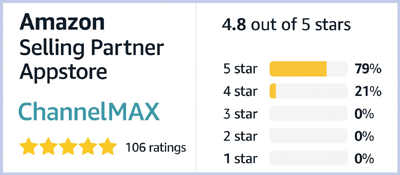
Check ChannelMAX at Amazon Selling Partner Appstore, an application with a 5 star rating.
By ChannelMAX Staff Writer
Aug-2026#08
Sellers importing inventory into the United States may want to check an important part of their supply chain now: who is officially acting as their Importer of Record.
In an update titled “Check import status ahead of potential U.S. import changes” posted on Seller Central, Amazon alerted sellers to potential changes stemming from U.S. Executive Order 14411, which directs federal agencies to strengthen customs enforcement and revise requirements for companies and individuals importing goods into the United States.
Amazon stressed that sellers do not need to change their operations immediately. According to the Seller Central announcement, implementation details have not yet been finalized and sellers’ current import operations are not affected by the announcement.
However, reviewing Importer of Record arrangements now could help sellers identify potential compliance issues before new requirements are implemented.
Also Read: Reach More Global Customers as Amazon Auto-Translates Product Images Across Multiple Stores
What is Executive Order 14411?
Executive Order 14411, titled “Strengthening Customs Enforcement,” was issued on June 3, 2026. It directs the U.S. Department of Homeland Security and U.S. Customs and Border Protection to strengthen several customs and importer requirements.
The order focuses heavily on Importers of Record, commonly known as IORs.
Among other measures, it directs authorities to revise importer eligibility requirements, strengthen bonding requirements and require additional information from IORs. The order also calls for enhanced vetting and a system under which importers would need to remain in “good standing” with CBP.
Some measures are particularly significant for foreign IORs.
Why the Importer of Record matters to Amazon sellers
The Importer of Record is the person or entity legally responsible for the customs entry of imported merchandise.
For Amazon sellers, the IOR may vary depending on how the seller has structured shipping and customs clearance. Amazon’s Seller Central update notes that the IOR could be the seller itself, a freight forwarder or a customs broker.
This distinction could become increasingly important because Executive Order 14411 provides different treatment for foreign and U.S. IORs.
The order directs authorities to prohibit foreign IORs from filing informal entries and establishes heightened requirements for foreign IORs making formal entries.
For formal entries, the order says a foreign IOR generally may not rely on a continuous bond unless CBP permits it under specified circumstances. It also provides that eligible foreign IORs would need to be validated under the Customs Trade Partnership Against Terrorism program, known as CTPAT, or use a CTPAT-validated and licensed customs broker to file entries.
More information could be required from importers
The executive order also calls for CBP to collect additional information about IORs.
Potential requirements include anticipated import volumes, the year the business was organized, ownership and beneficial ownership information, business affiliations and disclosures concerning domestic assets.
The government is also moving toward greater supply-chain disclosure. The order calls for information concerning imported products and their production, potentially including manufacturer product identifiers and specifications such as composition, grade or size.
These provisions could be particularly relevant to Amazon sellers that source products overseas and send inventory directly into the U.S.
What Amazon sellers should do now
Amazon is not telling sellers to immediately restructure their importing arrangements. Instead, the Seller Central notice encourages sellers to determine whether their current IOR is considered a U.S. entity or a foreign entity.
Sellers working with a freight forwarder or customs broker can contact the provider and ask a simple question: “Is my Importer of Record a U.S. entity or a foreign entity?”
That answer can give sellers an early indication of whether the foreign-IOR provisions may eventually affect their shipments.
Sellers should also consider reviewing customs documentation, importer identification details, customs bonds, broker arrangements and the information maintained about overseas suppliers and manufacturers.
Businesses using direct-to-consumer, marketplace, delivered-duty-paid or similar cross-border structures may have greater reason to review their IOR arrangements because changes affecting foreign IORs could influence customs procedures, clearance times and compliance costs.
No immediate change, but preparation could reduce disruption
One important point for sellers is that the Seller Central notice should not be interpreted as an announcement that all of these potential requirements are already being enforced against their Amazon shipments.
Executive Order 14411 establishes the policy direction and instructs U.S. authorities to develop or revise regulations, policies and procedures. Several provisions direct DHS and CBP to take action within specified implementation periods.
The order also directs authorities to update the IOR registry, remove inactive importers, confirm compliance by active IORs and establish risk-based tiers based on factors including compliance history, enforcement actions and audits. Enhanced and recurring vetting is also contemplated for IORs, brokers, freight forwarders and other parties involved in importing goods.
Why sellers should pay attention
For Amazon sellers sourcing from China, India and other overseas manufacturing markets, customs compliance can directly affect inventory availability.
A shipment delayed at the border can create downstream problems such as low FBA inventory, stockouts, lost Buy Box opportunities, missed sales and higher logistics costs.
Knowing who serves as the IOR therefore gives sellers a useful starting point for assessing their exposure to future U.S. customs requirements.
Sellers should monitor subsequent Seller Central notices and official guidance from U.S. Customs and Border Protection rather than making major changes based solely on preliminary interpretations.
Executive Order 14411 does not mean Amazon sellers need to overhaul their import operations today. It does, however, provide a reason to understand those operations more clearly.
By confirming whether their IOR is a U.S. or foreign entity, reviewing customs and broker arrangements and keeping supplier documentation organized, sellers can put themselves in a stronger position to respond when final implementation requirements become clear. Early preparation could help reduce customs delays, unexpected compliance costs and inventory disruptions once the new rules take shape.
Also Read: Amazon urges sellers to optimize listings with built-in tools to improve visibility and sales
Disclaimer:
Amazon is the registered trademark of the company.
About ChannelMAX.NET:
ChannelMAX offers Amazon Repricer that runs on the latest AI Repricing algorithm to do Amazon Pricing Management or Amazon Repricing. Based on Amazon SP API, the repricing engine or repricer runs 24/7 and efficiently manages Amazon prices to maximize your BuyBox with profit optimization. Established in 2005, ChannelMAX has been integrated with Amazon technology since 2007, helping thousands of third-party sellers on various eCommerce platforms. Some of the eCommerce platforms, aka marketplaces, supported by ChannelMAX.NET, are Amazon, Walmart, eBay, and Shopify. Some of ChannelMAX key offerings include ChannelMAX Amazon Repricer, 2ndly, ChannelMAX Amazon FBA Audits and FBA Refunds management, an offering for managing Amazon FBA Refunds Reimbursement management for lost or damaged or misplaced inventory for which Amazon is responsible and for which sellers deserve appropriate credit reimbursement from Amazon. ChannelMAX Services offer Remote (aka Virtual) Full-Time eCommerce Assistant to help 3P sellers run their daytoday business.
Check ChannelMAX at Amazon Selling Partner Appstore, an application with a 5 star rating.