How Much Does It Cost to Sell on Amazon?
A Comprehensive Guide for Sellers: Account Fees, Referral Fees, Fulfillment Costs & Hidden Charges
By ChannelMAX Staff Writer
July-2025#08
If you sell on Amazon, it's essential to understand how much it really costs to run your business on this platform. This helps you set the right prices, maintain a healthy profit margin, and grow your business efficiently. Amazon provides you with powerful tools and access to buyers all over the world, but it also charges multiple types of fees. These costs can add up fast if you're not careful.
Let’s break it down in simple terms and help you understand what you have to pay, where extra hidden costs might be, and how you can lower those costs.
How much does it cost to sell on Amazon?
Selling on Amazon involves several types of fees that sellers need to be aware of. These include the Amazon selling account fee, referral fee, fulfillment fees (for both FBA and FBM), and monthly storage fees. You might also have to pay long-term storage fees, return processing fees, refund administration fees, advertising costs, and other extra fees like charges for labeling, preparing, or removing items. Knowing all these fee types helps you calculate your total costs and set the right prices.
Amazon Selling Account Fees
If you want to sell on Amazon, the first thing you need to choose is the type of seller account. There are two options: Individual and Professional. Your choice depends on how many products you want to sell and which tools you need.
1. Individual Seller Account
a. Fee: $0.99 for each item you sell
b. Best for: Beginners or those selling less than 40 items per month
c. What you get: Basic access to sell on Amazon. No advanced tools like bulk upload, API access, or Buy Box option
If you're just trying out Amazon or selling once in a while, this plan is good because there’s no monthly fee—you only pay when something sells.
2. Professional Seller Account
a. Fee: $39.99 per month
b. Best for: Regular sellers or businesses selling 40 or more items a month
c. What you get: Access to the BuyBox, tools to upload many products at once (bulk listing), access to Amazon Ads, option to join Brand Registry.
This Professional plan is perfect for sellers who want to grow their Amazon business. Even if you don’t sell 40+ items yet, the extra tools and automation features can save time and help you sell more.
Which Account Should You Choose?
Choose Individual if:
a. You sell just a few items
b. You're new and just want to try selling
Choose Professional if:
a. You plan to sell regularly
b. You want more features and tools to grow
Amazon Referral Fees (Amazon Commission)
When you sell something on Amazon, you pay a referral fee. This is the commission Amazon charges you for using its platform to reach millions of buyers.
The referral fee is a percentage of the total selling price, which includes the item cost, shipping, and gift-wrapping charges (if any). The percentage changes depending on what type of product you’re selling.
Typical Referral Fee Rates
Example: If you sell a $40 product in the Kitchen category (15% referral fee), Amazon will charge $6.00 as a referral fee.
To learn more about the latest referral fees, visit the official Amazon page.
Why It’s Important for Sellers?
Referral fees are one of the biggest costs after your product sourcing costs and shipping charges. If your profit margin is low, this fee can significantly reduce your earnings. Also, categories like Jewelry or Clothing have higher fees. You’ll need to price your items carefully to avoid losing money.
Smart Tip for Sellers
To protect your profit:
a. Choose product categories with lower referral fees
b. Always calculate your profit after Amazon’s (referral + fulfillment) fees
c. Use a repricing tool like ChannelMAX to adjust your prices automatically and stay profitable
Fulfillment Fees – FBA vs. FBM
After Amazon’s referral fee, the next major cost for sellers is fulfillment, which means how your product is packed, shipped, and delivered to customers.
You can choose between two main options on Amazon:
1. FBA (Fulfilled by Amazon) – Amazon handles everything: storing, packing, shipping, customer service, and returns.
2. FBM (Fulfilled by Merchant) – You do it all yourself or with your own delivery partner.
Each method has different costs, benefits, and challenges.
Fulfilled by Amazon (FBA)
With FBA, you send your products to Amazon’s warehouse. Amazon then takes care of:
a. Storing your inventory
b. Packing and shipping your orders
c. Handling returns and customer service
But for this service, you pay FBA fulfillment fees, which depend on the product's size, weight, and time of year.
FBA Fees in 2025 (US Marketplace)
Tip: For products under $10, Amazon introduced Low-Price FBA fees to help sellers save money.
Pros of FBA:
a. Prime shipping (fast delivery) for customers
b. Higher chances of winning the BuyBox
c. Less work for the seller
Cons of FBA:
a. Extra costs for storage and returns
b. Less control over packaging and branding
c. Long-term storage fees for unsold items
Fulfilled by Merchant (FBM)
With FBM, you take care of everything—from packing the order to shipping it to the customer. This gives you more control, but also more work.
FBM Costs Include:
a. Packing supplies (boxes, tape, etc.)
b. Courier or shipping charges
c. Time and labour to pack and fulfill orders
d. Customer service and handling returns
Example: If it costs you $4 to ship an order, and the product sells for $25, then your fulfillment cost is $4. FBA might cost around $3.50 for the same order.
Pros of FBM:
a. Can be cheaper if you manage logistics efficiently
b. More control over inventory and branding
c. No storage or removal fees from Amazon
Cons of FBM:
a. Not Prime eligible, so less attractive to Prime customers
b. Lower chance to win the BuyBox compared to FBA
c. You must handle all customer service and returns
Which One Should You Choose?
Many sellers start with FBA and later add FBM for oversized, slow-moving, or custom items.
Also Read: Amazon FBA vs FBM: Which Fulfillment Method Is Right for You?
Storage Fees and Additional Fulfillment Charges for FBA Sellers
If you use Fulfillment by Amazon (FBA), you will also have to pay inventory storage fees and some additional charges. These costs can reduce your profits, especially if your items don’t sell quickly. Let’s break these down.
Monthly Storage Fees (FBA)
Amazon charges monthly storage fees to keep your products in their warehouse. These fees vary depending on the time of year and product size.
Why higher fees in Oct-Dec?
This is the busy holiday season. Many sellers send more inventory, so Amazon increases its fees during the peak season.
Aged Inventory Surcharge
If you store items for over 180 days and they’re slow-moving, Amazon may add a low-inventory-level fee (especially for standard-sized items).
a. Can range from $0.32 to $1.11 per unit, depending on inventory depth
b. This encourages sellers to keep enough stock and avoid keeping too many unsold items
For more details about the charges, visit the official website.
Unplanned Service Fees
If you send inventory to Amazon without proper labels, barcodes, or prep, Amazon will do it for you, but charge a fee. These charges include
a. Labeling fee
b. Bagging or bubble wrap
c. Unplanned prep service: Can go higher depending on product type
For more details about the Unplanned service charges, visit the official website.
How to Reduce These Costs?
a. Don’t send too much inventory at once, especially for new products
b. Use small and lightweight packaging to reduce storage space
c. Keep a close eye on inventory age reports
d. Automate your restocking using tools to avoid overstocking or understocking
Inbound & Placement Fees
When you send your products to Amazon's warehouse (called a Fulfillment Center), you may have to pay some fees. These are called Inbound and Placement Fees. Shipping to Amazon is generally affordable if you use Amazon’s partner delivery services, but extra charges can add up if you're not careful.
What Are Inbound and Placement Fees?
a. Inbound Shipping Fees: This is the cost of sending your products from your warehouse or supplier to Amazon’s warehouse.
b. Placement Service Fees: Sometimes, Amazon may ask you to send your products to multiple warehouses instead of just one. This can cost more in shipping, or you might have to pay Amazon extra to send everything to just one place.
Placement Fee Updates
Amazon made a few updates to help reduce placement costs:
a. Oversized Items: Placement fees have been reduced by up to $0.58 per unit for large products
b. New “Send to Amazon” tool: Now shows a clear preview of all fees before you ship, so you can plan better.
c. Choice for Sellers: You can choose to let Amazon split your shipments to different warehouses, or pay a small fee per unit to send everything to just one warehouse
How do These Fees Add Up?
a. If Amazon splits your shipment to multiple Fulfillment Centers, your overall shipping and labor costs can go up
b. Sending everything to one warehouse can save time, but may cost more per unit
Tips to Reduce Inbound & Placement Fees
a. Use Amazon’s partnered carrier program to get cheaper shipping rates
b. Pack your products better so you can fit more units in one box
c. Use tools to forecast demand and send inventory in smarter batches
d. Always check the “Placement Service Fees” when approving your shipping plan
Returns, Refunds & Hidden Costs
While Amazon makes returns easy for customers, they can sometimes be a headache for sellers. Selling on Amazon is great, but returns and hidden fees can reduce your profit margins. Here’s what you should know:
Return Processing Fees
If a customer returns an item in categories like clothes, shoes, or accessories, Amazon charges you a Return Processing Fee. This fee is usually the same as your original FBA fulfillment fee.
Example: If your FBA fulfillment fee was $3.50, the return processing fee will also be $3.50.
Refund Administration Fees
When Amazon refunds a customer, they don’t always return your full referral fee. Instead, they charge a refund admin fee. Amazon keeps 20% of the referral fee, up to a maximum of $5 per item.
Example: If your referral fee was $6, Amazon refunds $4.80 and keeps $1.20 as a processing fee.
Other Hidden Fees You Might Miss
How to Minimize These Charges?
a. Label and prep your products before sending them to Amazon.
b. Regularly remove old or unsellable stock to avoid storage & removal fees.
c. Keep your product list clean – avoid unused listings.
d. Automate your listing management to avoid inactive or unnecessary SKUs.
Advertising & Software Tools
Advertising on Amazon is essential if you want your products to be visible in search results and competitive in crowded categories. At the same time, using software tools to automate operations helps smart sellers save time and work more efficiently. Let’s see how these costs affect your Amazon business.
Amazon Advertising Costs (PPC)
Amazon has multiple ad types, but the most popular is Pay-Per-Click (PPC). This means you only pay when someone clicks your ad. It helps you get seen quickly and boost sales, especially for newly launched or slow-moving products.
Typical PPC Costs:
a. Average Cost-Per-Click (CPC): Around $0.50 – $1.20, depending on how competitive your category is
b. Sponsored Products: These ads appear in search results. They are the most popular and work well for boosting visibility.
c. Sponsored Brands & Videos: These are for sellers with a brand registered on Amazon. They are more expensive but great for brand building.
d. Display Ads: These reach people outside Amazon too, like on apps and websites. They are best for advanced advertisers.
PPC costs depend on your product category, competition, keywords, and how well your ads are set up.
TACoS (Total Advertising Cost of Sales)
TACoS helps you know if your ads are working well. It shows your ad spend as a percentage of your total sales. A healthy TACoS is between 8% and 15%. If your TACoS is too high (like 20% or more), it could mean you're spending too much on ads, or your product price is too low.
Example: If you spend $150 on ads and make $1,000 in sales, your TACoS is 15%. That’s acceptable. But if you spend $300 and make $1,000, TACoS = 30% — that's not acceptable.
Tip: Track your TACoS weekly. Adjust your ads if it keeps going up.
Software Tools You Might Need as a Seller
As your Amazon business grows, it becomes hard to manage everything manually. That’s why sellers use software tools to save time, avoid mistakes, and make better decisions. Here are common types of tools sellers pay for:
Typical Monthly Costs for Tools:
Some sellers pay for 4-5 different tools. But this can get expensive and hard to manage.
Why ChannelMAX is a Smart Choice?
ChannelMAX offers a complete solution in one platform, with:
a. Auto Repricing across Amazon: helps win the Buy Box
b. Inventory Sync in real-time: keeps your stock levels updated across all marketplaces
c. Sales Forecasting: helps plan inventory and avoid stockouts
d. Keyword Tracking: improves your product listings and ad performance
Benefits of Using ChannelMAX:
a. Save money by using one tool instead of many
b. Get better support with an all-in-one dashboard
c. Reduce mistakes from manual work
d. Suitable for both new and experienced sellers
Pro Tips to Lower Costs & Boost Profits
Keeping costs under control is key to long-term success. Here’s how to reduce advertising and software spending:
a. Set a daily ad budget to avoid overspending
b. Test different keywords to find what works best
c. Regularly review and pause underperforming ads to focus only on high-performing ones
d. Use automatic and manual campaigns together for better control
e. Use bundled tools like ChannelMAX to avoid paying for many separate ones
f. Choose tools that help grow your business
Sample Cost Breakdown (Per Unit Example)
To understand how all these fees come together, let’s look at a practical example of how much it might cost to sell one product on Amazon.
Example Product:
Item: Stainless Steel Water Bottle
Selling Price: $25
Category: Kitchen & Dining (Amazon takes 15% as referral fee)
Fulfillment Method: FBA (Fulfilled by Amazon)
Advertising Used: Sponsored Products (moderate campaign)
Breakdown of Costs Per Unit:
Now Add Product Cost: Let’s say it costs you $6.00 to make and ship the bottle to Amazon.
Final Profit:
Selling Price: $25.00
Total Cost (Fees + Product): $12.00 + $6.00 = $18.00
Your Profit per Bottle: $25.00 – $18.00 = $7.00
So, you make $7 profit, which is a 28% profit margin. That’s good, but you need to keep an eye on ad costs, returns, and how long your items stay in storage.
How to Reduce Amazon Selling Costs?
Selling on Amazon can make good money, but only if you control your expenses. Amazon charges for many things, like storage, shipping, and advertising. Below are simple and smart tips to reduce costs and increase profits.
1. Use Amazon’s Low-Price FBA (If You Qualify)
If you sell small and low-cost items (under $10), Amazon has a Low-Price FBA program that charges you less.
a. Lower fees for packing and shipping
b. Helps you make a profit even at low prices
c. Best for small items like stationery, home use items, or beauty products
Tip: Try selling small items as a bundle to increase your order value.
2. Automate Repricing to Stay Competitive
Changing prices manually consumes time. A smart repricing tool like ChannelMAX can help you:
a. Win the BuyBox more often
b. Avoid pricing your item too cheaply or too expensively
c. Keep your prices competitive all the time, even when you’re not online
This saves you from losing sales or wasting money on bad pricing.
3. Optimize Packaging and Product Size
Amazon’s fulfillment and storage fees depend on product size. If you can make your packaging smaller:
a. Your product may move to a lower fee category
b. You can save $0.50 to $2 per unit on FBA fees
c. Your shipping cost will also go down
Example: Reducing the box height may shift the product from “standard” to “small” and save money.
4. Monitor Inventory Age and Turnover
Amazon charges more for old and unsold products. To avoid these charges:
a. Check how long your items are in stock
b. Offer discounts to sell old items faster
c. Send smaller batches more often
Tools can help you track how fast your products sell and remind you when to restock.
5. Improve Ad Efficiency
Ads are useful for driving traffic, but can be expensive if not used properly. To lower ad costs:
a. Use keywords that bring more sales
b. Add negative keywords to avoid irrelevant clicks
c. Stop ads that don’t perform well
d. Set a clear goal like TACoS between 10%–15%
Bonus Tip: Use Amazon’s “Search Term Report” to find underperforming keywords and remove them.
Conclusion
Selling on Amazon can be a great way to earn money, but only if you understand all your costs. There are many types of fees, like account fees, referral fees, FBA (Fulfilled by Amazon) costs, ad spending, and hidden costs such as storage and product returns. All these affect how much money you actually make.
Many sellers focus only on getting more sales, but what really matters is how much profit you keep. When you understand your costs and manage them well, you can set better prices, avoid big losses, and grow your business steadily. Learn all the fees Amazon charges, use data to decide your pricing, shipping, and ad plans, don’t buy too much stock—extra storage can be expensive, monitor your return and refunds, and use your profits to invest in tools that help your business grow.
With good planning and the right tools, you can build a strong and profitable Amazon business, even when competition is tough.
Also Read: Amazon Advertising Campaign: A Complete Guide to Maximizing Sales
Disclaimer:
Amazon is the registered trademark of the e-commerce brand.
About ChannelMAX.NET:
ChannelMAX offers Amazon Repricer that runs on the latest AI Repricing agents to do Amazon Pricing Management or Amazon Repricing. Based on Amazon SP API, the repricing engine or repricer runs 24/7 and efficiently manages Amazon prices to maximize your BuyBox with profit optimization. Established in 2005, ChannelMAX has been integrated with Amazon technology since 2007, helping thousands of third-party sellers on various eCommerce platforms. Some of the eCommerce platforms, aka marketplaces, supported by ChannelMAX.NET, are Amazon, Walmart, eBay, and Shopify. Some of ChannelMAX key offerings include ChannelMAX Amazon Repricer, 2ndly, ChannelMAX Amazon FBA Audits and FBA Refunds management, an offering for managing Amazon FBA Refunds Reimbursement management for lost or damaged or misplaced inventory for which Amazon is responsible and for which sellers deserve appropriate credit reimbursement from Amazon. ChannelMAX Services offer Remote (aka Virtual) Full-Time eCommerce Assistant to help 3P sellers run their daytoday business.
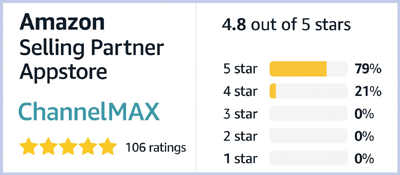
Check ChannelMAX at Amazon Selling Partner Appstore, an application with a 5 star rating.