Pros and Cons of Amazon Prime

Is Amazon Prime Worth It? What Every Seller Should Know
By ChannelMAX Staff Writer
June-2025#05
Amazon Prime is more than just a program to keep customers happy—it’s a powerful system that influences how people search for and buy products on Amazon. With over 200 million Prime members worldwide, this service is changing how shoppers behave. So, sellers need to adapt too.
If you sell on Amazon, it’s important to understand the advantages and disadvantages of Amazon Prime. This will help you make better decisions about how you list your products, deliver them, and promote them.
What Is Amazon Prime?
Amazon Prime is a paid membership program for Amazon customers. People who join this program get special benefits like:
a. Free and fast shipping (1–2 days on most items)
b. Early access to special discounts and sales
c. Free movies, TV shows, and music with Prime Video and Prime Music
d. Easy returns and good customer support
Why Is Amazon Prime Important to Sellers?
If you sell on Amazon, Prime can help your products stand out. Prime-eligible products get a Prime badge, which tells customers:
a. The product will be delivered quickly
b. Amazon is handling the delivery, or the seller follows Amazon’s shipping rules
c. The product has easy returns and support from Amazon
The Prime badge builds customer trust and can lead to more sales, better ranking in search results, and a higher chance of winning the BuyBox.
Sellers can offer Prime in two ways:
1. FBA (Fulfilled by Amazon) – You send your items to Amazon’s warehouse. Amazon handles shipping, returns, and customer service.
2. Seller Fulfilled Prime (SFP) – You keep the items in your own warehouse and ship them yourself, but you must follow Amazon’s fast delivery and service rules.
Pros of Amazon Prime for Sellers
1. Increased Visibility Through the Prime Badge
The Prime badge on your product listing is more than just a tag—it shows customers that your product is trustworthy. Products with the Prime badge are more visible in search results and are automatically seen as more reliable, better in quality, and quicker to deliver.
Why does it help sellers?
a. Many buyers use filters to see only Prime-eligible products. If your product doesn’t have the badge, it may be left out of search results and people may never see it.
b. The Prime badge helps your product show up higher in Amazon search results.
c. Buyers trust the badge, so they’re more likely to click on your product listing. This boosts your click-through rate (CTR) and increases the chances of making more sales.
Example: If you sell a kitchen scale and your listing has the Prime badge, people searching for “digital kitchen scale” may see your product first, even if the price is slightly higher, because Amazon knows Prime items sell better.
Tip for sellers: To get the Prime badge, most sellers use Fulfilled by Amazon (FBA). In FBA, Amazon stores, packs, and ships your product. It saves time and helps increase your chances of winning the BuyBox.
2. Access to a High-Spending Customer Base
Amazon Prime members are not your average shoppers. They pay an annual or monthly fee to be part of Prime. In return, they get fast shipping, exclusive deals, and additional services. Because they pay for Prime, they usually shop more often and spend more money than non-Prime users.
Why does it help sellers?
a. Prime customers are loyal and often come back for repeat purchases.
b. They trust Amazon’s fulfillment and customer service, so they are more likely to try new products or brands without hesitation.
c. Research shows that Prime members spend almost twice as much on Amazon compared to non-members.
What does this mean for you?
If your products are Prime-eligible, you can sell to Amazon’s most valuable customers, people who are ready to buy. These are not window shoppers—they’re serious buyers who want fast and easy shopping.
Example: If you sell skincare products, Prime shoppers may prefer to buy from you repeatedly because they know their order will arrive quickly and can be returned easily if needed.
Tip for sellers: Keep an eye on your product reviews and provide excellent customer service. Prime customers often write detailed reviews, which can make your product more trusted and popular.
3. Opportunity to Join Prime Day and Exclusive Sales
Prime Day, Black Friday, Cyber Monday, and Prime Early Access are some of the biggest shopping events on Amazon. But there’s one rule—only Prime-eligible products are allowed to participate in these sales.
Why does it help sellers?
a. Millions of Prime members actively shop during these events.
b. The Prime-eligible products are shown more on Amazon's homepage, promotions, and special deal sections.
c. Sellers often see a big increase in sales and traffic during these days, helping them reach new customers quickly.
What does this mean for you?
If your product is part of FBA and has the Prime badge, you can join these events. These sales days are a great opportunity to sell more and clear inventory, promote your brand, and gain new customers fast.
Example: If you sell fitness bands and list your products as Prime-eligible, you can offer a discount on Prime Day. If the product is popular, you might get lots of orders in just a few hours.
Tip for sellers: Always get ready early for big sales. Keep enough stock, optimize your listings with good photos and keywords, and try bundling products to attract more buyers.
4. Faster Shipping = Higher Conversions
One of the biggest reasons people shop on Amazon is because of fast and reliable delivery. With Prime, customers can get their orders in one day, two days, or even the same day, which makes them more likely to buy.
Why does it help sellers?
a. Products that offer faster shipping are more likely to win the BuyBox.
b. Shoppers often leave carts without buying if they see long delivery times. Prime helps eliminate that problem.
c. Fast delivery keeps customers happy and reduces complaints or returns.
What does this mean for you?
If you use FBA (Fulfillment by Amazon) and make your product Prime-eligible, Amazon promises fast delivery for you. They handle everything—from storage to shipping. When buyers see “Get it by tomorrow,” they often click Buy Now without hesitation.
Example: Let’s say you sell baby bottles. A parent shopping late at night may choose your Prime product over another one that takes longer to arrive, even if your price is a bit higher, just to get it faster.
Tip for sellers: Use tools like ChannelMAX to monitor competitor pricing and make sure your fast-shipping Prime product is also competitively priced. Fast delivery + smart pricing = higher conversions.
5. Streamlined Operations with FBA Support
Most sellers who offer Prime use FBA, a service from Amazon that takes care of storing, packing, shipping, and returns for your products. This helps your items qualify for Prime and reduces your workload.
Why does it help sellers?
a. You don’t need to manage your own warehouse or worry about shipping.
b. Amazon handles customer support and returns on your behalf.
c. You save time and energy, which can be used to focus on growing your business, improving your listings, or launching new products.
What does this mean for you?
Whether you're a small business or an experienced seller, FBA helps you grow faster. You don’t need a big team or your own warehouse—just send your products to Amazon, and they handle the rest.
Example: Let’s say you sell phone accessories and suddenly get 500 orders during a big sale. With FBA, Amazon ships all the orders for you, quickly and correctly, while you can focus on other parts of your business.
Tip for sellers: Check your FBA fees and inventory regularly. While FBA saves time, keeping an eye on storage limits and slow-selling products will help you save money and run things smoothly.
6. Better Chances to Win the BuyBox
The BuyBox is the area on an Amazon product detail page where shoppers begin the purchasing process by clicking “Add to Cart” or “Buy Now.” Around 80–90% of sales happen through this box.
Why does it help sellers?
a. Prime-eligible listings get priority for the BuyBox, especially if your price is good and you have a strong seller record.
b. If you win the BuyBox, more people see your offer, click on it, and buy from you.
c. Shoppers trust the BuyBox, so they’re more likely to buy from sellers shown there.
What does this mean for you?
If you use Prime, your chances of being featured in the BuyBox increase significantly. This gives you a direct advantage over competitors without Prime, even if you both sell the same product.
Example: Let’s say, if 10 sellers are selling the same phone case, but only 2 of them have Prime. Those 2 are much more likely to win the BuyBox and most of the sales.
Tip for sellers: Use a repricing tool like ChannelMAX to stay competitive. It changes your prices automatically to help you win the BuyBox more often, without cutting your profit too much.
Cons of Amazon Prime for Sellers
1. FBA Costs Can Reduce Profit Margins
Using Fulfillment by Amazon (FBA) gives your products the Prime badge, but it’s not free. Amazon charges you for storing, packing, and shipping your items—these are called FBA fees. These fees can reduce your profits, especially for lower-priced or bulky items.
Why does this matter to sellers?
a. FBA fees include storage charges (monthly and long-term) and additional charges for oversized or slow-moving items.
b. You also pay fulfillment fees (per unit) for packing and shipping.
c. For products with low margins, these fees can make you earn very little, or even lose money.
d. You might have to increase your price to cover costs, which could make your product less competitive.
Example: Say you sell a phone case for $12. If Amazon charges $4 for fulfillment and $1 for storage, you’ve already spent $5, which is almost half the price, before paying for ads or Amazon’s selling fee.
Tip for sellers:
a. Use Amazon’s FBA calculator to estimate costs before listing products.
b. Consider using a repricing tool, such as ChannelMAX, to optimize your pricing strategy and maintain profitability.
c. Keep an eye on your inventory to avoid paying extra for long-term storage.
2. Stricter Performance Standards
When you sell with Amazon Prime, you must follow stricter rules, especially if you ship the orders yourself (using Seller Fulfilled Prime). Even if you use FBA (Fulfilled by Amazon), it’s very important to keep customers happy because Prime buyers expect fast and smooth service.
Why does this matter to sellers?
a. Amazon checks your order defect rate, late shipping rate, and cancellation rate very closely.
b. If your performance is poor, you can lose your Prime badge, your account may be suspended, or your products may get less visibility.
c. Prime shoppers expect fast delivery, proper product details, and great service—even small mistakes can lead to bad reviews.
Example: If a customer chooses one-day delivery but gets the item late or damaged, they may leave a bad review. This can lower your product’s ranking and hurt your chances of winning the BuyBox.
Tip for sellers:
a. Make sure product details are correct to avoid returns or complaints.
b. Check customer reviews and feedback often.
c. Use Amazon’s reports and tools to track your performance metrics.
d. Try automation tools to stay competitive without compromising service quality.
3. Less Control Over Branding and Packaging
When you use Amazon FBA to offer Prime, Amazon handles the packing and shipping. This is fast and reliable, but you can’t control how your product looks when it reaches the customer.
Why does this matter to sellers?
a. You can’t include custom packaging, inserts, or thank-you notes in FBA orders.
b. All products are shipped in Amazon-branded boxes, so customers don’t see your brand clearly.
c. You lose the chance to create a unique unboxing experience or promote your website and social pages.
Example: If you sell handmade soaps and want to include a coupon or a note about your brand in the box, Amazon FBA won’t allow it. Your soap might look the same as others, and customers may not remember your brand.
Tip for sellers:
a. Use strong product photos and A+ content on your Amazon listing to tell your brand story.
b. Send follow-up emails through Amazon to thank customers and ask for reviews.
c. For some products, you can use FBM (Fulfilled by Merchant) if you want full control over branding.
Also Read: Mastering Amazon A+ Content: Guidelines for Creating High-Impact Product
4. Increased Competition Among Prime Sellers
Getting the Prime badge helps you reach more customers, but it also means you're competing directly with other top sellers who also use FBA and offer low prices.
Why does this matter to sellers?
a. Other Prime sellers might sell the same or even similar products, often at more affordable prices.
b. You may find yourself in a pricing war, which can lower your profit.
c. Competing with big brands or sellers with many reviews can make it harder for your product to get noticed.
Example: If you're selling phone chargers and there are 15 similar Prime listings, buyers may choose the cheapest one or the one with the most reviews, even if your product is high quality.
Tip for sellers:
a. Use a smart repricing tool like ChannelMAX to stay competitive without dropping your price too low.
b. Make your product stand out with better pictures, strong bullet points, and good branding.
c. Run Amazon ads to get more visibility and collect reviews, especially for new products.
5. Higher Return Rates
Amazon Prime offers a fast and easy return policy, which customers love. But for sellers, it can be a problem. Since Prime members know they can return items easily, they’re more likely to return products, even for small reasons.
Why does this matter to sellers?
a. More returns mean more costs (like return shipping and handling).
b. Products returned in used or damaged condition may not be resellable.
c. High return rates can harm your seller account health, especially if returns come with complaints.
Example: If you sell clothes like T-shirts or shoes, buyers might order different sizes or colors, try them on, and return the ones they don’t like. This might increase your sales at first, but it also creates more returns and extra issues.
Tip for sellers:
a. Write clear and accurate product descriptions so customers know what they’re getting.
b. Use high-quality images and accurate size charts for products like clothing.
c. Find out why people return your items and improve listings based on customer feedback.
d. For expensive or easily damaged products, consider FBM (Fulfilled by Merchant) with stricter return policies.
6. Harder for FBM Sellers to Compete
If you’re fulfilling orders yourself through FBM (Fulfilled by Merchant), it can be hard to compete with sellers who use Amazon Prime (FBA). Many customers filter for “Prime-eligible” products, so your product listing may not even show up unless they remove that filter.
Why does this matter to sellers?
a. Non-Prime listings have lower visibility and may not appear in search results by default.
b. Prime items are more visible, and customers often choose Prime products for fast shipping and easy returns.
c. Even if your product is cheaper, buyers may still choose Prime items for the convenience.
Example: Let's say you're selling office supplies and using FBM. But another seller offers the same item through FBA with Prime. If their shipping is faster and the price is close to yours, customers will likely buy from them instead.
Tip for sellers:
a. Try to offer fast and free shipping and excellent customer service to compete.
b. Maintain a strong seller rating so buyers trust you.
c. Think about using FBA or joining Seller Fulfilled Prime (though it has strict rules).
d. Sell on your own website or other platforms if profits are low on Amazon.
How Amazon Sellers Can Use Prime Strategically?
Amazon Prime has many benefits, but you need to use it wisely to grow your business in the long term. With the right plan, sellers can get more sales and better visibility and avoid common problems. Here’s how to make the best use of Prime:
1. Pick the Right Products for Prime
Not every product is good for FBA or Prime. Try to choose items that are:
a. Light and easy to ship
b. In high demand all year
c. Priced high enough to cover Amazon FBA fees
d. Avoid oversized or low-profit items unless you're sure they will sell well in large numbers.
2. Monitor Your Profits Closely
Use tools and spreadsheets to track all your costs. These costs include FBA fees, referral fees, returns, and advertising. Calculate your true profit per unit regularly.
a. Use Amazon’s FBA calculator before enrolling a product to Prime.
b. Adjust pricing as needed using smart repricers like ChannelMAX.
3. Start with FBA, Try FBM Later
FBA is a great way to get Prime benefits, especially if you're new seller. Once you grow, try FBM (Fulfilled by Merchant) for products where you can offer fast and reliable shipping yourself and save on fees.
4. Make Your Listings Better
Good product listings help reduce returns and increase sales. Make sure your listings have:
a. Clear titles with important keywords
b. High-quality images that zoom
c. Honest descriptions and bullet points
5. Monitor Your Inventory Closely
Running out of stock can make you lose the BuyBox or Prime eligibility. But too much stock means high storage fees.
a. Use past sales data to predict future demand
b. Set alerts to restock on time
c. Use tools for repricing and inventory management to manage stock well.
6. Use Prime to Build Trust
The Prime badge is trusted by millions of Amazon shoppers. When shoppers see it, they expect fast delivery and trustworthy service. This trust can help you get more clicks and sales.
a. Highlight the Prime badge in your ads and product images
b. Use it to promote your top-rated and best-selling products
c. Mention "Prime eligible" in your promotions outside of Amazon (like social media or emails)
Prime is more than just fast shipping, it’s a way to grow your business. If you use it right, you can sell more, win the BuyBox, and succeed long term on Amazon.
Conclusion
Amazon Prime can help sellers in a great way. It gives your products more visibility, lets you reach loyal customers, and improves your chances of winning the BuyBox.
But there are also some challenges, like FBA fees, more product returns, and strong competition. To succeed, sellers need to be smart. Pick the right products for Prime, keep an eye on your profits, and use good tools to manage your prices and inventory. If you use Prime the right way, it can help your business grow and build trust on Amazon.
Whether you are just starting or growing your business, knowing both the advantages and disadvantages of Prime can help you choose what’s best for you.
Also Read: Is Fulfillment by Amazon (FBA) Worth It? A Comprehensive Guide for Sellers
Disclaimer:
Amazon is the registered trademark of the e-commerce brand.
About ChannelMAX.NET:
ChannelMAX offers Amazon Repricer that runs on the latest AI Repricing agents to do Amazon Pricing Management or Amazon Repricing. Based on Amazon SP API, the repricing engine or repricer runs 24/7 and efficiently manages Amazon prices to maximize your BuyBox with profit optimization. Established in 2005, ChannelMAX has been integrated with Amazon technology since 2007, helping thousands of third-party sellers on various eCommerce platforms. Some of the eCommerce platforms, aka marketplaces, supported by ChannelMAX.NET, are Amazon, Walmart, eBay, and Shopify. Some of ChannelMAX key offerings include ChannelMAX Amazon Repricer, 2ndly, ChannelMAX Amazon FBA Audits and FBA Refunds management, an offering for managing Amazon FBA Refunds Reimbursement management for lost or damaged or misplaced inventory for which Amazon is responsible and for which sellers deserve appropriate credit reimbursement from Amazon. ChannelMAX Services offer Remote (aka Virtual) Full-Time eCommerce Assistant to help 3P sellers run their daytoday business.
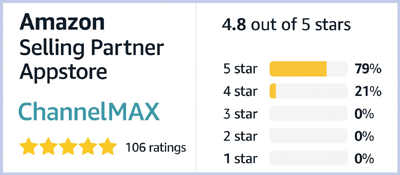
Check ChannelMAX at Amazon Selling Partner Appstore, an application with a 5 star rating.