Amazon Adds High B2B Demand Insights to Help Sellers Identify FBA Opportunities
New Seller Central filter estimates the potential 90-day B2B sales uplift for products moved to Fulfillment by Amazon
By ChannelMAX Staff Writer
July-2026#25
A new inventory insight is giving US sellers a more targeted way to identify products that may attract demand from business buyers. The feature highlights merchant-fulfilled products that Amazon projects could perform better if enrolled in Fulfillment by Amazon. The update, titled “Grow B2B sales with FBA inventory insights,” was posted on Amazon US Seller Central. It could help sellers make more informed fulfillment decisions instead of moving products to FBA based only on consumer sales performance.
High B2B Demand filter added
The FBA Enrollment Opportunities page now includes a High B2B Demand filter. It identifies products that are in demand among Amazon Business customers and may generate additional B2B sales when fulfilled through FBA.
Also Read: Amazon Tightens Product Compliance With Direct Third-Party Testing
Sellers can access the recommendations by following these steps:
1. Sign in to Seller Central.
2. Open the Menu.
3. Select Inventory.
4. Select Opportunities.
5. Choose the High B2B Demand filter.
6. Review the projected 90-day B2B sales uplift displayed for each product.
The projections allow sellers to compare opportunities at the product level. This can help them prioritize SKUs with stronger estimated business demand. However, the projected uplift should be treated as an estimate rather than a guaranteed sales result. Actual performance can depend on price, competition, inventory availability, product eligibility and changes in customer demand.
Why FBA could support B2B sales
Products enrolled in FBA can become eligible for the Prime badge. Prime eligibility may improve delivery convenience for business buyers and help qualifying offers compete for the Featured Offer. Enrollment does not guarantee the Prime badge, Featured Offer placement or additional sales. Products and offers must continue meeting Amazon’s applicable eligibility and performance requirements.
With FBA, sellers send inventory to Amazon’s fulfillment network. Amazon then stores the products and handles picking, packing, delivery, customer service and returns. This can reduce the operational workload for sellers handling frequent or larger business orders. It may be particularly valuable for companies that do not have the infrastructure to manage fast delivery and customer service at scale.
FBA orders receive delivery-metric exemptions
According to the Seller Central update, orders shipped through FBA are exempt from the On-time Delivery Rate and Business Hour Delivery Rate policy requirements. This could reduce delivery-performance pressure for sellers expanding into B2B sales. Amazon controls the delivery process for FBA orders, rather than requiring the seller to meet those delivery standards through a merchant-fulfilled network.
The exemption applies to orders shipped through FBA. Sellers should continue monitoring the relevant performance requirements for orders they fulfill themselves.
Business buyers have different purchasing patterns
Amazon said its business customers purchase 70 percent more per order and return 50 percent less than other customers. These figures suggest that B2B orders may provide larger baskets and fewer returns. However, results will differ by seller, product category and customer segment.
Products preferred by organizations may also differ from those popular with individual consumers. Business customers may prioritize practical supplies, replacement items, workplace equipment, multipacks or products purchased repeatedly and in larger quantities. Separating B2B insights from general consumer performance can therefore reveal opportunities that may not be visible in a seller’s overall sales rankings.
Check profitability before enrolling products
A High B2B Demand recommendation alone should not determine whether a product is moved to FBA. Sellers should first calculate the expected margin after all applicable costs. These may include FBA fulfillment fees, monthly storage charges, inbound transportation costs, inventory placement charges, aged-inventory surcharges and returns-related expenses.
Product size and weight are especially important because they can influence fulfillment and storage costs. Slow-moving or bulky inventory may become expensive to keep in Amazon’s fulfillment network, even when some B2B demand exists. Sellers can use Amazon’s FBA Revenue Calculator to compare estimated costs and margins. They should also review the current US FBA fee information before sending inventory.
Start with a controlled quantity
A practical approach is to test selected High B2B Demand products with a limited initial shipment. Sellers can then measure sales velocity, margin, storage use, return rates and the share of orders coming from business customers. The 90-day projection can serve as a planning reference. It should not automatically be used as the quantity to send.
Sellers should consider current stock, supplier lead times and seasonal demand before deciding how many units to enroll. Maintaining too little inventory could result in missed sales, while sending too much could increase storage costs.
Additional ways to attract business buyers
FBA enrollment can be combined with other Amazon Business features. Where appropriate, sellers can consider business prices and quantity discounts for customers purchasing multiple units. Listings should also provide accurate dimensions, compatibility details, pack quantities, technical information and other specifications that procurement teams may need.
The product price must remain competitive. Fulfillment through FBA may strengthen an offer, but buyers can still compare pricing, delivery speed, seller performance and product information. The High B2B Demand filter gives Amazon US sellers a clearer way to identify products that could benefit from FBA. Its product-level 90-day estimates can support better inventory and fulfillment planning.
The strongest opportunities will be products that combine projected business demand with healthy margins, manageable storage costs and reliable replenishment. Sellers who test recommendations carefully and track actual results can use the new insight to pursue incremental B2B sales without committing excessive inventory.
Also Read: Amazon Unifies Product, Shipment and FBA Inventory Tools in Seller Central
Disclaimer:
Amazon is the registered trademark of the company.
About ChannelMAX.NET:
ChannelMAX offers Amazon Repricer that runs on the latest AI Repricing algorithm to do Amazon Pricing Management or Amazon Repricing. Based on Amazon SP API, the repricing engine or repricer runs 24/7 and efficiently manages Amazon prices to maximize your BuyBox with profit optimization. Established in 2005, ChannelMAX has been integrated with Amazon technology since 2007, helping thousands of third-party sellers on various eCommerce platforms. Some of the eCommerce platforms, aka marketplaces, supported by ChannelMAX.NET, are Amazon, Walmart, eBay, and Shopify. Some of ChannelMAX key offerings include ChannelMAX Amazon Repricer, 2ndly, ChannelMAX Amazon FBA Audits and FBA Refunds management, an offering for managing Amazon FBA Refunds Reimbursement management for lost or damaged or misplaced inventory for which Amazon is responsible and for which sellers deserve appropriate credit reimbursement from Amazon. ChannelMAX Services offer Remote (aka Virtual) Full-Time eCommerce Assistant to help 3P sellers run their daytoday business.
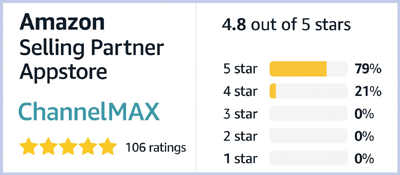
Check ChannelMAX at Amazon Selling Partner Appstore, an application with a 5 star rating.
By ChannelMAX Staff Writer
July-2026#25
A new inventory insight is giving US sellers a more targeted way to identify products that may attract demand from business buyers. The feature highlights merchant-fulfilled products that Amazon projects could perform better if enrolled in Fulfillment by Amazon. The update, titled “Grow B2B sales with FBA inventory insights,” was posted on Amazon US Seller Central. It could help sellers make more informed fulfillment decisions instead of moving products to FBA based only on consumer sales performance.
High B2B Demand filter added
The FBA Enrollment Opportunities page now includes a High B2B Demand filter. It identifies products that are in demand among Amazon Business customers and may generate additional B2B sales when fulfilled through FBA.
Also Read: Amazon Tightens Product Compliance With Direct Third-Party Testing
Sellers can access the recommendations by following these steps:
1. Sign in to Seller Central.
2. Open the Menu.
3. Select Inventory.
4. Select Opportunities.
5. Choose the High B2B Demand filter.
6. Review the projected 90-day B2B sales uplift displayed for each product.
The projections allow sellers to compare opportunities at the product level. This can help them prioritize SKUs with stronger estimated business demand. However, the projected uplift should be treated as an estimate rather than a guaranteed sales result. Actual performance can depend on price, competition, inventory availability, product eligibility and changes in customer demand.
Why FBA could support B2B sales
Products enrolled in FBA can become eligible for the Prime badge. Prime eligibility may improve delivery convenience for business buyers and help qualifying offers compete for the Featured Offer. Enrollment does not guarantee the Prime badge, Featured Offer placement or additional sales. Products and offers must continue meeting Amazon’s applicable eligibility and performance requirements.
With FBA, sellers send inventory to Amazon’s fulfillment network. Amazon then stores the products and handles picking, packing, delivery, customer service and returns. This can reduce the operational workload for sellers handling frequent or larger business orders. It may be particularly valuable for companies that do not have the infrastructure to manage fast delivery and customer service at scale.
FBA orders receive delivery-metric exemptions
According to the Seller Central update, orders shipped through FBA are exempt from the On-time Delivery Rate and Business Hour Delivery Rate policy requirements. This could reduce delivery-performance pressure for sellers expanding into B2B sales. Amazon controls the delivery process for FBA orders, rather than requiring the seller to meet those delivery standards through a merchant-fulfilled network.
The exemption applies to orders shipped through FBA. Sellers should continue monitoring the relevant performance requirements for orders they fulfill themselves.
Business buyers have different purchasing patterns
Amazon said its business customers purchase 70 percent more per order and return 50 percent less than other customers. These figures suggest that B2B orders may provide larger baskets and fewer returns. However, results will differ by seller, product category and customer segment.
Products preferred by organizations may also differ from those popular with individual consumers. Business customers may prioritize practical supplies, replacement items, workplace equipment, multipacks or products purchased repeatedly and in larger quantities. Separating B2B insights from general consumer performance can therefore reveal opportunities that may not be visible in a seller’s overall sales rankings.
Check profitability before enrolling products
A High B2B Demand recommendation alone should not determine whether a product is moved to FBA. Sellers should first calculate the expected margin after all applicable costs. These may include FBA fulfillment fees, monthly storage charges, inbound transportation costs, inventory placement charges, aged-inventory surcharges and returns-related expenses.
Product size and weight are especially important because they can influence fulfillment and storage costs. Slow-moving or bulky inventory may become expensive to keep in Amazon’s fulfillment network, even when some B2B demand exists. Sellers can use Amazon’s FBA Revenue Calculator to compare estimated costs and margins. They should also review the current US FBA fee information before sending inventory.
Start with a controlled quantity
A practical approach is to test selected High B2B Demand products with a limited initial shipment. Sellers can then measure sales velocity, margin, storage use, return rates and the share of orders coming from business customers. The 90-day projection can serve as a planning reference. It should not automatically be used as the quantity to send.
Sellers should consider current stock, supplier lead times and seasonal demand before deciding how many units to enroll. Maintaining too little inventory could result in missed sales, while sending too much could increase storage costs.
Additional ways to attract business buyers
FBA enrollment can be combined with other Amazon Business features. Where appropriate, sellers can consider business prices and quantity discounts for customers purchasing multiple units. Listings should also provide accurate dimensions, compatibility details, pack quantities, technical information and other specifications that procurement teams may need.
The product price must remain competitive. Fulfillment through FBA may strengthen an offer, but buyers can still compare pricing, delivery speed, seller performance and product information. The High B2B Demand filter gives Amazon US sellers a clearer way to identify products that could benefit from FBA. Its product-level 90-day estimates can support better inventory and fulfillment planning.
The strongest opportunities will be products that combine projected business demand with healthy margins, manageable storage costs and reliable replenishment. Sellers who test recommendations carefully and track actual results can use the new insight to pursue incremental B2B sales without committing excessive inventory.
Also Read: Amazon Unifies Product, Shipment and FBA Inventory Tools in Seller Central
Disclaimer:
Amazon is the registered trademark of the company.
About ChannelMAX.NET:
ChannelMAX offers Amazon Repricer that runs on the latest AI Repricing algorithm to do Amazon Pricing Management or Amazon Repricing. Based on Amazon SP API, the repricing engine or repricer runs 24/7 and efficiently manages Amazon prices to maximize your BuyBox with profit optimization. Established in 2005, ChannelMAX has been integrated with Amazon technology since 2007, helping thousands of third-party sellers on various eCommerce platforms. Some of the eCommerce platforms, aka marketplaces, supported by ChannelMAX.NET, are Amazon, Walmart, eBay, and Shopify. Some of ChannelMAX key offerings include ChannelMAX Amazon Repricer, 2ndly, ChannelMAX Amazon FBA Audits and FBA Refunds management, an offering for managing Amazon FBA Refunds Reimbursement management for lost or damaged or misplaced inventory for which Amazon is responsible and for which sellers deserve appropriate credit reimbursement from Amazon. ChannelMAX Services offer Remote (aka Virtual) Full-Time eCommerce Assistant to help 3P sellers run their daytoday business.
Check ChannelMAX at Amazon Selling Partner Appstore, an application with a 5 star rating.