Amazon Expands FBA Export to More Than 175 New Destinations, Opening Wider Global Reach for US Sellers
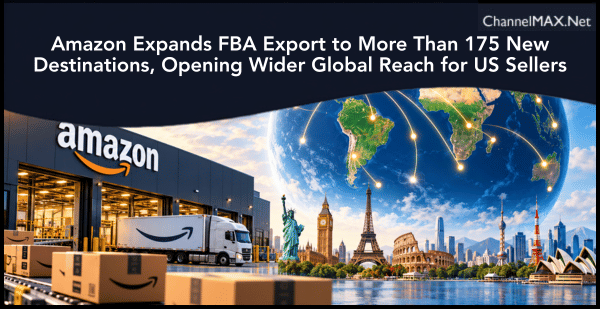
Eligible FBA products can reach millions more international shoppers through Amazon.com, while Amazon handles fulfillment, customs clearance and delivery without additional FBA Export fulfillment costs for sellers
By ChannelMAX Staff Writer
Sept-2026#14
US-based Amazon sellers using Fulfillment by Amazon are getting a significantly wider international reach without necessarily having to move inventory into overseas fulfillment centers. Amazon is expanding FBA Export to more than 175 new destinations, potentially putting eligible products in front of millions of additional international customers who shop on Amazon.com.
The update was posted on Amazon Seller Central under News and Announcements. Amazon said the changes will be processed across affected seller accounts over the next 30 days.
More Destinations Being Added Automatically
Sellers who already participate in FBA Export should pay particular attention to their account settings. According to the Seller Central announcement, the newly supported destinations will be automatically enabled for existing FBA Export participants over an eight-day period, except where sellers have previously disabled particular destinations or products.
Destinations that a seller has already disabled will remain under the Restricted countries list. Sellers can change these restrictions through their Export Settings if they later decide to make products available in those markets. Amazon said sellers who are not currently using FBA Export will not see their account settings changed as part of the expansion.
How FBA Export Works
FBA Export allows international customers to purchase eligible products from Amazon.com even though the seller’s inventory remains in Amazon’s US fulfillment network. Amazon identifies products that qualify for the program and handles fulfillment of eligible international orders. Amazon also handles applicable import-duty and customs-clearance processes and delivers the order to the international buyer. International customers pay the international shipping costs and customs duties. Amazon says there is no additional cost to sellers for fulfilling FBA Export orders.
At checkout, international customers can see a price that accounts for international shipping and an import fee before completing an eligible purchase.
Also Read: Amazon Unveils Smarter AI Seller Assistant, Free Amazon Quick Plus Subscription at Accelerate 2026
Why the Expansion Matters for Amazon Sellers
The biggest potential advantage is access to additional demand from outside the United States without requiring sellers to establish a separate inventory position in each destination. For sellers with products already stored in US FBA fulfillment centers, the expansion could create incremental international sales opportunities using the same Amazon.com listings and inventory.
It may also provide sellers with a relatively low-friction way to observe international demand before considering a more substantial expansion through Amazon Global Selling or inventory placement in another country. However, FBA Export should not be confused with selling directly through another Amazon marketplace. FBA Export makes eligible US inventory available to international customers shopping on Amazon.com. Selling through another Amazon store, such as an overseas marketplace, involves a different international-selling setup.
Not Every FBA Product Is Exportable
Sellers should also understand that having an FBA listing does not automatically make every product eligible for international export. Amazon determines FBA Export eligibility based on several factors. Products can be excluded because of US export restrictions, destination-country import rules, transportation restrictions or other compliance requirements.
Amazon’s FBA Export documentation identifies categories that can face restrictions, including weapons and imitation weapons, plants and seeds, certain animal products, surveillance equipment and laser-related products. Heavy or bulky products, dangerous goods and certain lithium-battery products can also face transportation restrictions. Amazon also states that sellers are responsible for ensuring their FBA Export-eligible products can legally be exported and imported into participating destinations and comply with applicable laws.
Check Your Exportable Inventory
Sellers can use Amazon’s Exportable Inventory report to identify which products in their FBA inventory currently qualify for FBA Export. This report is worth checking periodically because Amazon reviews product eligibility, and an ASIN that is not currently exportable may become eligible later. Amazon says newly submitted ASINs are processed for export eligibility periodically. Complete product descriptions and bullet points can help Amazon process ASINs for eligibility review.
Sellers Can Control Countries and Products
The expansion does not mean sellers must make every eligible product available everywhere. Amazon allows sellers to exclude particular countries, exclude specific products entirely, or prevent selected products from being exported to particular countries. These controls can be useful for brands with territorial distribution agreements, licensing restrictions or other commercial limitations.
Sellers with distribution agreements should review those agreements before allowing newly added destinations. Amazon specifically notes that sellers concerned about overseas distribution restrictions can opt out of FBA Export or restrict individual countries and products.
What Sellers Should Do Now
Existing FBA Export sellers should review their Export Settings during the rollout rather than assuming their previous geographic configuration will remain unchanged.
In particular, sellers should:
1. Check FBA Export status under Fulfillment by Amazon settings in Seller Central.
2. Review the Restricted countries list and determine whether previously blocked destinations should remain restricted.
3. Check the Exportable Inventory report to identify eligible ASINs.
4. Review contractual, regulatory and product-specific restrictions before enabling additional countries.
5. Monitor international FBA Export orders after the expansion to identify products and destinations generating new demand.
Amazon provides an international-orders sales report that can help with this analysis. Sellers can access Amazon Fulfilled Shipments under the Fulfillment reports and filter shipments by destination country to identify FBA Export orders.
A New Opportunity to Test International Demand
For Amazon.com FBA sellers, the expansion could be particularly useful as a demand-testing tool. A seller may be able to reach more overseas buyers without immediately establishing local FBA inventory in each international marketplace. The opportunity will vary by product because export eligibility, local regulations, shipping economics and customer demand differ across destinations. Sellers should therefore monitor performance rather than treating all newly enabled countries as equally valuable.
With more than 175 new destinations being added, the latest FBA Export expansion substantially widens the potential international audience for eligible Amazon.com inventory. For sellers already enrolled, the immediate priority is to review Export Settings, confirm which countries and products are enabled, and monitor international orders as the rollout reaches their accounts.
Sellers who use the expansion strategically may also gain useful data about where their products attract overseas demand. That information can help inform future decisions about international listings, localized inventory and broader global expansion.
Also Read: Amazon Expands AGL Shipping to More Battery Electronics and Mechanical Devices
Disclaimer:
Amazon is the registered trademark of the e-commerce brand.
About ChannelMAX.NET:
ChannelMAX offers Amazon Repricer that runs on the latest AI Repricing algorithm to do Amazon Pricing Management or Amazon Repricing. Based on Amazon SP API, the repricing engine or repricer runs 24/7 and efficiently manages Amazon prices to maximize your BuyBox with profit optimization. Established in 2005, ChannelMAX has been integrated with Amazon technology since 2007, helping thousands of third-party sellers on various eCommerce platforms. Some of the eCommerce platforms, aka marketplaces, supported by ChannelMAX.NET, are Amazon, Walmart, eBay, and Shopify. Some of ChannelMAX key offerings include ChannelMAX Amazon Repricer, 2ndly, ChannelMAX Amazon FBA Audits and FBA Refunds management, an offering for managing Amazon FBA Refunds Reimbursement management for lost or damaged or misplaced inventory for which Amazon is responsible and for which sellers deserve appropriate credit reimbursement from Amazon. ChannelMAX Services offer Remote (aka Virtual) Full-Time eCommerce Assistant to help 3P sellers run their daytoday business.
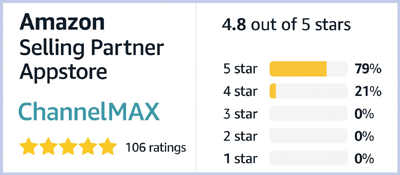
Check ChannelMAX at Amazon Selling Partner Appstore, an application with a 5 star rating.
By ChannelMAX Staff Writer
Sept-2026#14
US-based Amazon sellers using Fulfillment by Amazon are getting a significantly wider international reach without necessarily having to move inventory into overseas fulfillment centers. Amazon is expanding FBA Export to more than 175 new destinations, potentially putting eligible products in front of millions of additional international customers who shop on Amazon.com.
The update was posted on Amazon Seller Central under News and Announcements. Amazon said the changes will be processed across affected seller accounts over the next 30 days.
More Destinations Being Added Automatically
Sellers who already participate in FBA Export should pay particular attention to their account settings. According to the Seller Central announcement, the newly supported destinations will be automatically enabled for existing FBA Export participants over an eight-day period, except where sellers have previously disabled particular destinations or products.
Destinations that a seller has already disabled will remain under the Restricted countries list. Sellers can change these restrictions through their Export Settings if they later decide to make products available in those markets. Amazon said sellers who are not currently using FBA Export will not see their account settings changed as part of the expansion.
How FBA Export Works
FBA Export allows international customers to purchase eligible products from Amazon.com even though the seller’s inventory remains in Amazon’s US fulfillment network. Amazon identifies products that qualify for the program and handles fulfillment of eligible international orders. Amazon also handles applicable import-duty and customs-clearance processes and delivers the order to the international buyer. International customers pay the international shipping costs and customs duties. Amazon says there is no additional cost to sellers for fulfilling FBA Export orders.
At checkout, international customers can see a price that accounts for international shipping and an import fee before completing an eligible purchase.
Also Read: Amazon Unveils Smarter AI Seller Assistant, Free Amazon Quick Plus Subscription at Accelerate 2026
Why the Expansion Matters for Amazon Sellers
The biggest potential advantage is access to additional demand from outside the United States without requiring sellers to establish a separate inventory position in each destination. For sellers with products already stored in US FBA fulfillment centers, the expansion could create incremental international sales opportunities using the same Amazon.com listings and inventory.
It may also provide sellers with a relatively low-friction way to observe international demand before considering a more substantial expansion through Amazon Global Selling or inventory placement in another country. However, FBA Export should not be confused with selling directly through another Amazon marketplace. FBA Export makes eligible US inventory available to international customers shopping on Amazon.com. Selling through another Amazon store, such as an overseas marketplace, involves a different international-selling setup.
Not Every FBA Product Is Exportable
Sellers should also understand that having an FBA listing does not automatically make every product eligible for international export. Amazon determines FBA Export eligibility based on several factors. Products can be excluded because of US export restrictions, destination-country import rules, transportation restrictions or other compliance requirements.
Amazon’s FBA Export documentation identifies categories that can face restrictions, including weapons and imitation weapons, plants and seeds, certain animal products, surveillance equipment and laser-related products. Heavy or bulky products, dangerous goods and certain lithium-battery products can also face transportation restrictions. Amazon also states that sellers are responsible for ensuring their FBA Export-eligible products can legally be exported and imported into participating destinations and comply with applicable laws.
Check Your Exportable Inventory
Sellers can use Amazon’s Exportable Inventory report to identify which products in their FBA inventory currently qualify for FBA Export. This report is worth checking periodically because Amazon reviews product eligibility, and an ASIN that is not currently exportable may become eligible later. Amazon says newly submitted ASINs are processed for export eligibility periodically. Complete product descriptions and bullet points can help Amazon process ASINs for eligibility review.
Sellers Can Control Countries and Products
The expansion does not mean sellers must make every eligible product available everywhere. Amazon allows sellers to exclude particular countries, exclude specific products entirely, or prevent selected products from being exported to particular countries. These controls can be useful for brands with territorial distribution agreements, licensing restrictions or other commercial limitations.
Sellers with distribution agreements should review those agreements before allowing newly added destinations. Amazon specifically notes that sellers concerned about overseas distribution restrictions can opt out of FBA Export or restrict individual countries and products.
What Sellers Should Do Now
Existing FBA Export sellers should review their Export Settings during the rollout rather than assuming their previous geographic configuration will remain unchanged.
In particular, sellers should:
1. Check FBA Export status under Fulfillment by Amazon settings in Seller Central.
2. Review the Restricted countries list and determine whether previously blocked destinations should remain restricted.
3. Check the Exportable Inventory report to identify eligible ASINs.
4. Review contractual, regulatory and product-specific restrictions before enabling additional countries.
5. Monitor international FBA Export orders after the expansion to identify products and destinations generating new demand.
Amazon provides an international-orders sales report that can help with this analysis. Sellers can access Amazon Fulfilled Shipments under the Fulfillment reports and filter shipments by destination country to identify FBA Export orders.
A New Opportunity to Test International Demand
For Amazon.com FBA sellers, the expansion could be particularly useful as a demand-testing tool. A seller may be able to reach more overseas buyers without immediately establishing local FBA inventory in each international marketplace. The opportunity will vary by product because export eligibility, local regulations, shipping economics and customer demand differ across destinations. Sellers should therefore monitor performance rather than treating all newly enabled countries as equally valuable.
With more than 175 new destinations being added, the latest FBA Export expansion substantially widens the potential international audience for eligible Amazon.com inventory. For sellers already enrolled, the immediate priority is to review Export Settings, confirm which countries and products are enabled, and monitor international orders as the rollout reaches their accounts.
Sellers who use the expansion strategically may also gain useful data about where their products attract overseas demand. That information can help inform future decisions about international listings, localized inventory and broader global expansion.
Also Read: Amazon Expands AGL Shipping to More Battery Electronics and Mechanical Devices
Disclaimer:
Amazon is the registered trademark of the e-commerce brand.
About ChannelMAX.NET:
ChannelMAX offers Amazon Repricer that runs on the latest AI Repricing algorithm to do Amazon Pricing Management or Amazon Repricing. Based on Amazon SP API, the repricing engine or repricer runs 24/7 and efficiently manages Amazon prices to maximize your BuyBox with profit optimization. Established in 2005, ChannelMAX has been integrated with Amazon technology since 2007, helping thousands of third-party sellers on various eCommerce platforms. Some of the eCommerce platforms, aka marketplaces, supported by ChannelMAX.NET, are Amazon, Walmart, eBay, and Shopify. Some of ChannelMAX key offerings include ChannelMAX Amazon Repricer, 2ndly, ChannelMAX Amazon FBA Audits and FBA Refunds management, an offering for managing Amazon FBA Refunds Reimbursement management for lost or damaged or misplaced inventory for which Amazon is responsible and for which sellers deserve appropriate credit reimbursement from Amazon. ChannelMAX Services offer Remote (aka Virtual) Full-Time eCommerce Assistant to help 3P sellers run their daytoday business.
Check ChannelMAX at Amazon Selling Partner Appstore, an application with a 5 star rating.