Amazon prompts sellers to review 2026 shipping choices across FBA, AWD, SFP, FBM and more
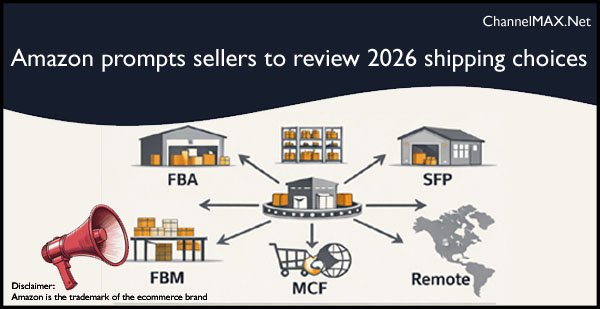
Seller Central note highlights six fulfillment paths and points sellers to Supply Chain by Amazon for end to end inventory, storage and delivery planning
By ChannelMAX Staff Writer
Jan-2026#10
Amazon has issued a reminder to sellers to review their fulfillment setup for 2026, listing multiple ways to store inventory and deliver orders depending on margin, volume, and operational capacity. The announcement was made on Seller Central, under a post titled “Explore your shipping options for 2026,” and it directs sellers to learn more via Supply Chain by Amazon. The announcement was shared on Amazon Seller Central, where Amazon encouraged sellers to reassess their existing fulfillment setup during 2026. The update titled “Explore your shipping options for 2026” is intended to help sellers make informed operational decisions throughout the year rather than announcing any immediate policy change.
Also Read: Amazon mandates prepaid return labels for all US sellers from February 8
Fulfillment by Amazon remains central in 2026
Amazon reiterated that Fulfillment by Amazon continues to be a key option for sellers aiming to meet Prime customer expectations in 2026. By using FBA, sellers can rely on Amazon’s global fulfillment network for storage, packing, shipping, customer service, and returns, while offering free two-day Prime delivery that can improve visibility and sales performance.
Amazon Warehousing and Distribution for multi-channel sellers
The 2026 update also highlights Amazon Warehousing and Distribution as a low-cost inventory storage and distribution solution. It allows sellers to distribute inventory not only to Amazon customers but also to non-Amazon sales channels, supporting broader omnichannel strategies.
Seller Fulfilled Prime for operational control
Amazon noted that Seller Fulfilled Prime remains relevant in 2026 for sellers who want to manage fulfillment themselves while still offering Prime shipping. Listings carrying the Prime badge can build shopper trust, provided sellers consistently meet Amazon’s delivery performance standards.
FBM continues to offer flexibility
Fulfilled by Merchant was positioned as a suitable option for sellers seeking full control over inventory, packaging, and shipping. In 2026, this model remains especially useful for niche products, customized orders, or sellers with their own logistics networks.
Multi-Channel Fulfillment supports off-Amazon sales
Amazon also reminded sellers that Multi-Channel Fulfillment allows them to use FBA inventory to fulfill customer orders from other platforms, including their own websites. This helps sellers streamline inventory management while expanding sales beyond Amazon.
Remote Fulfillment enables cross-border expansion
The update once again points to Remote Fulfillment with FBA as a way for US-based sellers to reach customers in Canada, Mexico, and Brazil during 2026 using their US inventory. Eligible products receive Prime shipping in those markets, with returns routed back to the United States.
What sellers should do next for 2026 planning
Here are practical steps sellers can take after this Seller Central reminder.1
1. Decide what you want to optimize
o If your priority is speed and reduced daily workload, FBA may fit.
o If storage costs and keeping FBA stocked are the pain points, AWD may help.
o If you can hit strict shipping metrics from your own warehouse, consider SFP.
o If you sell on multiple channels, review MCF for off-Amazon orders.
2. Check program eligibility before committing
o SFP requires prequalification and a trial.
o Remote Fulfillment has specific account and program prerequisites, including a Professional selling plan and being enrolled in FBA in the US with relevant settings enabled.
3. Compare total cost, not just shipping cost
Include storage, fulfillment fees, return handling, and operational overhead. Amazon provides tools for estimating fees and comparing fulfillment methods on its selling resources, and sellers should use those calculators before switching models.
Amazon’s Seller Central update is a timely prompt for sellers to start 2026 with a deliberate fulfillment strategy rather than default habits. By mapping each product to the right option, or mixing programs like AWD with FBA, or FBA with MCF, sellers can better manage costs, maintain in-stock rates, and meet delivery expectations across Amazon and beyond.
Also Read: How to Reprice on Amazon Without Losing Money
Disclaimer:
Amazon is the registered trademark of the e-commerce brand.
About ChannelMAX.NET:
ChannelMAX offers Amazon Repricer that runs on the latest AI Repricing algorithm to do Amazon Pricing Management or Amazon Repricing. Based on Amazon SP API, the repricing engine or repricer runs 24/7 and efficiently manages Amazon prices to maximize your BuyBox with profit optimization. Established in 2005, ChannelMAX has been integrated with Amazon technology since 2007, helping thousands of third-party sellers on various eCommerce platforms. Some of the eCommerce platforms, aka marketplaces, supported by ChannelMAX.NET, are Amazon, Walmart, eBay, and Shopify. Some of ChannelMAX key offerings include ChannelMAX Amazon Repricer, 2ndly, ChannelMAX Amazon FBA Audits and FBA Refunds management, an offering for managing Amazon FBA Refunds Reimbursement management for lost or damaged or misplaced inventory for which Amazon is responsible and for which sellers deserve appropriate credit reimbursement from Amazon. ChannelMAX Services offer Remote (aka Virtual) Full-Time eCommerce Assistant to help 3P sellers run their daytoday business.
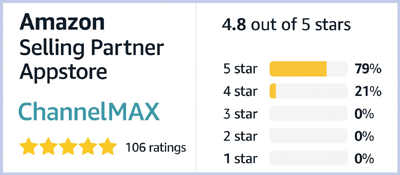
Check ChannelMAX at Amazon Selling Partner Appstore, an application with a 5 star rating.
By ChannelMAX Staff Writer
Jan-2026#10
Amazon has issued a reminder to sellers to review their fulfillment setup for 2026, listing multiple ways to store inventory and deliver orders depending on margin, volume, and operational capacity. The announcement was made on Seller Central, under a post titled “Explore your shipping options for 2026,” and it directs sellers to learn more via Supply Chain by Amazon. The announcement was shared on Amazon Seller Central, where Amazon encouraged sellers to reassess their existing fulfillment setup during 2026. The update titled “Explore your shipping options for 2026” is intended to help sellers make informed operational decisions throughout the year rather than announcing any immediate policy change.
Also Read: Amazon mandates prepaid return labels for all US sellers from February 8
Fulfillment by Amazon remains central in 2026
Amazon reiterated that Fulfillment by Amazon continues to be a key option for sellers aiming to meet Prime customer expectations in 2026. By using FBA, sellers can rely on Amazon’s global fulfillment network for storage, packing, shipping, customer service, and returns, while offering free two-day Prime delivery that can improve visibility and sales performance.
Amazon Warehousing and Distribution for multi-channel sellers
The 2026 update also highlights Amazon Warehousing and Distribution as a low-cost inventory storage and distribution solution. It allows sellers to distribute inventory not only to Amazon customers but also to non-Amazon sales channels, supporting broader omnichannel strategies.
Seller Fulfilled Prime for operational control
Amazon noted that Seller Fulfilled Prime remains relevant in 2026 for sellers who want to manage fulfillment themselves while still offering Prime shipping. Listings carrying the Prime badge can build shopper trust, provided sellers consistently meet Amazon’s delivery performance standards.
FBM continues to offer flexibility
Fulfilled by Merchant was positioned as a suitable option for sellers seeking full control over inventory, packaging, and shipping. In 2026, this model remains especially useful for niche products, customized orders, or sellers with their own logistics networks.
Multi-Channel Fulfillment supports off-Amazon sales
Amazon also reminded sellers that Multi-Channel Fulfillment allows them to use FBA inventory to fulfill customer orders from other platforms, including their own websites. This helps sellers streamline inventory management while expanding sales beyond Amazon.
Remote Fulfillment enables cross-border expansion
The update once again points to Remote Fulfillment with FBA as a way for US-based sellers to reach customers in Canada, Mexico, and Brazil during 2026 using their US inventory. Eligible products receive Prime shipping in those markets, with returns routed back to the United States.
What sellers should do next for 2026 planning
Here are practical steps sellers can take after this Seller Central reminder.1
1. Decide what you want to optimize
o If your priority is speed and reduced daily workload, FBA may fit.
o If storage costs and keeping FBA stocked are the pain points, AWD may help.
o If you can hit strict shipping metrics from your own warehouse, consider SFP.
o If you sell on multiple channels, review MCF for off-Amazon orders.
2. Check program eligibility before committing
o SFP requires prequalification and a trial.
o Remote Fulfillment has specific account and program prerequisites, including a Professional selling plan and being enrolled in FBA in the US with relevant settings enabled.
3. Compare total cost, not just shipping cost
Include storage, fulfillment fees, return handling, and operational overhead. Amazon provides tools for estimating fees and comparing fulfillment methods on its selling resources, and sellers should use those calculators before switching models.
Amazon’s Seller Central update is a timely prompt for sellers to start 2026 with a deliberate fulfillment strategy rather than default habits. By mapping each product to the right option, or mixing programs like AWD with FBA, or FBA with MCF, sellers can better manage costs, maintain in-stock rates, and meet delivery expectations across Amazon and beyond.
Also Read: How to Reprice on Amazon Without Losing Money
Disclaimer:
Amazon is the registered trademark of the e-commerce brand.
About ChannelMAX.NET:
ChannelMAX offers Amazon Repricer that runs on the latest AI Repricing algorithm to do Amazon Pricing Management or Amazon Repricing. Based on Amazon SP API, the repricing engine or repricer runs 24/7 and efficiently manages Amazon prices to maximize your BuyBox with profit optimization. Established in 2005, ChannelMAX has been integrated with Amazon technology since 2007, helping thousands of third-party sellers on various eCommerce platforms. Some of the eCommerce platforms, aka marketplaces, supported by ChannelMAX.NET, are Amazon, Walmart, eBay, and Shopify. Some of ChannelMAX key offerings include ChannelMAX Amazon Repricer, 2ndly, ChannelMAX Amazon FBA Audits and FBA Refunds management, an offering for managing Amazon FBA Refunds Reimbursement management for lost or damaged or misplaced inventory for which Amazon is responsible and for which sellers deserve appropriate credit reimbursement from Amazon. ChannelMAX Services offer Remote (aka Virtual) Full-Time eCommerce Assistant to help 3P sellers run their daytoday business.
Check ChannelMAX at Amazon Selling Partner Appstore, an application with a 5 star rating.