How to Reprice on Amazon Without Losing Money
A Practical Pricing Guide for Sellers Who Want to Stay Competitive and Protect Profits
By ChannelMAX Staff Writer
Jan-2026#09
Repricing on Amazon is important, but it can also be risky. Many sellers lose money not because there is too much competition, but because they change prices without a proper plan. Lowering prices again and again just to win the Buy Box can quickly reduce profits and harm the business in the long run.
Smart repricing is not about being the cheapest seller. It is about staying competitive while still making a profit. Sellers need to understand their costs, set price limits, and reprice based on logic instead of fear.
In this article, you will learn how to reprice on Amazon without losing money, common pricing mistakes to avoid, and how to create a safe and long-term repricing strategy.
Understanding Amazon Repricing: What It Really Means
Amazon repricing means adjusting your product prices based on market changes. It is not a one-time action. It is an ongoing process where prices are adjusted to stay competitive and profitable.
Repricing is usually done because of several reasons, like:
a. Changes in competitor prices.
b. Winning or losing the Buy Box.
c. High or low inventory levels.
d. Changes in customer demand.
Many sellers think repricing means lowering prices to beat competitors. This is a common misunderstanding. Being the cheapest seller does not always mean you will get more sales or make more profit. In fact, it often leads to losses.
Repricing is about offering the right price at the right time. The right price is one that attracts buyers, helps you win the Buy Box, and still gives enough profit after deducting Amazon fees, shipping costs, and other expenses.
Smart repricing focuses on balance. It makes sure that:
a. Your prices are competitive, but not too low.
b. Your profit margins are protected.
c. Your Amazon account health remains strong.
d. Your inventory moves at a healthy rate without overstocking or running out.
When done correctly, repricing helps sellers grow steadily. It supports long-term success by keeping profits steady while meeting Amazon’s performance standards.
Why Sellers Lose Money While Repricing 
Many Amazon sellers lose money while repricing because they focus only on having the lowest price. They believe that lowering prices will automatically increase sales or help them win the Buy Box. In reality, this approach often leads to losses and unhealthy competition.
Here are the most common reasons sellers lose money when repricing:
a. Ignoring Amazon referral and FBA fees: Amazon charges referral fees, fulfillment fees, storage fees, and other costs. If these are not included while setting prices, sellers may sell products at a loss without realizing it.
b. Lowering prices without setting a minimum limit: Many sellers reduce prices again and again without setting a minimum price. This can quickly push prices below cost, leaving no profit margin.
c. Competing aggressively with every seller: Not all competitors are the same. Some sellers may be clearing old stock, may have lower costs, different sourcing, or poor account health. Competing with everyone often results in unnecessary price drops.
d. Reacting emotionally to competitor price changes: Constantly changing prices out of fear of losing the Buy Box leads to unstable pricing. Emotional decisions often create price wars and result in poor margins.
e. Not adjusting prices based on inventory: When inventory is low, lowering prices can cause stockouts and missed profit opportunities. When inventory is high, failing to adjust prices properly can increase storage costs.
Without proper rules and controls, repricing is not helpful. Instead of increasing profit, it slowly damages margins, account health, and long-term business stability. Smart sellers use data, limits, and strategy to avoid these costly mistakes.
Also Read: Why Amazon Sellers Lose the Buy Box (And How to Fix It)
Steps to Repricing on Amazon Without Losing Money
Step 1: Calculate Your True Cost Before Repricing
Before you start repricing on Amazon, you must clearly understand how much each product actually costs you. This is the most important step in protecting your profit. If you do not know your true cost, even a small price drop can turn a profitable sale into a loss.
Your true cost is not just the product price. It includes all expenses involved in selling on Amazon, such as:
a. Product manufacturing or sourcing cost: The amount you pay to make or buy the product.
b. Amazon referral fee: Usually around 15% of the selling price, depending on the category.
c. FBA fulfillment fees or FBM shipping costs: Includes picking, packing, shipping, and customer service.
d. Storage fees: Monthly and long-term storage fees for keeping inventory in Amazon warehouses.
e. Advertising spend (PPC): The cost of running Amazon ads to get sales.
f. Returns, refunds, and damaged inventory: Losses caused by customer returns or damaged products.
If your repricing strategy ignores any of these costs, you may sell more units, but your overall profit will drop.
Also Read: How Much Does It Cost to Sell on Amazon?
Step 2: Set a Minimum Price to Protect Profit
A minimum price is the lowest price at which you can safely sell your product without losing money.
Why setting a minimum price is very important:
a. It prevents selling products at a loss.
b. It stops repricing tools from pushing prices too low.
c. It protects profit margins during heavy competition.
d. It keeps pricing stable during price wars.
e. It gives you confidence that every sale is profitable.
Without a minimum price, automated or manual repricing can slowly eat into your margins without you noticing. Many sellers realize the problem only after checking reports and seeing losses.
With ChannelMAX, sellers can set strict minimum price rules. This ensures that no price change ever goes below a profitable level, no matter how aggressive the competition becomes.
Step 3: Stop Competing With Every Seller
Not all competitors are equal, and competing with everyone is a big mistake. Some sellers have different goals or standards, and reacting to them can hurt your business.
Some sellers may:
a. Ship products slowly.
b. Have poor feedback or low seller ratings.
c. Cancel orders often.
d. Use unsustainable or clearance pricing.
Amazon does not choose the Buy Box winner based only on price. Seller performance and reliability also matter equally.
Smart repricing strategy:
a. Compete only with sellers using similar fulfillment methods (FBA vs FBA, FBM vs FBM)
b. Ignore sellers with poor performance or bad feedback
c. Do not react to extreme price drops from unreliable sellers
This approach helps you avoid unnecessary price cuts and keeps your pricing stable and profitable.
Also Read: Amazon FBA vs FBM: Which Fulfillment Method Is Right for You?
Step 4: Focus on the Buy Box—But Profitably
Winning the Buy Box is important because most Amazon sales come from it. However, winning the Buy Box at any cost can hurt your business.
Many sellers lose money by:
a. Dropping prices too aggressively just to win the Buy Box.
b. Continue to lower prices even after winning it.
c. Panicking when they temporarily lose the Buy Box and lower prices.
Amazon’s Buy Box algorithm considers many factors, such as:
a. Price
b. Fulfillment method (FBA or FBM)
c. Seller performance metrics and feedback
d. Shipping speed
e. Overall customer experience
Smart repricing aims to win the Buy Box within a safe price range, not at the lowest possible price. ChannelMAX supports Buy Box-focused repricing, helping sellers stay competitive while still protecting their margins.
Step 5: Use Inventory-Based Repricing to Avoid Losses
Your inventory level should directly affect how you price your products. Ignoring inventory while repricing can lead to serious losses.
Poor inventory-based pricing can cause:
a. Overstock losses due to heavy discounts.
b. Stock-outs that reduce sales rank and visibility.
c. Panic repricing when inventory is running low.
Smart inventory-based repricing strategy:
a. Lower prices slowly for products that are not selling.
b. Keeping prices steady or slightly increasing for fast-selling products.
c. Protect prices when inventory is limited.
This method improves cash flow, reduces storage costs, and avoids unnecessary profit loss.
Step 6: Avoid Sudden Price Drops and Price Wars
Sudden and big price drops usually trigger aggressive reactions from competitors. This often starts a price war, where everyone keeps lowering prices, and no one makes money.
Price wars:
a. Destroy profit margins across the market.
b. Take a long time to recover from.
c. Train customers to wait for lower prices.
Better approach:
a. Use controlled and planned price adjustments.
b. Make small, gradual changes instead of sharp drops.
c. Let automated repricing rules handle competition.
Automation removes emotional decisions and keeps pricing logical and stable.
Step 7: Use Automated Repricing Instead of Manual Pricing
Manual repricing is risky, slow, and difficult to manage, especially in competitive marketplaces.
Problems with manual repricing include:
a. Missing real-time competitor price changes.
b. Difficulty in managing large product catalogs.
c. Higher chance of pricing mistakes.
d. Wasted time and effort.
Automated repricing tools solve these issues by:
a. Reacting instantly to market changes.
b. Applying pricing rules consistently.
c. Protecting minimum and maximum prices.
d. Reducing human error.
For serious Amazon sellers, automated repricing is no longer optional. It is essential to stay competitive without losing money.
Also Read: How Repricing Improves Seller Metrics and Account Health
Step 8: Monitor Profit and Performance Regularly
Even the best repricing strategy needs regular monitoring. Market conditions change, and pricing rules must be adjusted when needed.
Sellers should regularly track:
a. Profit margins for each SKU.
b. Buy Box win percentage.
c. Inventory turnover rate.
d. Pricing stability.
e. Seller account health metrics.
If margins drop or sales behavior changes, repricing rules should be updated immediately. ChannelMAX gives sellers full control over pricing behavior, helping them maintain long-term stability, healthy profits, and sustainable growth on Amazon.
To sum up, repricing on Amazon can help you sell more, but if done carelessly, it can make you lose money. The key is to stay competitive without lowering prices too much. Know your costs, set a minimum price, focus on the right competitors, and adjust prices based on your inventory.
Using tools like ChannelMAX can make repricing easier and safer. Automation helps you respond to changes quickly without making emotional decisions. Regularly monitoring performance and adjusting your strategy ensures long-term stability and growth.
Remember, smart repricing is not about being the cheapest. It is about selling at the right price at the right time to keep your profit and grow your business safely.
Also Read: Automated Repricers: What Should You Spend and What Features Matter?
Disclaimer:
Amazon is the registered trademark of the e-commerce brand.
About ChannelMAX.NET:
ChannelMAX offers Amazon Repricer that runs on the latest AI Repricing algorithm to do Amazon Pricing Management or Amazon Repricing. Based on Amazon SP API, the repricing engine or repricer runs 24/7 and efficiently manages Amazon prices to maximize your BuyBox with profit optimization. Established in 2005, ChannelMAX has been integrated with Amazon technology since 2007, helping thousands of third-party sellers on various eCommerce platforms. Some of the eCommerce platforms, aka marketplaces, supported by ChannelMAX.NET, are Amazon, Walmart, eBay, and Shopify. Some of ChannelMAX key offerings include ChannelMAX Amazon Repricer, 2ndly, ChannelMAX Amazon FBA Audits and FBA Refunds management, an offering for managing Amazon FBA Refunds Reimbursement management for lost or damaged or misplaced inventory for which Amazon is responsible and for which sellers deserve appropriate credit reimbursement from Amazon. ChannelMAX Services offer Remote (aka Virtual) Full-Time eCommerce Assistant to help 3P sellers run their daytoday business.
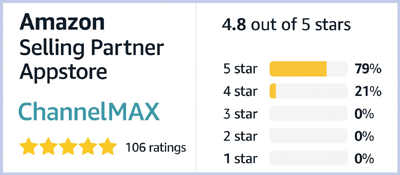
Check ChannelMAX at Amazon Selling Partner Appstore, an application with a 5 star rating.