Amazon Sellers Must Update EU Returns Policy for Right to Repair Rules Effective July 31
By ChannelMAX Staff Writer
Aug-2026#01
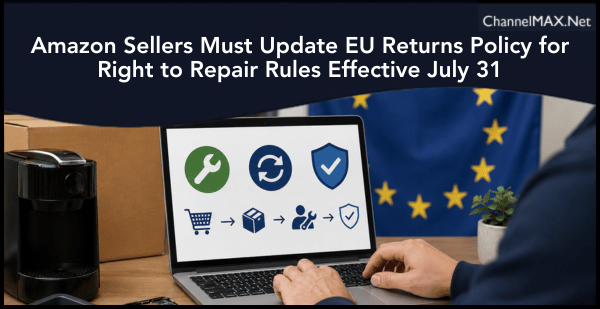
A major change has come into effect for Amazon sellers operating in European Union marketplaces. Sellers offering products in Amazon's EU stores are now required to ensure their returns and refunds information complies with the EU Right to Repair Directive, which became applicable to customer orders placed on or after July 31, 2026.
The update, published on Amazon Seller Central, requires sellers to clearly explain how customers can request a repair or replacement and outlines new obligations designed to promote product repairs instead of unnecessary replacements or refunds.
Why this update matters
The new requirements stem from the EU Right to Repair Directive (2024/1799), which amends the existing Sale of Goods Directive (EU) 2019/771. The legislation aims to reduce electronic waste, extend product life, and encourage sustainable consumption by making repairs more accessible for consumers. For Amazon sellers, compliance is more than a legal obligation. It also helps prevent customer disputes, reduces the risk of Amazon intervention, and improves buyer confidence in their business.
Also Read: Amazon AWD Expands to Five European Markets With Long-Term Bulk Storage
Who is affected
The update applies to sellers offering products in Amazon's European Union marketplaces where the Right to Repair Directive is applicable. It impacts customer orders placed on or after July 31, 2026.
What sellers must do
According to the announcement on Seller Central, sellers should update the Returns & Refunds section of their storefront by:
• Going to Settings
• Opening Your Info & Policy
• Selecting Returns & Refunds
• Adding information explaining how customers can contact them for a repair or replacement
Once updated, the information will automatically appear on the seller's Amazon storefront.
New obligations under the Directive
The updated rules introduce two important customer rights.
Customers must be informed before choosing a remedy
Before a buyer selects a solution for a defective or non-conforming product, the seller must inform them that they have the right to choose between repair and replacement, where both options are available.
Sellers must also explain that choosing a completed repair extends the product warranty by an additional 12 months.
Warranty extension after repair
If a customer chooses repair and the repair is successfully completed, the product's legal warranty must be extended by 12 months. This new provision is intended to encourage repairs instead of replacing products unnecessarily.
What happens if sellers do not respond
Amazon also warned that sellers should respond to repair requests within a reasonable period. If a seller fails to respond, Amazon Customer Service may process a refund on the seller's behalf, potentially increasing costs and affecting seller performance metrics.
Existing customer rights remain
The Right to Repair Directive does not eliminate existing consumer protections. Under the Sale of Goods Directive, customers remain entitled to a repair or replacement when goods are defective, damaged, or not as described, unless one option is impossible or would impose disproportionate costs on the seller.
Additional guidance for sellers
Sellers should review their customer support process to ensure repair requests are handled efficiently. Businesses using third-party repair centers should make sure contact details and repair procedures are clearly explained in their Returns & Refunds policy.
Keeping records of repair requests, customer communication, and completed repairs can also help demonstrate compliance if disputes arise. Sellers offering electronics, appliances, tools, furniture, and other repairable products should pay particular attention to these new obligations, as repair requests may become more common under the updated rules.
How sellers can benefit
Although the new rules introduce additional responsibilities, they also offer several long-term advantages. A well-defined repair process can improve customer trust, reduce unnecessary returns, lower replacement costs, and support more sustainable business practices. Sellers who update their storefront policies promptly and establish an efficient repair workflow are likely to experience fewer disputes and better customer satisfaction.
With the Right to Repair Directive now in effect, Amazon sellers serving EU customers should review their Returns & Refunds information without delay. The Seller Central announcement provides a clear roadmap for compliance, helping sellers meet legal obligations while offering customers greater transparency and confidence when purchasing products through Amazon's European marketplaces.
Also Read: Amazon Requires Sellers to Tag Images With Photorealistic AI-Generated People
Disclaimer:
Amazon is the registered trademark of the company.
About ChannelMAX.NET:
ChannelMAX offers Amazon Repricer that runs on the latest AI Repricing algorithm to do Amazon Pricing Management or Amazon Repricing. Based on Amazon SP API, the repricing engine or repricer runs 24/7 and efficiently manages Amazon prices to maximize your BuyBox with profit optimization. Established in 2005, ChannelMAX has been integrated with Amazon technology since 2007, helping thousands of third-party sellers on various eCommerce platforms. Some of the eCommerce platforms, aka marketplaces, supported by ChannelMAX.NET, are Amazon, Walmart, eBay, and Shopify. Some of ChannelMAX key offerings include ChannelMAX Amazon Repricer, 2ndly, ChannelMAX Amazon FBA Audits and FBA Refunds management, an offering for managing Amazon FBA Refunds Reimbursement management for lost or damaged or misplaced inventory for which Amazon is responsible and for which sellers deserve appropriate credit reimbursement from Amazon. ChannelMAX Services offer Remote (aka Virtual) Full-Time eCommerce Assistant to help 3P sellers run their daytoday business.

Check ChannelMAX at Amazon Selling Partner Appstore, an application with a 5 star rating.
Aug-2026#01
A major change has come into effect for Amazon sellers operating in European Union marketplaces. Sellers offering products in Amazon's EU stores are now required to ensure their returns and refunds information complies with the EU Right to Repair Directive, which became applicable to customer orders placed on or after July 31, 2026.
The update, published on Amazon Seller Central, requires sellers to clearly explain how customers can request a repair or replacement and outlines new obligations designed to promote product repairs instead of unnecessary replacements or refunds.
Why this update matters
The new requirements stem from the EU Right to Repair Directive (2024/1799), which amends the existing Sale of Goods Directive (EU) 2019/771. The legislation aims to reduce electronic waste, extend product life, and encourage sustainable consumption by making repairs more accessible for consumers. For Amazon sellers, compliance is more than a legal obligation. It also helps prevent customer disputes, reduces the risk of Amazon intervention, and improves buyer confidence in their business.
Also Read: Amazon AWD Expands to Five European Markets With Long-Term Bulk Storage
Who is affected
The update applies to sellers offering products in Amazon's European Union marketplaces where the Right to Repair Directive is applicable. It impacts customer orders placed on or after July 31, 2026.
What sellers must do
According to the announcement on Seller Central, sellers should update the Returns & Refunds section of their storefront by:
• Going to Settings
• Opening Your Info & Policy
• Selecting Returns & Refunds
• Adding information explaining how customers can contact them for a repair or replacement
Once updated, the information will automatically appear on the seller's Amazon storefront.
New obligations under the Directive
The updated rules introduce two important customer rights.
Customers must be informed before choosing a remedy
Before a buyer selects a solution for a defective or non-conforming product, the seller must inform them that they have the right to choose between repair and replacement, where both options are available.
Sellers must also explain that choosing a completed repair extends the product warranty by an additional 12 months.
Warranty extension after repair
If a customer chooses repair and the repair is successfully completed, the product's legal warranty must be extended by 12 months. This new provision is intended to encourage repairs instead of replacing products unnecessarily.
What happens if sellers do not respond
Amazon also warned that sellers should respond to repair requests within a reasonable period. If a seller fails to respond, Amazon Customer Service may process a refund on the seller's behalf, potentially increasing costs and affecting seller performance metrics.
Existing customer rights remain
The Right to Repair Directive does not eliminate existing consumer protections. Under the Sale of Goods Directive, customers remain entitled to a repair or replacement when goods are defective, damaged, or not as described, unless one option is impossible or would impose disproportionate costs on the seller.
Additional guidance for sellers
Sellers should review their customer support process to ensure repair requests are handled efficiently. Businesses using third-party repair centers should make sure contact details and repair procedures are clearly explained in their Returns & Refunds policy.
Keeping records of repair requests, customer communication, and completed repairs can also help demonstrate compliance if disputes arise. Sellers offering electronics, appliances, tools, furniture, and other repairable products should pay particular attention to these new obligations, as repair requests may become more common under the updated rules.
How sellers can benefit
Although the new rules introduce additional responsibilities, they also offer several long-term advantages. A well-defined repair process can improve customer trust, reduce unnecessary returns, lower replacement costs, and support more sustainable business practices. Sellers who update their storefront policies promptly and establish an efficient repair workflow are likely to experience fewer disputes and better customer satisfaction.
With the Right to Repair Directive now in effect, Amazon sellers serving EU customers should review their Returns & Refunds information without delay. The Seller Central announcement provides a clear roadmap for compliance, helping sellers meet legal obligations while offering customers greater transparency and confidence when purchasing products through Amazon's European marketplaces.
Also Read: Amazon Requires Sellers to Tag Images With Photorealistic AI-Generated People
Disclaimer:
Amazon is the registered trademark of the company.
About ChannelMAX.NET:
ChannelMAX offers Amazon Repricer that runs on the latest AI Repricing algorithm to do Amazon Pricing Management or Amazon Repricing. Based on Amazon SP API, the repricing engine or repricer runs 24/7 and efficiently manages Amazon prices to maximize your BuyBox with profit optimization. Established in 2005, ChannelMAX has been integrated with Amazon technology since 2007, helping thousands of third-party sellers on various eCommerce platforms. Some of the eCommerce platforms, aka marketplaces, supported by ChannelMAX.NET, are Amazon, Walmart, eBay, and Shopify. Some of ChannelMAX key offerings include ChannelMAX Amazon Repricer, 2ndly, ChannelMAX Amazon FBA Audits and FBA Refunds management, an offering for managing Amazon FBA Refunds Reimbursement management for lost or damaged or misplaced inventory for which Amazon is responsible and for which sellers deserve appropriate credit reimbursement from Amazon. ChannelMAX Services offer Remote (aka Virtual) Full-Time eCommerce Assistant to help 3P sellers run their daytoday business.
Check ChannelMAX at Amazon Selling Partner Appstore, an application with a 5 star rating.