Amazon Tightens Product Bundle Rules From January 11, 2027, Sellers Must Review Listings
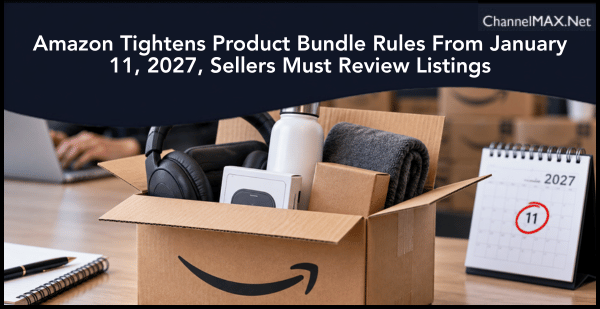
Most bundles sold under a single ASIN will need original manufacturer or brand packaging, while Amazon introduces exceptions and removes several previous restrictions
By ChannelMAX Staff Writer
Sept-2026#06
Amazon sellers offering product bundles have until January 11, 2027, to review their listings under a major update to the marketplace’s product bundling policy. From that date, most bundles listed as a single ASIN will have to be packaged by the original manufacturer or brand. The change could affect sellers who assemble different products themselves and market the combination as a single bundled product. Noncompliant bundles remaining on Amazon after the deadline may be deactivated and recorded as listing violations. Amazon disclosed the new requirements in an update on Seller Central titled “New requirements for product bundles starting January 11.”
New bundle requirements take effect January 11
Effective January 11, 2027, Amazon says most product bundles listed as a single ASIN must be packaged by the original manufacturer or brand. This means sellers should not assume they can continue creating physical bundles by independently combining products and listing the package under one ASIN.
Amazon says the change is intended to help ensure bundles are authentic and safe, while strengthening customer confidence in the products they receive. However, the policy is not a blanket ban on seller-created or repackaged bundles. Amazon has outlined several important exceptions.
Authorized repackaged bundles can continue
Reconfigured and repackaged products may still be bundled when the seller has authorization. According to the Seller Central update, sellers must have a letter of authorization from the brand owner or manufacturer granting permission to repackage the product with all other included brands for sale in Amazon stores.
This documentation could become particularly important after the policy takes effect. If Amazon identifies a bundle as noncompliant after January 11, sellers will be able to upload their letter of authorization through the Account Health dashboard. Sellers relying on this exception should obtain and organize the required documentation before the deadline rather than waiting for a listing violation.
Also Read: Amazon Launches Standard Ocean Express to Speed Up East Coast FBA Inventory Delivery
Certain categories are exempt
Amazon is providing exemptions for some types of bundles. Bundles listed within gifting browse nodes and camera product types will not have to be original manufacturer configurations. Sellers operating in these areas should still review the complete Product Bundling Policy to confirm that their listings fall within the applicable exemption and comply with other Amazon listing requirements.
Virtual Bundles remain an important alternative
The policy also makes an important distinction for bundles created through Amazon’s Virtual Bundles tool. Virtual Bundles are not physically packaged together before sale. Therefore, Amazon says they do not need to be product configurations created by the original manufacturer.
This exception applies to eligible brand owners and authorized resellers using the Virtual Bundles tool. For eligible sellers, Virtual Bundles could therefore become an increasingly useful way to offer complementary products together without creating a new physical bundle that could fall under the updated packaging restrictions.
Amazon removes some previous bundle restrictions
The January policy change is not only about tightening requirements. Amazon is also expanding the types of bundles sellers can create. Under the updated policy, sellers can create bundles in Books, Music, Video, DVD and Video Game categories.
Amazon will also allow bundles containing secondary generic products or service plans, as well as bundles that include gift cards. This creates new merchandising possibilities for sellers whose products previously faced bundling restrictions.
Multi-brand Consumables bundles get an authorization route
Another notable change applies to the Consumables category. Amazon says sellers can create bundles containing multiple brands in Consumables when they have letters of authorization. This could benefit sellers looking to combine complementary branded products, but documentation will be critical.
Sellers using this option should make sure their authorization covers the brands and repackaging involved in the bundle and retain the documentation in case Amazon requests evidence.
What happens to noncompliant bundles?
January 11, 2027, is the key compliance date sellers need to remember. Amazon has advised sellers to review existing product bundles and make sure they comply with the revised policy. Sellers may choose to sell through inventory that will not comply with the new requirements before January 11.
After the new rules take effect, Amazon says noncompliant listed bundles will be deactivated. The issues will also appear as listing violations on the seller’s Account Health dashboard. Amazon will notify affected sellers by email. The Account Health consequences make advance preparation particularly important. Sellers should not wait until January 11 to determine which ASINs could be affected.
FBA sellers should pay attention to remaining inventory
The update deserves additional attention from Fulfillment by Amazon sellers. A listing becoming noncompliant does not necessarily mean the associated physical inventory simply disappears from Amazon fulfillment centers. Sellers with affected FBA inventory may need to decide how to handle remaining units.
Amazon directs sellers to its “Remove inventory from a fulfillment center” guidance for information on creating removal orders for noncompliant FBA inventory. FBA sellers should therefore identify potentially affected inventory early and consider the time needed to sell through, remove or otherwise address those units before enforcement begins. Waiting until the deadline could leave sellers dealing with both a deactivated listing and inventory stored within Amazon’s fulfillment network.
What sellers should do before January 11
Sellers that currently offer bundles should start with an inventory and catalog audit. Identify every ASIN that represents a bundle rather than a single standalone product. Determine who physically packaged the bundle and whether it is an original manufacturer or brand configuration.
For seller-repackaged bundles, determine whether the listing qualifies for an exception and whether the necessary letters of authorization are available. Sellers should pay particular attention to multi-brand bundles because authorization requirements may apply.
FBA sellers should also check the quantity of potentially noncompliant inventory already stored at Amazon fulfillment centers. This can help determine whether there is enough time to sell through the units before January 11 or whether another inventory strategy may be necessary. It is also worth reviewing advertising and promotional activity connected to affected ASINs. Sellers should avoid investing heavily in a bundle listing that may have to be discontinued or restructured before the policy takes effect.
Do not assume existing listings are grandfathered
One important point for sellers is that existing bundle listings should not automatically be considered exempt simply because they were created before the new policy. Amazon specifically asks sellers to review their current product bundles and ensure they comply with the updated requirements. The warning that noncompliant listed bundles will be deactivated after January 11 indicates that sellers need to assess existing catalog inventory as well as any new bundles they plan to launch.
A practical compliance checklist
Before January 11, sellers should identify all physical bundle ASINs in their catalogs, confirm who packaged each bundle, determine whether an exemption applies and collect applicable authorization letters. They should then check FBA inventory levels for affected ASINs and decide whether noncompliant units can reasonably be sold through before the deadline.
Sellers using independently assembled physical bundles should also evaluate whether an eligible Virtual Bundle could provide an alternative approach. Finally, sellers should monitor their Account Health dashboard and registered Seller Central email address as the enforcement date approaches.
Why this update matters
Bundling can be an effective strategy for increasing order value, combining complementary products and differentiating an offer from competing listings. However, the January 11 policy changes make the source and configuration of a physical bundle considerably more important.
The update also presents opportunities. Amazon is removing some earlier restrictions, allowing additional bundle configurations and preserving routes for authorized repackaging and Virtual Bundles. Sellers therefore need to distinguish between bundle models that are becoming restricted and those that are newly permitted or specifically exempted.
Amazon’s revised Product Bundling Policy represents an important compliance change for sellers that assemble or sell multiple products under a single ASIN.
From January 11, 2027, most such bundles will need to be packaged by the original manufacturer or brand unless they qualify for one of Amazon’s stated exceptions. Noncompliant listings can be deactivated and result in listing violations appearing in Account Health.
At the same time, the revised rules expand opportunities in several previously restricted areas, including Books, Music, Video, DVD and Video Games, as well as certain bundles involving generic products, service plans and gift cards. For sellers, the months before January 11 provide an important preparation window. Reviewing bundle ASINs, securing authorization documents, assessing FBA inventory and considering.
Also Read: Amazon Extends Prime Big Deal Days Deal Submission Deadline to September 22
Disclaimer:
Amazon is the registered trademark of the company.
About ChannelMAX.NET:
ChannelMAX offers Amazon Repricer that runs on the latest AI Repricing algorithm to do Amazon Pricing Management or Amazon Repricing. Based on Amazon SP API, the repricing engine or repricer runs 24/7 and efficiently manages Amazon prices to maximize your BuyBox with profit optimization. Established in 2005, ChannelMAX has been integrated with Amazon technology since 2007, helping thousands of third-party sellers on various eCommerce platforms. Some of the eCommerce platforms, aka marketplaces, supported by ChannelMAX.NET, are Amazon, Walmart, eBay, and Shopify. Some of ChannelMAX key offerings include ChannelMAX Amazon Repricer, 2ndly, ChannelMAX Amazon FBA Audits and FBA Refunds management, an offering for managing Amazon FBA Refunds Reimbursement management for lost or damaged or misplaced inventory for which Amazon is responsible and for which sellers deserve appropriate credit reimbursement from Amazon. ChannelMAX Services offer Remote (aka Virtual) Full-Time eCommerce Assistant to help 3P sellers run their daytoday business.
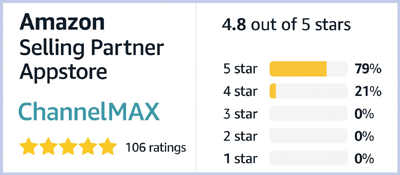
Check ChannelMAX at Amazon Selling Partner Appstore, an application with a 5 star rating.
By ChannelMAX Staff Writer
Sept-2026#06
Amazon sellers offering product bundles have until January 11, 2027, to review their listings under a major update to the marketplace’s product bundling policy. From that date, most bundles listed as a single ASIN will have to be packaged by the original manufacturer or brand. The change could affect sellers who assemble different products themselves and market the combination as a single bundled product. Noncompliant bundles remaining on Amazon after the deadline may be deactivated and recorded as listing violations. Amazon disclosed the new requirements in an update on Seller Central titled “New requirements for product bundles starting January 11.”
New bundle requirements take effect January 11
Effective January 11, 2027, Amazon says most product bundles listed as a single ASIN must be packaged by the original manufacturer or brand. This means sellers should not assume they can continue creating physical bundles by independently combining products and listing the package under one ASIN.
Amazon says the change is intended to help ensure bundles are authentic and safe, while strengthening customer confidence in the products they receive. However, the policy is not a blanket ban on seller-created or repackaged bundles. Amazon has outlined several important exceptions.
Authorized repackaged bundles can continue
Reconfigured and repackaged products may still be bundled when the seller has authorization. According to the Seller Central update, sellers must have a letter of authorization from the brand owner or manufacturer granting permission to repackage the product with all other included brands for sale in Amazon stores.
This documentation could become particularly important after the policy takes effect. If Amazon identifies a bundle as noncompliant after January 11, sellers will be able to upload their letter of authorization through the Account Health dashboard. Sellers relying on this exception should obtain and organize the required documentation before the deadline rather than waiting for a listing violation.
Also Read: Amazon Launches Standard Ocean Express to Speed Up East Coast FBA Inventory Delivery
Certain categories are exempt
Amazon is providing exemptions for some types of bundles. Bundles listed within gifting browse nodes and camera product types will not have to be original manufacturer configurations. Sellers operating in these areas should still review the complete Product Bundling Policy to confirm that their listings fall within the applicable exemption and comply with other Amazon listing requirements.
Virtual Bundles remain an important alternative
The policy also makes an important distinction for bundles created through Amazon’s Virtual Bundles tool. Virtual Bundles are not physically packaged together before sale. Therefore, Amazon says they do not need to be product configurations created by the original manufacturer.
This exception applies to eligible brand owners and authorized resellers using the Virtual Bundles tool. For eligible sellers, Virtual Bundles could therefore become an increasingly useful way to offer complementary products together without creating a new physical bundle that could fall under the updated packaging restrictions.
Amazon removes some previous bundle restrictions
The January policy change is not only about tightening requirements. Amazon is also expanding the types of bundles sellers can create. Under the updated policy, sellers can create bundles in Books, Music, Video, DVD and Video Game categories.
Amazon will also allow bundles containing secondary generic products or service plans, as well as bundles that include gift cards. This creates new merchandising possibilities for sellers whose products previously faced bundling restrictions.
Multi-brand Consumables bundles get an authorization route
Another notable change applies to the Consumables category. Amazon says sellers can create bundles containing multiple brands in Consumables when they have letters of authorization. This could benefit sellers looking to combine complementary branded products, but documentation will be critical.
Sellers using this option should make sure their authorization covers the brands and repackaging involved in the bundle and retain the documentation in case Amazon requests evidence.
What happens to noncompliant bundles?
January 11, 2027, is the key compliance date sellers need to remember. Amazon has advised sellers to review existing product bundles and make sure they comply with the revised policy. Sellers may choose to sell through inventory that will not comply with the new requirements before January 11.
After the new rules take effect, Amazon says noncompliant listed bundles will be deactivated. The issues will also appear as listing violations on the seller’s Account Health dashboard. Amazon will notify affected sellers by email. The Account Health consequences make advance preparation particularly important. Sellers should not wait until January 11 to determine which ASINs could be affected.
FBA sellers should pay attention to remaining inventory
The update deserves additional attention from Fulfillment by Amazon sellers. A listing becoming noncompliant does not necessarily mean the associated physical inventory simply disappears from Amazon fulfillment centers. Sellers with affected FBA inventory may need to decide how to handle remaining units.
Amazon directs sellers to its “Remove inventory from a fulfillment center” guidance for information on creating removal orders for noncompliant FBA inventory. FBA sellers should therefore identify potentially affected inventory early and consider the time needed to sell through, remove or otherwise address those units before enforcement begins. Waiting until the deadline could leave sellers dealing with both a deactivated listing and inventory stored within Amazon’s fulfillment network.
What sellers should do before January 11
Sellers that currently offer bundles should start with an inventory and catalog audit. Identify every ASIN that represents a bundle rather than a single standalone product. Determine who physically packaged the bundle and whether it is an original manufacturer or brand configuration.
For seller-repackaged bundles, determine whether the listing qualifies for an exception and whether the necessary letters of authorization are available. Sellers should pay particular attention to multi-brand bundles because authorization requirements may apply.
FBA sellers should also check the quantity of potentially noncompliant inventory already stored at Amazon fulfillment centers. This can help determine whether there is enough time to sell through the units before January 11 or whether another inventory strategy may be necessary. It is also worth reviewing advertising and promotional activity connected to affected ASINs. Sellers should avoid investing heavily in a bundle listing that may have to be discontinued or restructured before the policy takes effect.
Do not assume existing listings are grandfathered
One important point for sellers is that existing bundle listings should not automatically be considered exempt simply because they were created before the new policy. Amazon specifically asks sellers to review their current product bundles and ensure they comply with the updated requirements. The warning that noncompliant listed bundles will be deactivated after January 11 indicates that sellers need to assess existing catalog inventory as well as any new bundles they plan to launch.
A practical compliance checklist
Before January 11, sellers should identify all physical bundle ASINs in their catalogs, confirm who packaged each bundle, determine whether an exemption applies and collect applicable authorization letters. They should then check FBA inventory levels for affected ASINs and decide whether noncompliant units can reasonably be sold through before the deadline.
Sellers using independently assembled physical bundles should also evaluate whether an eligible Virtual Bundle could provide an alternative approach. Finally, sellers should monitor their Account Health dashboard and registered Seller Central email address as the enforcement date approaches.
Why this update matters
Bundling can be an effective strategy for increasing order value, combining complementary products and differentiating an offer from competing listings. However, the January 11 policy changes make the source and configuration of a physical bundle considerably more important.
The update also presents opportunities. Amazon is removing some earlier restrictions, allowing additional bundle configurations and preserving routes for authorized repackaging and Virtual Bundles. Sellers therefore need to distinguish between bundle models that are becoming restricted and those that are newly permitted or specifically exempted.
Amazon’s revised Product Bundling Policy represents an important compliance change for sellers that assemble or sell multiple products under a single ASIN.
From January 11, 2027, most such bundles will need to be packaged by the original manufacturer or brand unless they qualify for one of Amazon’s stated exceptions. Noncompliant listings can be deactivated and result in listing violations appearing in Account Health.
At the same time, the revised rules expand opportunities in several previously restricted areas, including Books, Music, Video, DVD and Video Games, as well as certain bundles involving generic products, service plans and gift cards. For sellers, the months before January 11 provide an important preparation window. Reviewing bundle ASINs, securing authorization documents, assessing FBA inventory and considering.
Also Read: Amazon Extends Prime Big Deal Days Deal Submission Deadline to September 22
Disclaimer:
Amazon is the registered trademark of the company.
About ChannelMAX.NET:
ChannelMAX offers Amazon Repricer that runs on the latest AI Repricing algorithm to do Amazon Pricing Management or Amazon Repricing. Based on Amazon SP API, the repricing engine or repricer runs 24/7 and efficiently manages Amazon prices to maximize your BuyBox with profit optimization. Established in 2005, ChannelMAX has been integrated with Amazon technology since 2007, helping thousands of third-party sellers on various eCommerce platforms. Some of the eCommerce platforms, aka marketplaces, supported by ChannelMAX.NET, are Amazon, Walmart, eBay, and Shopify. Some of ChannelMAX key offerings include ChannelMAX Amazon Repricer, 2ndly, ChannelMAX Amazon FBA Audits and FBA Refunds management, an offering for managing Amazon FBA Refunds Reimbursement management for lost or damaged or misplaced inventory for which Amazon is responsible and for which sellers deserve appropriate credit reimbursement from Amazon. ChannelMAX Services offer Remote (aka Virtual) Full-Time eCommerce Assistant to help 3P sellers run their daytoday business.
Check ChannelMAX at Amazon Selling Partner Appstore, an application with a 5 star rating.