Labor Day Sale 2026: Amazon urges US sellers to clear excess inventory and launch deals before Q4
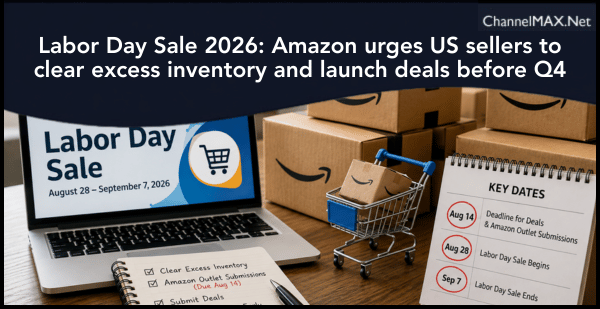
Amazon’s Labor Day Sale is set to run from August 28 through September 7, giving US sellers an important sales window to move inventory and prepare their businesses for the Q4 shopping season
By ChannelMAX Staff Writer
Aug-2026#04
In an update titled “Boost your sales during the Labor Day Sale” published on Seller Central, Amazon has outlined several steps sellers can take to make the most of the event. These include clearing aged and excess inventory through Amazon Outlet, submitting promotions, starting advertising campaigns early, and improving overall inventory health. For sellers, the timing is particularly important. Labor Day arrives shortly before the major Q4 shopping period, when inventory requirements, advertising competition and fulfillment demand can increase significantly.
Also Read: Amazon Expands Buy Shipping With Linked Carrier Account Rates
August 14 deadline for deals and Outlet submissions
One of the most important dates for sellers is August 14. Amazon said sellers who want to use Amazon Outlet during the Labor Day period should submit eligible deals by August 14 to allow enough time for approval before the event begins.
Amazon Outlet is designed to help sellers move eligible overstock and aged inventory. According to the Seller Central announcement, it can be particularly useful for products that have been sitting for more than 180 days or when sellers have stock exceeding forecasted demand. The increased shopping traffic around Labor Day could provide additional visibility for these ASINs and help sellers convert slow-moving inventory into sales.
Labor Day deal sourcing also closes August 14
Deal sourcing for the Labor Day Sale is open through August 14, according to Amazon. Eligible promotional formats can include Best Deals, Lightning Deals, Prime Exclusive Discounts and coupons, depending on the product and seller's eligibility. Sellers should review their eligible ASINs before the deadline rather than waiting until the Labor Day Sale begins.
Choosing the right promotional format is also important. Sellers should consider factors such as inventory levels, margins, expected traffic, discount requirements and advertising costs before deciding how aggressively to discount a product.
Amazon highlights six high-demand categories
Amazon identified several categories that could see strong demand during the Labor Day shopping period.
These include Electronics, Home and Kitchen, Fashion, Sports and Outdoors, Beauty and Personal Care, and Kitchen and Appliances. Sellers operating in these categories may want to review inventory levels, pricing and promotional eligibility ahead of the event.
However, sellers should not assume that every product in a high-demand category requires a discount. Historical sales data, current inventory, profit margins and advertising performance should be considered before launching a promotion.
Start advertising before the sale
Amazon is also encouraging sellers to begin advertising early instead of waiting for August 28. The company recommends supporting deals with a full-funnel advertising approach. Starting campaigns ahead of the event can help promoted ASINs build momentum before Labor Day traffic increases. Sellers with aged or excess inventory may also consider allocating additional advertising budget to selected ASINs.
Advertising decisions should still be based on profitability. Sellers should monitor advertising cost of sales, conversion rates, total advertising cost of sales where applicable, and the contribution margin after discounts and advertising expenses.
Labor Day can help sellers prepare for Q4
The Labor Day Sale is not only a sales opportunity. It can also serve as an inventory-management window ahead of Q4. Moving slow-selling inventory before the peak season can free up fulfillment capacity for products expected to perform strongly during major holiday shopping events.
Amazon specifically highlighted several potential benefits of improving inventory health before Q4, including freeing storage space for peak-season replenishment, reducing the risk of capacity constraints and limiting costs associated with holding aged inventory. Sellers using Fulfillment by Amazon should therefore review their inventory reports before deciding which products to promote.
What Amazon sellers should do now
With the August 14 deadline approaching, sellers can begin by identifying ASINs with excess stock or inventory that has been stored for more than 180 days. They can then check whether those products qualify for Amazon Outlet or Labor Day promotional opportunities.
Sellers should also review the Deals Dashboard for eligible promotions and use Amazon Fulfillment Reports to examine inventory age, stock levels and other fulfillment information. Before approving discounts, sellers should calculate whether the expected selling price will remain profitable after referral fees, FBA fees where applicable, promotional costs, advertising expenditure and other relevant expenses.
Advertising campaigns for selected Labor Day products can also be prepared early so sellers have time to evaluate performance and make adjustments before the August 28 start date.
Key dates for sellers
August 14: Deadline highlighted by Amazon for Labor Day deal sourcing and Amazon Outlet submissions.
August 28: Labor Day Sale begins.
September 7: Labor Day Sale ends.
For sellers carrying excess inventory, the most immediate priority is August 14 rather than August 28.
A useful pre-Q4 inventory opportunity
The Labor Day Sale gives Amazon US sellers a chance to combine short-term sales generation with longer-term inventory planning. Sellers can use the event to promote products with strong seasonal potential while also clearing aged or excess inventory that could otherwise occupy valuable fulfillment capacity heading into Q4.
The Seller Central update makes early preparation particularly important. Sellers who review their inventory, promotional eligibility, margins and advertising strategy before the August 14 deadline will have more options for participating in the event.
For businesses preparing for the holiday season, successfully reducing slow-moving inventory during Labor Day could also create additional room for replenishing faster-selling products ahead of the Q4 peak.
Also Read: Amazon Seller Assistant Now Explains Why Your Offer Isn’t the Featured Offer
Disclaimer:
Amazon is the registered trademark of the company.
About ChannelMAX.NET:
ChannelMAX offers Amazon Repricer that runs on the latest AI Repricing algorithm to do Amazon Pricing Management or Amazon Repricing. Based on Amazon SP API, the repricing engine or repricer runs 24/7 and efficiently manages Amazon prices to maximize your BuyBox with profit optimization. Established in 2005, ChannelMAX has been integrated with Amazon technology since 2007, helping thousands of third-party sellers on various eCommerce platforms. Some of the eCommerce platforms, aka marketplaces, supported by ChannelMAX.NET, are Amazon, Walmart, eBay, and Shopify. Some of ChannelMAX key offerings include ChannelMAX Amazon Repricer, 2ndly, ChannelMAX Amazon FBA Audits and FBA Refunds management, an offering for managing Amazon FBA Refunds Reimbursement management for lost or damaged or misplaced inventory for which Amazon is responsible and for which sellers deserve appropriate credit reimbursement from Amazon. ChannelMAX Services offer Remote (aka Virtual) Full-Time eCommerce Assistant to help 3P sellers run their daytoday business.
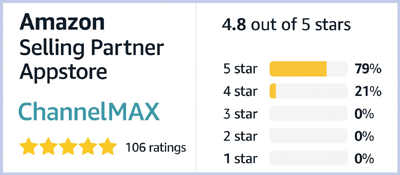
Check ChannelMAX at Amazon Selling Partner Appstore, an application with a 5 star rating.
By ChannelMAX Staff Writer
Aug-2026#04
In an update titled “Boost your sales during the Labor Day Sale” published on Seller Central, Amazon has outlined several steps sellers can take to make the most of the event. These include clearing aged and excess inventory through Amazon Outlet, submitting promotions, starting advertising campaigns early, and improving overall inventory health. For sellers, the timing is particularly important. Labor Day arrives shortly before the major Q4 shopping period, when inventory requirements, advertising competition and fulfillment demand can increase significantly.
Also Read: Amazon Expands Buy Shipping With Linked Carrier Account Rates
August 14 deadline for deals and Outlet submissions
One of the most important dates for sellers is August 14. Amazon said sellers who want to use Amazon Outlet during the Labor Day period should submit eligible deals by August 14 to allow enough time for approval before the event begins.
Amazon Outlet is designed to help sellers move eligible overstock and aged inventory. According to the Seller Central announcement, it can be particularly useful for products that have been sitting for more than 180 days or when sellers have stock exceeding forecasted demand. The increased shopping traffic around Labor Day could provide additional visibility for these ASINs and help sellers convert slow-moving inventory into sales.
Labor Day deal sourcing also closes August 14
Deal sourcing for the Labor Day Sale is open through August 14, according to Amazon. Eligible promotional formats can include Best Deals, Lightning Deals, Prime Exclusive Discounts and coupons, depending on the product and seller's eligibility. Sellers should review their eligible ASINs before the deadline rather than waiting until the Labor Day Sale begins.
Choosing the right promotional format is also important. Sellers should consider factors such as inventory levels, margins, expected traffic, discount requirements and advertising costs before deciding how aggressively to discount a product.
Amazon highlights six high-demand categories
Amazon identified several categories that could see strong demand during the Labor Day shopping period.
These include Electronics, Home and Kitchen, Fashion, Sports and Outdoors, Beauty and Personal Care, and Kitchen and Appliances. Sellers operating in these categories may want to review inventory levels, pricing and promotional eligibility ahead of the event.
However, sellers should not assume that every product in a high-demand category requires a discount. Historical sales data, current inventory, profit margins and advertising performance should be considered before launching a promotion.
Start advertising before the sale
Amazon is also encouraging sellers to begin advertising early instead of waiting for August 28. The company recommends supporting deals with a full-funnel advertising approach. Starting campaigns ahead of the event can help promoted ASINs build momentum before Labor Day traffic increases. Sellers with aged or excess inventory may also consider allocating additional advertising budget to selected ASINs.
Advertising decisions should still be based on profitability. Sellers should monitor advertising cost of sales, conversion rates, total advertising cost of sales where applicable, and the contribution margin after discounts and advertising expenses.
Labor Day can help sellers prepare for Q4
The Labor Day Sale is not only a sales opportunity. It can also serve as an inventory-management window ahead of Q4. Moving slow-selling inventory before the peak season can free up fulfillment capacity for products expected to perform strongly during major holiday shopping events.
Amazon specifically highlighted several potential benefits of improving inventory health before Q4, including freeing storage space for peak-season replenishment, reducing the risk of capacity constraints and limiting costs associated with holding aged inventory. Sellers using Fulfillment by Amazon should therefore review their inventory reports before deciding which products to promote.
What Amazon sellers should do now
With the August 14 deadline approaching, sellers can begin by identifying ASINs with excess stock or inventory that has been stored for more than 180 days. They can then check whether those products qualify for Amazon Outlet or Labor Day promotional opportunities.
Sellers should also review the Deals Dashboard for eligible promotions and use Amazon Fulfillment Reports to examine inventory age, stock levels and other fulfillment information. Before approving discounts, sellers should calculate whether the expected selling price will remain profitable after referral fees, FBA fees where applicable, promotional costs, advertising expenditure and other relevant expenses.
Advertising campaigns for selected Labor Day products can also be prepared early so sellers have time to evaluate performance and make adjustments before the August 28 start date.
Key dates for sellers
August 14: Deadline highlighted by Amazon for Labor Day deal sourcing and Amazon Outlet submissions.
August 28: Labor Day Sale begins.
September 7: Labor Day Sale ends.
For sellers carrying excess inventory, the most immediate priority is August 14 rather than August 28.
A useful pre-Q4 inventory opportunity
The Labor Day Sale gives Amazon US sellers a chance to combine short-term sales generation with longer-term inventory planning. Sellers can use the event to promote products with strong seasonal potential while also clearing aged or excess inventory that could otherwise occupy valuable fulfillment capacity heading into Q4.
The Seller Central update makes early preparation particularly important. Sellers who review their inventory, promotional eligibility, margins and advertising strategy before the August 14 deadline will have more options for participating in the event.
For businesses preparing for the holiday season, successfully reducing slow-moving inventory during Labor Day could also create additional room for replenishing faster-selling products ahead of the Q4 peak.
Also Read: Amazon Seller Assistant Now Explains Why Your Offer Isn’t the Featured Offer
Disclaimer:
Amazon is the registered trademark of the company.
About ChannelMAX.NET:
ChannelMAX offers Amazon Repricer that runs on the latest AI Repricing algorithm to do Amazon Pricing Management or Amazon Repricing. Based on Amazon SP API, the repricing engine or repricer runs 24/7 and efficiently manages Amazon prices to maximize your BuyBox with profit optimization. Established in 2005, ChannelMAX has been integrated with Amazon technology since 2007, helping thousands of third-party sellers on various eCommerce platforms. Some of the eCommerce platforms, aka marketplaces, supported by ChannelMAX.NET, are Amazon, Walmart, eBay, and Shopify. Some of ChannelMAX key offerings include ChannelMAX Amazon Repricer, 2ndly, ChannelMAX Amazon FBA Audits and FBA Refunds management, an offering for managing Amazon FBA Refunds Reimbursement management for lost or damaged or misplaced inventory for which Amazon is responsible and for which sellers deserve appropriate credit reimbursement from Amazon. ChannelMAX Services offer Remote (aka Virtual) Full-Time eCommerce Assistant to help 3P sellers run their daytoday business.
Check ChannelMAX at Amazon Selling Partner Appstore, an application with a 5 star rating.