Amazon Expands GWD to Shanghai, Adds FOB Shipping Across China Network
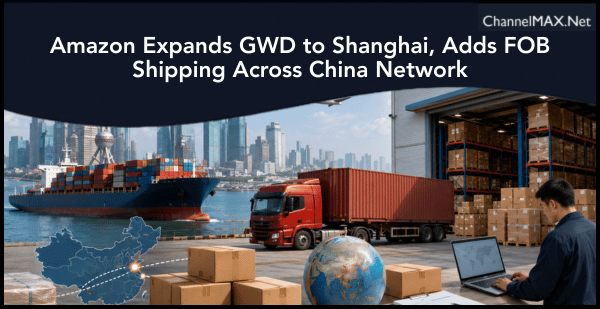
The expansion gives sellers a choice between Shanghai and Shenzhen for upstream storage, while new FOB support provides greater control over export documents and origin charges
By ChannelMAX Staff Writer
July-2026#17
Sellers sourcing products from China now have another way to position inventory closer to their manufacturers before moving it to the United States. Global Warehousing and Distribution has expanded to Shanghai, giving sellers access to GWD facilities in two major Chinese manufacturing and export centers. The service was already available in Shenzhen.
GWD has also introduced support for the Free on Board incoterm across all its locations. The change can help sellers manage export documentation and obtain separate invoices for export declarations and origin port handling charges. The update, titled “Global Warehousing and Distribution’s new China shipping options are live,” was published on Amazon US Seller Central.
Also Read: Amazon Reveals Key Q4 2026 Deadlines, Peak Fees And Deal Discounts For Sellers
Shanghai Added to Amazon’s GWD Network
The new Shanghai facility gives sellers more flexibility when deciding where to send inventory manufactured in China. Businesses can now select either Shanghai or Shenzhen based on the location of their factory, supplier or consolidation point. Shanghai may be more convenient for sellers sourcing from eastern China, including major manufacturing areas around Shanghai, Jiangsu, Zhejiang and nearby provinces.
Shenzhen may remain a more suitable option for businesses sourcing from southern China, particularly Guangdong and the Pearl River Delta region. Choosing a facility closer to the manufacturer can shorten domestic transportation distances. It may also reduce local freight costs and help inventory reach GWD sooner. However, sellers should compare more than distance. They should also consider pickup availability, domestic transportation rates, receiving appointments, product eligibility and the estimated time required to process inventory.
GWD Acts as Upstream Inventory Storage
Global Warehousing and Distribution allows sellers to store bulk inventory in China before it is needed in the US FBA network. Instead of immediately exporting an entire production order to the United States, a seller can send inventory to a GWD facility in China. Amazon can then move eligible quantities into the US fulfillment network according to demand and the seller’s replenishment settings. This creates an upstream inventory pool closer to the manufacturing location.
When US demand increases, units can be moved from GWD through Amazon Global Logistics and into Amazon’s US fulfillment network. Sellers may use Amazon’s automated replenishment capabilities or maintain greater manual control, depending on the available account settings.
Amazon originally introduced GWD in Shenzhen in April 2026. At the time, it said the service could reduce storage costs by up to 45% compared with storing the same inventory in US Amazon Warehousing and Distribution facilities. It also said GWD inventory could reach US fulfillment centers up to seven days faster when paired with Amazon Global Logistics.
Actual costs and transit times will depend on the shipment, storage period, origin, product dimensions and destination. Sellers should check the current rate card and booking estimate before making a decision.
FOB Support Offers Greater Document Control
The introduction of Free on Board support is an important part of the update. Under the FOB incoterm, the supplier or seller is generally responsible for completing export formalities and loading the goods onto the nominated vessel at the agreed origin port. Risk then transfers to the buyer once the goods are on board.
The buyer generally arranges and pays for the main ocean transportation and handles import requirements at the destination. Amazon says the new FOB option allows sellers to obtain separate invoices for the export declaration and origin port handling charges. These documents may support the export tax rebate process in China.
Export tax rebate eligibility depends on the transaction structure, product, documentation and applicable Chinese tax rules. Sellers should confirm requirements with their supplier, export agent or qualified tax professional.
FOB also changes how transportation costs and responsibilities may be divided between the supplier and the seller. Businesses should clearly state the named port, shipment terms, cargo responsibilities and insurance arrangements in their purchase contract.
The International Chamber of Commerce notes that FOB is intended for sea or inland waterway transportation. It also advises that the Free Carrier incoterm may be more suitable for many containerized shipments because containers are often delivered to a terminal before being loaded onto a vessel. Sellers using Amazon’s FOB workflow should follow the contractual terms provided for that service.
Potential Reduction in US Storage Costs
Keeping large quantities of slow-moving or seasonal inventory in the United States can increase storage expenses. The expanded GWD service gives sellers the option to keep bulk inventory in Shanghai or Shenzhen. Units can then be exported when they are closer to being needed for US sales. This may help sellers avoid paying US storage costs for inventory that is not yet ready to sell.
The model could be useful for seasonal products, products with long production cycles and established ASINs with predictable sales patterns. It may also help businesses that place large factory orders to receive manufacturing discounts but do not want to send the full quantity to US FBA immediately.
The strategy is not suitable for every product. Fast-selling items may require larger quantities to be positioned in the United States. Products with short shelf lives, special handling requirements or uncertain eligibility may also require a different approach. Sellers should compare GWD storage and processing fees with their current factory storage, third-party warehouse, freight forwarding and US storage costs.
No Long-Term Commitment Required
Sellers can begin with one shipment and are not required to make a long-term volume commitment, according to the Seller Central update. GWD also does not impose peak-season storage fee increases. This can help sellers test the service without immediately moving their entire supply chain.
A trial shipment should contain enough inventory to evaluate receiving, storage, documentation, export handling, transit time and US replenishment performance. At the same time, the test should be small enough to limit financial exposure if the workflow does not meet expectations. Sellers should track the shipment from the factory to GWD and then from GWD to the US fulfillment network. Any delays, unplanned charges or documentation problems should be recorded before additional volume is committed.
How Sellers Can Create a GWD Shipment
Sellers can begin the process through the Send to Amazon Warehousing and Distribution workflow in Seller Central. They must first select a ship-from address located in China. The workflow will then allow them to choose an available GWD distribution center. The seller can select Shanghai or Shenzhen based on availability and supply-chain requirements. Eligible SKUs and shipment quantities must then be added.
Sellers will need to provide the required product, manufacturer, pickup and shipment information. If the FOB option is selected, additional documentation or coordination may be required. After reviewing the information and estimated charges, the seller can submit the booking. Amazon may require sellers to complete onboarding for Amazon Global Logistics if they have not previously used the service. A logistics provider may also contact the seller or supplier to coordinate shipment details.
Checks to Complete Before Booking
Sellers should confirm that their products are eligible for GWD and FBA before sending inventory. Product labels, carton measurements, weights, packing lists and export declarations should be accurate. Errors can delay receiving or produce unexpected charges.
The supplier should understand the selected incoterm and know who is responsible for factory pickup, origin transport, customs declarations, port handling, insurance and ocean freight. Sellers should also calculate the complete landed cost. This includes Chinese domestic transportation, GWD storage, inbound and outbound processing, international freight, customs duties, insurance and FBA-related charges.
Demand forecasting remains important even when inventory is stored upstream. A seller must allow enough time for booking, export processing, ocean transit, customs clearance, receiving and distribution within the US fulfillment network.
GWD can improve replenishment flexibility, but it cannot completely remove the risks associated with production delays, port disruption or sudden demand changes. The addition of Shanghai and the expansion of FOB support give China-sourcing sellers more control over where they store inventory and how they manage export documentation.
Sellers can choose a GWD location closer to their manufacturer, hold bulk inventory in China and replenish US FBA when demand requires it. The option may reduce unnecessary US storage costs while creating a more flexible connection between manufacturing and fulfillment.
The ability to begin with a single shipment makes it easier to evaluate the service before increasing volume.
Sellers considering GWD should compare Shanghai and Shenzhen carefully, review all fees and confirm their FOB responsibilities. A controlled trial shipment can provide the data needed to decide whether GWD should become a larger part of their China-to-US supply chain.
Also Read: Amazon Highlights Three Shopping Trends Sellers Can Use to Compete in 2026
Disclaimer:
Amazon is the registered trademark of the company.
About ChannelMAX.NET:
ChannelMAX offers Amazon Repricer that runs on the latest AI Repricing algorithm to do Amazon Pricing Management or Amazon Repricing. Based on Amazon SP API, the repricing engine or repricer runs 24/7 and efficiently manages Amazon prices to maximize your BuyBox with profit optimization. Established in 2005, ChannelMAX has been integrated with Amazon technology since 2007, helping thousands of third-party sellers on various eCommerce platforms. Some of the eCommerce platforms, aka marketplaces, supported by ChannelMAX.NET, are Amazon, Walmart, eBay, and Shopify. Some of ChannelMAX key offerings include ChannelMAX Amazon Repricer, 2ndly, ChannelMAX Amazon FBA Audits and FBA Refunds management, an offering for managing Amazon FBA Refunds Reimbursement management for lost or damaged or misplaced inventory for which Amazon is responsible and for which sellers deserve appropriate credit reimbursement from Amazon. ChannelMAX Services offer Remote (aka Virtual) Full-Time eCommerce Assistant to help 3P sellers run their daytoday business.
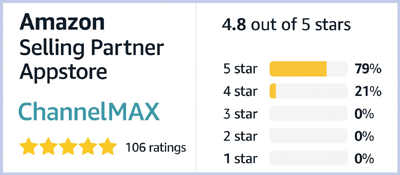
Check ChannelMAX at Amazon Selling Partner Appstore, an application with a 5 star rating.
By ChannelMAX Staff Writer
July-2026#17
Sellers sourcing products from China now have another way to position inventory closer to their manufacturers before moving it to the United States. Global Warehousing and Distribution has expanded to Shanghai, giving sellers access to GWD facilities in two major Chinese manufacturing and export centers. The service was already available in Shenzhen.
GWD has also introduced support for the Free on Board incoterm across all its locations. The change can help sellers manage export documentation and obtain separate invoices for export declarations and origin port handling charges. The update, titled “Global Warehousing and Distribution’s new China shipping options are live,” was published on Amazon US Seller Central.
Also Read: Amazon Reveals Key Q4 2026 Deadlines, Peak Fees And Deal Discounts For Sellers
Shanghai Added to Amazon’s GWD Network
The new Shanghai facility gives sellers more flexibility when deciding where to send inventory manufactured in China. Businesses can now select either Shanghai or Shenzhen based on the location of their factory, supplier or consolidation point. Shanghai may be more convenient for sellers sourcing from eastern China, including major manufacturing areas around Shanghai, Jiangsu, Zhejiang and nearby provinces.
Shenzhen may remain a more suitable option for businesses sourcing from southern China, particularly Guangdong and the Pearl River Delta region. Choosing a facility closer to the manufacturer can shorten domestic transportation distances. It may also reduce local freight costs and help inventory reach GWD sooner. However, sellers should compare more than distance. They should also consider pickup availability, domestic transportation rates, receiving appointments, product eligibility and the estimated time required to process inventory.
GWD Acts as Upstream Inventory Storage
Global Warehousing and Distribution allows sellers to store bulk inventory in China before it is needed in the US FBA network. Instead of immediately exporting an entire production order to the United States, a seller can send inventory to a GWD facility in China. Amazon can then move eligible quantities into the US fulfillment network according to demand and the seller’s replenishment settings. This creates an upstream inventory pool closer to the manufacturing location.
When US demand increases, units can be moved from GWD through Amazon Global Logistics and into Amazon’s US fulfillment network. Sellers may use Amazon’s automated replenishment capabilities or maintain greater manual control, depending on the available account settings.
Amazon originally introduced GWD in Shenzhen in April 2026. At the time, it said the service could reduce storage costs by up to 45% compared with storing the same inventory in US Amazon Warehousing and Distribution facilities. It also said GWD inventory could reach US fulfillment centers up to seven days faster when paired with Amazon Global Logistics.
Actual costs and transit times will depend on the shipment, storage period, origin, product dimensions and destination. Sellers should check the current rate card and booking estimate before making a decision.
FOB Support Offers Greater Document Control
The introduction of Free on Board support is an important part of the update. Under the FOB incoterm, the supplier or seller is generally responsible for completing export formalities and loading the goods onto the nominated vessel at the agreed origin port. Risk then transfers to the buyer once the goods are on board.
The buyer generally arranges and pays for the main ocean transportation and handles import requirements at the destination. Amazon says the new FOB option allows sellers to obtain separate invoices for the export declaration and origin port handling charges. These documents may support the export tax rebate process in China.
Export tax rebate eligibility depends on the transaction structure, product, documentation and applicable Chinese tax rules. Sellers should confirm requirements with their supplier, export agent or qualified tax professional.
FOB also changes how transportation costs and responsibilities may be divided between the supplier and the seller. Businesses should clearly state the named port, shipment terms, cargo responsibilities and insurance arrangements in their purchase contract.
The International Chamber of Commerce notes that FOB is intended for sea or inland waterway transportation. It also advises that the Free Carrier incoterm may be more suitable for many containerized shipments because containers are often delivered to a terminal before being loaded onto a vessel. Sellers using Amazon’s FOB workflow should follow the contractual terms provided for that service.
Potential Reduction in US Storage Costs
Keeping large quantities of slow-moving or seasonal inventory in the United States can increase storage expenses. The expanded GWD service gives sellers the option to keep bulk inventory in Shanghai or Shenzhen. Units can then be exported when they are closer to being needed for US sales. This may help sellers avoid paying US storage costs for inventory that is not yet ready to sell.
The model could be useful for seasonal products, products with long production cycles and established ASINs with predictable sales patterns. It may also help businesses that place large factory orders to receive manufacturing discounts but do not want to send the full quantity to US FBA immediately.
The strategy is not suitable for every product. Fast-selling items may require larger quantities to be positioned in the United States. Products with short shelf lives, special handling requirements or uncertain eligibility may also require a different approach. Sellers should compare GWD storage and processing fees with their current factory storage, third-party warehouse, freight forwarding and US storage costs.
No Long-Term Commitment Required
Sellers can begin with one shipment and are not required to make a long-term volume commitment, according to the Seller Central update. GWD also does not impose peak-season storage fee increases. This can help sellers test the service without immediately moving their entire supply chain.
A trial shipment should contain enough inventory to evaluate receiving, storage, documentation, export handling, transit time and US replenishment performance. At the same time, the test should be small enough to limit financial exposure if the workflow does not meet expectations. Sellers should track the shipment from the factory to GWD and then from GWD to the US fulfillment network. Any delays, unplanned charges or documentation problems should be recorded before additional volume is committed.
How Sellers Can Create a GWD Shipment
Sellers can begin the process through the Send to Amazon Warehousing and Distribution workflow in Seller Central. They must first select a ship-from address located in China. The workflow will then allow them to choose an available GWD distribution center. The seller can select Shanghai or Shenzhen based on availability and supply-chain requirements. Eligible SKUs and shipment quantities must then be added.
Sellers will need to provide the required product, manufacturer, pickup and shipment information. If the FOB option is selected, additional documentation or coordination may be required. After reviewing the information and estimated charges, the seller can submit the booking. Amazon may require sellers to complete onboarding for Amazon Global Logistics if they have not previously used the service. A logistics provider may also contact the seller or supplier to coordinate shipment details.
Checks to Complete Before Booking
Sellers should confirm that their products are eligible for GWD and FBA before sending inventory. Product labels, carton measurements, weights, packing lists and export declarations should be accurate. Errors can delay receiving or produce unexpected charges.
The supplier should understand the selected incoterm and know who is responsible for factory pickup, origin transport, customs declarations, port handling, insurance and ocean freight. Sellers should also calculate the complete landed cost. This includes Chinese domestic transportation, GWD storage, inbound and outbound processing, international freight, customs duties, insurance and FBA-related charges.
Demand forecasting remains important even when inventory is stored upstream. A seller must allow enough time for booking, export processing, ocean transit, customs clearance, receiving and distribution within the US fulfillment network.
GWD can improve replenishment flexibility, but it cannot completely remove the risks associated with production delays, port disruption or sudden demand changes. The addition of Shanghai and the expansion of FOB support give China-sourcing sellers more control over where they store inventory and how they manage export documentation.
Sellers can choose a GWD location closer to their manufacturer, hold bulk inventory in China and replenish US FBA when demand requires it. The option may reduce unnecessary US storage costs while creating a more flexible connection between manufacturing and fulfillment.
The ability to begin with a single shipment makes it easier to evaluate the service before increasing volume.
Sellers considering GWD should compare Shanghai and Shenzhen carefully, review all fees and confirm their FOB responsibilities. A controlled trial shipment can provide the data needed to decide whether GWD should become a larger part of their China-to-US supply chain.
Also Read: Amazon Highlights Three Shopping Trends Sellers Can Use to Compete in 2026
Disclaimer:
Amazon is the registered trademark of the company.
About ChannelMAX.NET:
ChannelMAX offers Amazon Repricer that runs on the latest AI Repricing algorithm to do Amazon Pricing Management or Amazon Repricing. Based on Amazon SP API, the repricing engine or repricer runs 24/7 and efficiently manages Amazon prices to maximize your BuyBox with profit optimization. Established in 2005, ChannelMAX has been integrated with Amazon technology since 2007, helping thousands of third-party sellers on various eCommerce platforms. Some of the eCommerce platforms, aka marketplaces, supported by ChannelMAX.NET, are Amazon, Walmart, eBay, and Shopify. Some of ChannelMAX key offerings include ChannelMAX Amazon Repricer, 2ndly, ChannelMAX Amazon FBA Audits and FBA Refunds management, an offering for managing Amazon FBA Refunds Reimbursement management for lost or damaged or misplaced inventory for which Amazon is responsible and for which sellers deserve appropriate credit reimbursement from Amazon. ChannelMAX Services offer Remote (aka Virtual) Full-Time eCommerce Assistant to help 3P sellers run their daytoday business.
Check ChannelMAX at Amazon Selling Partner Appstore, an application with a 5 star rating.