Amazon Issues Fresh Guidance on Managing Multiple Seller Accounts

Seller Central update warns that policy violations in one account can impact all related accounts
By ChannelMAX Staff Writer
Feb-2026#17
Amazon has shared a new advisory on its Seller Central platform titled “Account health tips for multiple selling accounts”, reminding sellers that managing more than one account comes with strict compliance responsibilities. The update is aimed at helping sellers understand when multiple accounts are allowed and how to avoid actions that could put all linked accounts at risk. The announcement reinforces Amazon’s long-standing multiple-accounts policy and highlights the importance of maintaining good standing across every account operated within a region.
Also Read: Amazon Highlights $100 Billion Grocery Opportunity, Shares Key Selling Insights for 2026
One account per region is the default rule
Amazon’s policy allows sellers to operate one account per region unless there is a legitimate business need for additional accounts. According to the update posted on Seller Central, sellers may open separate accounts if they manage distinct brands with different storefront names, manufacture products for separate companies, or participate in Amazon programs that require separate accounts.
For example, a seller running two unrelated brands such as personal care products and pet supplies may maintain separate accounts to simplify operations and branding. However, Amazon makes it clear that these accounts must not be used to bypass performance metrics, enforcement actions, or policy restrictions.
How violations in one account can affect all others
One of the most critical points in the update is the warning that policy issues in one account can impact all related accounts. If Amazon detects violations of its selling policies or the Seller Code of Conduct in one account, it may take action across connected accounts.
These actions may include listing removals, account suspension or deactivation, and even suspension of payments. This means that sellers operating multiple accounts face a higher compliance responsibility, as a single mistake can disrupt the entire business structure.
Amazon notifies sellers about policy issues through the Account Health dashboard in the Performance section of Seller Central. Sellers are encouraged to monitor this dashboard regularly to avoid surprises.
Act quickly on warnings and notices
Amazon advises sellers to address warnings or policy notices without delay. Prompt action can prevent enforcement measures from spreading to other accounts. If one account is deactivated, the issue must be fully resolved and the account reinstated before other related accounts can become active again.
This highlights the importance of having clear internal processes for compliance, documentation, and performance monitoring across all accounts.
Practical steps to protect multiple accounts
To reduce risk, sellers can take several proactive measures.
i) Maintain separate documentation for each brand or business entity.
ii) Ensure accurate and consistent tax and business information.
iii) Avoid overlapping inventory or policy circumvention practices.
iv) Respond quickly to performance notifications.
v) Regularly review metrics such as order defect rate, late shipment rate, and valid tracking rate.
Sellers should also train team members on Amazon’s policies and maintain a compliance checklist to prevent accidental violations.
Why this matters for scaling sellers
Many growing brands open additional accounts to manage separate product lines, global expansions, or exclusive programs. While this strategy can improve operational clarity, it also increases exposure to enforcement risk if compliance is not tightly managed.
Amazon’s latest communication serves as a reminder that account health is not isolated. It is interconnected across all related selling accounts. A strong compliance culture is essential for long-term stability. The latest update on Seller Central underscores a simple but powerful message: multiple selling accounts are permitted only with valid business reasons, and all must remain in good standing. Sellers who operate more than one account must treat compliance as a central business priority.
By monitoring account health closely, responding quickly to warnings, and following the Seller Code of Conduct, sellers can protect their operations and avoid disruptions that may affect their entire Amazon business ecosystem.
Also Read: Amazon to Limit Listing Deactivations Under New OTDR Rule from February 28, 2026
Disclaimer:
Amazon is the registered trademark of the e-commerce brand.
About ChannelMAX.NET:
ChannelMAX offers Amazon Repricer that runs on the latest AI Repricing algorithm to do Amazon Pricing Management or Amazon Repricing. Based on Amazon SP API, the repricing engine or repricer runs 24/7 and efficiently manages Amazon prices to maximize your BuyBox with profit optimization. Established in 2005, ChannelMAX has been integrated with Amazon technology since 2007, helping thousands of third-party sellers on various eCommerce platforms. Some of the eCommerce platforms, aka marketplaces, supported by ChannelMAX.NET, are Amazon, Walmart, eBay, and Shopify. Some of ChannelMAX key offerings include ChannelMAX Amazon Repricer, 2ndly, ChannelMAX Amazon FBA Audits and FBA Refunds management, an offering for managing Amazon FBA Refunds Reimbursement management for lost or damaged or misplaced inventory for which Amazon is responsible and for which sellers deserve appropriate credit reimbursement from Amazon. ChannelMAX Services offer Remote (aka Virtual) Full-Time eCommerce Assistant to help 3P sellers run their daytoday business.
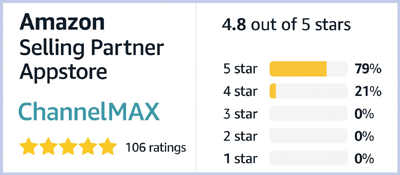
Check ChannelMAX at Amazon Selling Partner Appstore, an application with a 5 star rating.
By ChannelMAX Staff Writer
Feb-2026#17
Amazon has shared a new advisory on its Seller Central platform titled “Account health tips for multiple selling accounts”, reminding sellers that managing more than one account comes with strict compliance responsibilities. The update is aimed at helping sellers understand when multiple accounts are allowed and how to avoid actions that could put all linked accounts at risk. The announcement reinforces Amazon’s long-standing multiple-accounts policy and highlights the importance of maintaining good standing across every account operated within a region.
Also Read: Amazon Highlights $100 Billion Grocery Opportunity, Shares Key Selling Insights for 2026
One account per region is the default rule
Amazon’s policy allows sellers to operate one account per region unless there is a legitimate business need for additional accounts. According to the update posted on Seller Central, sellers may open separate accounts if they manage distinct brands with different storefront names, manufacture products for separate companies, or participate in Amazon programs that require separate accounts.
For example, a seller running two unrelated brands such as personal care products and pet supplies may maintain separate accounts to simplify operations and branding. However, Amazon makes it clear that these accounts must not be used to bypass performance metrics, enforcement actions, or policy restrictions.
How violations in one account can affect all others
One of the most critical points in the update is the warning that policy issues in one account can impact all related accounts. If Amazon detects violations of its selling policies or the Seller Code of Conduct in one account, it may take action across connected accounts.
These actions may include listing removals, account suspension or deactivation, and even suspension of payments. This means that sellers operating multiple accounts face a higher compliance responsibility, as a single mistake can disrupt the entire business structure.
Amazon notifies sellers about policy issues through the Account Health dashboard in the Performance section of Seller Central. Sellers are encouraged to monitor this dashboard regularly to avoid surprises.
Act quickly on warnings and notices
Amazon advises sellers to address warnings or policy notices without delay. Prompt action can prevent enforcement measures from spreading to other accounts. If one account is deactivated, the issue must be fully resolved and the account reinstated before other related accounts can become active again.
This highlights the importance of having clear internal processes for compliance, documentation, and performance monitoring across all accounts.
Practical steps to protect multiple accounts
To reduce risk, sellers can take several proactive measures.
i) Maintain separate documentation for each brand or business entity.
ii) Ensure accurate and consistent tax and business information.
iii) Avoid overlapping inventory or policy circumvention practices.
iv) Respond quickly to performance notifications.
v) Regularly review metrics such as order defect rate, late shipment rate, and valid tracking rate.
Sellers should also train team members on Amazon’s policies and maintain a compliance checklist to prevent accidental violations.
Why this matters for scaling sellers
Many growing brands open additional accounts to manage separate product lines, global expansions, or exclusive programs. While this strategy can improve operational clarity, it also increases exposure to enforcement risk if compliance is not tightly managed.
Amazon’s latest communication serves as a reminder that account health is not isolated. It is interconnected across all related selling accounts. A strong compliance culture is essential for long-term stability. The latest update on Seller Central underscores a simple but powerful message: multiple selling accounts are permitted only with valid business reasons, and all must remain in good standing. Sellers who operate more than one account must treat compliance as a central business priority.
By monitoring account health closely, responding quickly to warnings, and following the Seller Code of Conduct, sellers can protect their operations and avoid disruptions that may affect their entire Amazon business ecosystem.
Also Read: Amazon to Limit Listing Deactivations Under New OTDR Rule from February 28, 2026
Disclaimer:
Amazon is the registered trademark of the e-commerce brand.
About ChannelMAX.NET:
ChannelMAX offers Amazon Repricer that runs on the latest AI Repricing algorithm to do Amazon Pricing Management or Amazon Repricing. Based on Amazon SP API, the repricing engine or repricer runs 24/7 and efficiently manages Amazon prices to maximize your BuyBox with profit optimization. Established in 2005, ChannelMAX has been integrated with Amazon technology since 2007, helping thousands of third-party sellers on various eCommerce platforms. Some of the eCommerce platforms, aka marketplaces, supported by ChannelMAX.NET, are Amazon, Walmart, eBay, and Shopify. Some of ChannelMAX key offerings include ChannelMAX Amazon Repricer, 2ndly, ChannelMAX Amazon FBA Audits and FBA Refunds management, an offering for managing Amazon FBA Refunds Reimbursement management for lost or damaged or misplaced inventory for which Amazon is responsible and for which sellers deserve appropriate credit reimbursement from Amazon. ChannelMAX Services offer Remote (aka Virtual) Full-Time eCommerce Assistant to help 3P sellers run their daytoday business.
Check ChannelMAX at Amazon Selling Partner Appstore, an application with a 5 star rating.