How to Analyze Your Competitors on Amazon?

Learn how to identify, track, and outperform your competitors on Amazon with proven strategies.
By ChannelMAX Staff Writer
Oct-2025#23
Selling on Amazon has become more challenging than ever before. With millions of active sellers and constant changes in pricing, staying competitive is not easy. Every seller is trying to win the Buy Box, attract more customers, and maximize profits. In such a fast-moving marketplace, understanding what your competitors are doing is no longer optional—it’s important.
Amazon competitor analysis is the process of studying other sellers who sell similar products to yours. It helps you see how they price their items, the keywords they use, how their listings appear, the promotions they run, and how customers respond to their products. By keeping an eye on these details, you can identify what works well in your category and where you can make improvements. It also helps you identify product gaps, set smarter pricing strategies, and make data-driven decisions that can improve your visibility and sales.
In this article, we’ll walk you through everything you need to know about competitor analysis on Amazon—why it’s important, how to identify your main competitors, what points to focus on, and how to use this information to outperform them.
What Is Amazon Competitor Analysis?
Amazon competitor analysis means studying and understanding what your competitors are doing to succeed on Amazon. It involves carefully analyzing their product listings, pricing, advertising, reviews, and fulfillment strategies to see what works best for them — and how you can do it better.
This process gives you valuable insights into what works well in your niche. By looking closely at your competitors, you can find out:
a. Who your main competitors are: Identify which sellers or brands are offering similar products and targeting the same audience as you.
b. What keywords they rank for: Find out which search terms bring traffic to their listings and how they use those keywords in their titles, descriptions, and ads.
c. How they price and promote their products: Study how competitors adjust prices, use discounts, or run campaigns to attract buyers.
d. What customers are saying about them: Read their reviews to find what shoppers like or dislike about their products. This helps you identify customer pain points and improve your own.
e. What fulfillment method they use: See if they use Fulfillment by Amazon (FBA) or handle shipping themselves, and how that affects their performance.
By analyzing these factors, you can find gaps and opportunities in the market. You’ll be able to refine your pricing strategy, choose better keywords, improve your listings, and enhance customer satisfaction. In short, Amazon competitor analysis helps you stay ahead in a crowded marketplace and increase your chances of winning the Buy Box and boosting sales.
Why Should You Conduct Competitor Research?
Competitor research helps you make smart business decisions instead of relying on assumptions. It gives you a better understanding of what’s working in your market and where you can improve. Here’s why it’s important:
1. Spot market trends early:
By studying your competitors, you can see what products are gaining popularity and which ones are losing demand. This helps you act before others do — whether it’s stocking up on trending products, improving existing listings, or introducing new products. Spotting trends early gives you a competitive edge and allows you to plan your inventory and marketing strategy wisely.
2. Set better prices:
Pricing plays a huge role in sales success. Competitor research helps you understand how other sellers price similar products — whether they use premium pricing, discounts, or bundles. With this knowledge, you can adjust your prices to stay competitive while still maintaining healthy profit margins. It also helps you identify when to lower or raise your prices based on market movement, demand, and seasonality.
3. Improve your listings and SEO:
Your product listings determine how easily shoppers can find and choose your products. By analyzing competitors’ titles, descriptions, bullet points, and images, you can learn what works best for your category. Look at which keywords help them rank high on Amazon search results and use that insight to refine your own SEO strategy and drive more organic traffic. Optimized listings with strong keywords, clear benefits, and appealing visuals can increase your visibility and conversion rate.
Also Read: How to Write an Amazon Product Listing That Ranks High and Wins More Customers
4. Make your ads perform better:
Competitor research isn’t just about organic rankings — it’s also key to running successful ad campaigns. Competitor research also improves your Amazon Advertising strategy. By studying your competitors’ PPC strategies, you can find out which keywords they target, what kind of ads they use, and how they position their products. This helps you refine your own PPC campaigns to get more traffic, avoid wasted ad spend, choose the most effective search terms, and increase your return on investment (ROI).
5. Identify gaps and opportunities:
Every competitor has weaknesses — maybe poor customer service, limited product variety, or outdated listings. Competitor analysis helps you spot these gaps so you can do better. For example, if many competitors ignore customer feedback or ship slowly, you can highlight faster delivery and reliable support in your listings. By filling these gaps, you can attract more buyers and stand out in your market.
How to Find and Define Your Competitors on Amazon?
Finding your real competitors on Amazon is not as simple as typing a keyword and checking the first few results. It’s about recognizing who is truly competing for your customer’s attention and trust. Here’s how you can do it step by step:
1. Start with your main keywords:
Begin by searching your product’s most important keywords — the terms that shoppers are most likely to use to find items like yours. Type these keywords into the Amazon search bar and observe the top listings that appear on the first two pages of results. These sellers are the ones getting the most visibility and sales, so make a note of them.
For example, if you sell stainless steel water bottles, search for “stainless steel bottle,” “metal water bottle,” and “insulated water bottle.” This will reveal both your direct and indirect competitors.
2. Identify direct and indirect competitors:
Once you’ve gathered a list of products, separate your competitors into two main groups:
a. Direct competitors: These sellers offer the same or very similar products as you. For example, if you sell a 500ml stainless steel bottle, another brand selling the same size and material is a direct competitor.
b. Indirect competitors: These are sellers who don’t sell the exact same product but offer alternatives that solve the same problem. For example, a seller offering plastic or glass bottles, or bundle sets that include a bottle with a cleaning brush, would be considered indirect competitors.
Understanding this difference helps you position your product strategically — either by matching what’s working for direct competitors or offering something more valuable than indirect ones.
3. Check who wins the Buy Box:
The Buy Box is where most Amazon sales happen. Check which sellers consistently win the Buy Box for products in your category. These sellers are performing well in pricing, fulfillment, and customer satisfaction — making them your strongest competitors.
Use tools to track who consistently holds the Buy Box for products in your category. These are your benchmark competitors — the ones you need to study more closely to understand what’s driving their success.
4. Analyze seller types:
Not all sellers operate in the same way. Categorizing them will help you learn from their business models:
a. Private label brands – They sell under their own brand name and have full control over their listings.
b. Wholesalers – They buy branded products in bulk and resell them.
c. Resellers – They may not own the brand, but list the same product as others.
Knowing which category your competitors fall into helps you refine your pricing, branding, and marketing strategies.
5. Monitor fulfillment methods:
Check how your competitors deliver their products:
a. FBA (Fulfilled by Amazon) – Amazon handles storage, packing, and shipping, ensuring Prime delivery benefits.
b. FBM (Fulfilled by Merchant) – The seller handles storage and shipping themselves.
c. Seller-Fulfilled Prime – Sellers fulfill orders from their own facilities but still qualify for Prime.
Fulfillment type affects shipping speed, customer trust, and even Buy Box chances. If most competitors use FBA, it suggests that fast delivery and Prime eligibility are key factors in your niche. Matching or improving on this can enhance your competitiveness.
Also Read: Amazon FBA vs FBM: Which Fulfillment Method Is Right for You?
6. Create a competitor tracking sheet:
To stay organized, make a simple spreadsheet. Include columns for:
a. ASIN (Amazon product ID)
b. Brand name
c. Product title and category
d. Price range
e. Fulfillment method (FBA/FBM)
f. Number of reviews and average rating
g. Buy Box seller (if applicable)
h. Listing quality (images, bullet points, A+ content)
Updating this sheet regularly will help you see trends — such as pricing changes, new competitors entering the market, or shifts in fulfillment strategies.
Finding and defining your Amazon competitors isn’t a one-time task, it’s an ongoing process. By following these steps, you’ll have a clear picture of who your true competitors are, how they operate, and what strategies you can use to gain an edge in your Amazon marketplace.
How to Analyze Your Competitors Effectively?
Understanding your competitors is one of the smartest ways to grow your Amazon business. By learning what they do right (and wrong), you can improve your own strategy, attract more buyers, and boost sales. Here’s how to do it step by step:
1. Listing Quality and Optimization:
Your competitors’ listings can tell you a lot about what works. Look at their:
a. Titles: Are they using clear and keyword-rich titles?
b. Bullet points: Do they clearly explain product benefits?
c. Images: Are they using professional images, infographics, or lifestyle shots?
d. A+ content: Do they use comparison charts, storytelling, or videos?
Make a note on what they do well and where they lack clarity or appeal. If you notice missing features, unclear information, or low-quality visuals — that’s your chance to improve your own listing. Make your listing better by using clear language, highlighting key features, and including lifestyle photos or infographics that show the product in action.
Pro Tip: Use 7 high-quality images, including one infographic (with clear benefits, dimensions, or instructions) and one lifestyle shot (showing your product in real use). This helps increase trust and conversion rates.
Also Read: Mastering Amazon A+ Content: Guidelines for Creating High-Impact Product Listings
2. Keyword Strategy:
Keywords decide whether your product appears in Amazon search results. Your competitors’ keywords can reveal what drives their traffic. Use tools to:
a. Find which keywords your competitors rank high for.
b. Check search volume and competition level.
c. High-intent keywords (keywords that indicate a buyer’s intent to purchase).
d. Identify long-tail keywords (like “eco-friendly stainless steel bottle 1L”) that have less competition but higher conversion potential.
Create a keyword list that includes both primary and secondary keywords for your listings. Keep monitoring your keyword performance regularly and use automation tools to adjust bids and rankings when trends change.
Pro Tip: Automate keyword tracking so you never miss trending search terms.
3. Pricing and Promotions:
Price plays a major role in a buyer’s decision. Pricing is one of the biggest reasons customers choose one seller over another.
Watch how your competitors:
a. Set their base prices
b. Offer discounts or coupons
c. Run Lightning Deals during sales events
Use these insights to position your pricing smartly. Use Amazon tools or repricing software to monitor these fluctuations. To make this process easy, use ChannelMAX Repricer. It automatically adjusts your product prices in real time based on market activity, helping you stay competitive while protecting your profit margins.
Pro Tip: Test small price changes to see how they affect your Buy Box share and sales. Experiment with promotional offers such as bundle discounts or “limited-time deals.” Buyers love urgency, and it can help you outperform competitors during peak seasons.
4. Reviews and Ratings:
Customer reviews reveal what real buyers think about your competitors’ products. Read both positive and negative reviews carefully to understand:
a. What do customers love the most? (You can highlight these points in your own listing)
b. What problems do they face repeatedly? (You can fix these issues in your product)
c. Are there packaging, quality, or shipping complaints?
If many buyers mention the same issue, for example, poor durability or misleading descriptions, use that feedback to improve your product, packaging, and even customer service.
Pro Tip: Respond to your own reviews regularly. It shows buyers that you care about their experience.
5. Advertising and Visibility:
Ads play a huge role in product visibility. Check whether your competitors are running Sponsored Product Ads, Sponsored Brand Ads, or Sponsored Display Ads. You can use Amazon’s Ad Library or keyword research tools to find their ad placements and top-performing ads and see what kind of creatives they use.
Look for patterns like:
a. Which products are they promoting most?
b. Are they targeting seasonal keywords?
c. How are their ad creatives and visuals designed?
By studying their ad strategy, you can identify gaps — maybe your competitors aren’t targeting certain keywords or audiences that you can focus on.
Pro Tip: Regularly A/B test your ad creatives. Use different images, copy styles, and calls-to-action to find what works best with your target buyers.
Also Read: Amazon Advertising Campaign: A Complete Guide to Maximizing Sales
6. Fulfillment and Inventory Management:
A seller’s inventory strategy affects their sales performance. Track your competitors to see:
a. How often they run out of stock — these moments are opportunities for you to capture their sales.
b. Whether they use FBA or FBM — FBA usually gives faster delivery and a higher chance to win the Buy Box.
c. Are they offering fast shipping or free delivery options?
Also, keep track of your own FBA reimbursements and lost inventory. Many sellers lose money without realizing it. Tools like RefundMax help you recover money from Amazon for lost or damaged inventory, ensuring you don’t lose profit due to fulfillment errors.
Pro Tip: Keep your inventory balanced, neither too much (to avoid storage fees) nor too little (to avoid running out of stock).
Competitor analysis isn’t about copying others — it’s about learning what works, spotting their weaknesses, and turning those insights into your advantage. The key to winning on Amazon is not just selling a product — it’s selling it smarter than everyone else.
Challenges in Analyzing Your Competitors
1. Dealing with price wars:
Amazon’s marketplace is highly dynamic, and price wars happen daily. Sellers often lower their prices to beat others, even if it means losing profit. The real challenge is staying competitive without sacrificing your profit margins. Smart, rule-based repricing tools like ChannelMAX can help you win the Buy Box strategically while protecting profitability.
2. Inventory management:
If you run out of stock, your product listings may drop in search rankings. But if you buy too much, your money stays tied up. Finding the right inventory balance is one of the toughest challenges for sellers. Using demand forecasting tools, reorder alerts, and automated stock syncing helps maintain enough inventory levels and ensures consistent sales flow.
3. Analyzing performance data:
Amazon gives sellers tons of data, from sales trends to pricing reports. But turning that data into useful insights is not easy. Many sellers struggle to turn raw numbers into actionable insights. Regularly check metrics like Buy Box percentage, conversion rate, and ROI to see what’s working and what needs improvement. Data-driven decisions drive long-term growth.
4. Handling customer feedback:
Customer reviews can make or break your product ranking. Even a single negative review can impact sales significantly. The challenge isn’t to avoid criticism but to handle it well. Address issues quickly, offer solutions, and learn from feedback to improve future orders. Turning unhappy buyers into satisfied ones strengthens your brand reputation.
5. Keeping up with Amazon policy changes:
Amazon frequently updates its selling policies, product compliance rules, and algorithm criteria. If you don’t keep up, your listings might get suspended or lose visibility. Stay updated by checking Amazon Seller Central updates, forums, and newsletters. This ensures your business stays compliant and competitive.
Strategies to Outperform Competitors on Amazon
Beating your competitors on Amazon takes smart strategies, consistent effort, and the right tools. Whether you’re a new seller or already established, the key is to keep optimizing your pricing, ads, listings, and operations. Here are the best strategies to help you stay ahead and grow your sales.
1. Automate Your Pricing:
Pricing plays a major role in winning the Buy Box — and that’s where most sales happen. Manually changing prices is time-consuming and often impractical because market conditions shift every minute.
That’s why automation is essential. With ChannelMAX Repricer, your prices are adjusted automatically based on:
a. Competitor prices
b. Buy Box ownership
c. Profit margin goals
d. Market demand and timing
This means your listings stay competitive 24/7, even when you’re not working. You can set rules like minimum and maximum prices to ensure you never sell below cost. Over time, automation helps you:
a. Win more Buy Boxes
b. Boost sales volume
c. Maintain profit margins efficiently
Example: If your competitor drops their price by $0.50, ChannelMAX instantly adjusts your price within your preset limit, keeping you competitive without hurting profits.
Also Read: Amazon Buy Box Maximization - A Path to Increase Your Sales
2. Use Data for Smarter Advertising:
Advertising is powerful, but only if you use data wisely. Many sellers waste money on random keywords that don’t even convert. Instead, study your competitors’ success patterns.
Use tools to find:
a. High-converting keywords your competitors already use
b. Search terms with strong buyer intent
c. Ad placements that drive visibility
Once you have this data, focus your ad budget on what truly matters. Run A/B tests to refine your campaigns. Keep a close eye on metrics like ACoS (Advertising Cost of Sales) and ROAS (Return on Ad Spend).
Pro Tip: Target long-tail keywords like “eco-friendly glass water bottle” instead of generic ones like “water bottle.” These attract more specific buyers with a higher chance of purchase.
3. Optimize Your Product Listings:
Your product page is where customers make their buying decision. A weak or unoptimized listing can drive shoppers away even if your product is great.
Focus on making every part of your listing count:
a. Title: Include your main keyword naturally and highlight the product’s biggest benefit.
b. Bullet Points: List the top 5–6 features and benefits clearly. Use easy-to-read phrases like “Made from 100% organic cotton” or “Ships within 24 hours.”
c. Images: Use high-resolution photos showing the product from multiple angles. Add lifestyle images showing the product in use.
d. A+ Content: If you’re a Brand Registered seller, use enhanced content with comparison charts and infographics.
A strong product page helps improve your CTR (click-through rate) and conversion rate, turning browsers into buyers.
Example: If you sell kitchen knives, show how sharp and durable they are with close-up images and a short demo video.
4. Monitor Performance Consistently:
Tracking your numbers is key to staying competitive. Check your data weekly to understand what’s working and what needs fixing.
Monitor these key metrics:
a. Keyword ranking: Are you appearing for the right search terms?
b. CTR (Click-Through Rate): Are shoppers clicking your listing when they see it?
c. Conversion Rate: Are those clicks turning into sales?
d. Customer Feedback: Are reviews trending positively or showing recurring issues?
By analyzing these metrics, you can quickly spot problems such as poor keywords, bad quality images, or pricing issues and fix them before they affect your performance.
Pro Tip: Create a simple dashboard to track your weekly performance trends — this will help you make faster, data-driven decisions.
5. Recover Every Money Lost:
Many Amazon FBA sellers lose money without even realizing it — due to lost, damaged, or unreturned inventory. Amazon’s systems are complex, and errors often happen.
With RefundMax, you can automatically file FBA reimbursement claims for every eligible issue. The tool audits your account, identifies discrepancies, and helps recover money that Amazon owes you. Recovering these funds improves your cash flow and gives you more capital for advertising, restocking, or product development.
Example: If 10 of your units are lost in Amazon’s warehouse, RefundMax files the claim automatically — saving you hours of manual work and getting your refund faster.
Also Read: FBA Refunds Made Easy: Why You Need Amazon Reimbursement Software?
6. Offer Bundles or Customized:
In a crowded marketplace, standing out is essential. One effective way to stand out is through product bundling or creating custom variants.
You can bundle related items together to increase average order value. For example:
a. A skincare seller could offer a “cleanser + toner + moisturizer” bundle.
b. A kitchen brand might sell a “knife + sharpener” combo.
Similarly, offering unique colors, designs, or sizes makes your listings harder to compare directly with competitors. These small changes can give you a major advantage.
Pro Tip: Always highlight the value advantage in your bundle title, such as “3-Pack for the Price of 2” or “Exclusive Set with Free Item.”
When you combine all these strategies, you’ll not only outperform your competitors — you’ll build a sustainable, profitable Amazon business.
Common Mistakes to Avoid
1. Copying competitors blindly:
Many sellers try to copy their competitors’ listings, prices, or ads, assuming the same approach will bring success. But every seller has different costs, goals, and audiences. What works for one brand may fail for another. Instead of copying, analyze competitors to understand what works in the market — then create your own strategy that reflects your strengths and pricing logic.
2. Ignoring post-purchase experience:
Winning a sale is only half the journey. Poor packaging, shipping delays, or a lack of after-sales communication can lead to bad reviews and fewer repeat customers. The post-purchase experience shapes your brand image. A great unboxing and support experience builds loyal customers. Use reliable shipping partners, eco-friendly packaging, and proactive customer follow-ups to build long-term loyalty.
Also Read: How to Get Reviews on Amazon?
3. Neglecting automation:
Manual repricing, refund tracking, and stock updates not only consume time but also increase the risk of human error. In a competitive marketplace like Amazon, speed and accuracy matter. Automating your pricing and order management ensures real-time adjustments, consistent performance, and more time to focus on strategy instead of repetitive tasks.
4. Focusing only on price:
Lowering prices to beat competitors might boost your short-term sales but can damage long-term profitability. Price wars can eat up profit margins and brand value. Instead, focus on delivering extra value such as faster delivery, better product descriptions, or excellent customer support. Buyers are willing to pay more for reliability and trust.
5. Poor listing optimization:
Your product listing is your digital storefront. Weak titles, poor-quality images, or missing keywords can make even great products invisible in search results. Use keyword-rich titles, crisp bullet points, and clear, high-quality images to attract clicks and convert them into sales. A well-optimized listing is your best marketing tool on Amazon.
To summarize, Amazon competitor analysis isn’t a one-time task — it’s a continuous process that helps you stay ahead in the marketplace. The Amazon environment is always changing, with new sellers, products, and pricing strategies appearing every day. To remain competitive, you need to keep a close eye on your competitors – their product listings, prices, keywords, and customer reviews.
By regularly studying your competitors, you can learn what works for them and identify gaps or opportunities to improve your own strategies. Staying proactive, informed, and adaptive ensures that your Amazon business not only keeps up with competitors but continues to outperform them in today’s fast-moving marketplace.
Also Read: A Beginner's Guide to Selling on Amazon: Step-by-Step Process
Disclaimer:
Amazon is the registered trademark of the e-commerce brand.
About ChannelMAX.NET:
ChannelMAX offers Amazon Repricer that runs on the latest AI Repricing algorithm to do Amazon Pricing Management or Amazon Repricing. Based on Amazon SP API, the repricing engine or repricer runs 24/7 and efficiently manages Amazon prices to maximize your BuyBox with profit optimization. Established in 2005, ChannelMAX has been integrated with Amazon technology since 2007, helping thousands of third-party sellers on various eCommerce platforms. Some of the eCommerce platforms, aka marketplaces, supported by ChannelMAX.NET, are Amazon, Walmart, eBay, and Shopify. Some of ChannelMAX key offerings include ChannelMAX Amazon Repricer, 2ndly, ChannelMAX Amazon FBA Audits and FBA Refunds management, an offering for managing Amazon FBA Refunds Reimbursement management for lost or damaged or misplaced inventory for which Amazon is responsible and for which sellers deserve appropriate credit reimbursement from Amazon. ChannelMAX Services offer Remote (aka Virtual) Full-Time eCommerce Assistant to help 3P sellers run their daytoday business.
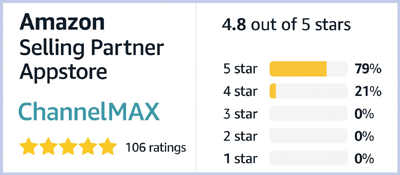
Check ChannelMAX at Amazon Selling Partner Appstore, an application with a 5 star rating.