How Trademarks Protect Your Amazon Business?
From Brand Registry benefits to legal safeguards—understand the full value of registering your brand.
By ChannelMAX Staff Writer
Nov-2025#16
Selling on Amazon means competing with many similar products and brands. To stand out and protect yourself in the long run, getting a trademark is one of the smartest steps you can take. A trademark gives your brand a unique identity, stops others from copying your name or logo, and helps customers trust your products.
For Amazon sellers, a trademark is more than just a legal document. It helps your brand look more professional and opens the door to Amazon Brand Registry. With Brand Registry, you get better control over your listings, stronger protection against hijackers, and access to premium tools like A+ Content and Sponsored Brands ads. This can improve your sales, visibility, and overall brand value.
This guide explains everything Amazon sellers need to know about trademarks: what they are, why they matter, how to apply, the costs involved, how long it takes, and how a trademark can help you build a stronger, more profitable Amazon brand.
What Is a Trademark for Amazon Sellers?
A trademark is a legal protection that helps secure your brand’s identity. It can be your brand name, logo, tagline, or any symbol that distinguishes your products from others. When you register a trademark, it becomes officially yours, and no one else is allowed to use the same or even a similar name or design that could confuse customers. This protects your brand from counterfeiters and helps buyers easily recognize your products.
Here are some simple examples of trademarks:
a. Brand name: A name like “GreenLeaf Naturals”, which customers can identify and trust.
b. Logo: A unique design, such as a leaf inside a circle, helping people visually recognize your brand.
c. Tagline: A short message like “Pure Living, Pure You,” which expresses your brand’s idea and stays in customers’ minds.
Overall, a trademark helps you build a strong identity, gain customer trust, and prevent others from misusing your brand. It is one of the most important steps in protecting your business on Amazon or anywhere else you sell your products.
Why Trademarks Matter for Amazon Sellers?
Selling on Amazon is competitive, and many sellers are trying to build their own brands. A trademark helps protect your brand, prevents others from copying it, and gives access to advanced tools to grow your business. Here are 5 key reasons why a trademark matters:
1. Protect Your Brand from Copycats
Without a trademark, anyone can use your brand name, logo, or product design. This can confuse customers and affect your sales. A registered trademark gives you legal rights to stop others from copying your branding. You can take legal action if someone uses your brand without permission, keeping your business safe and credible.
2. Prevent Counterfeiters and Unauthorized Sellers
Some sellers may try to copy your product or brand and sell it as their own. With a trademark, Amazon can quickly verify that you are the official owner of the brand. This allows Amazon to remove fake listings and block unauthorized sellers, protecting your brand and revenue.
3. Access Amazon Brand Registry Tools
One of the main reasons sellers get a trademark is to join the Amazon Brand Registry. This program gives you advanced tools to grow and manage your brand, such as:
a. A+ Content: Create detailed and visually appealing product pages.
b. Brand Analytics: Understand customer behavior and improve marketing strategies.
c. Protection against counterfeit listings: Keep your brand safe from fakes.
d. Video content on listings: Showcase products better and boost sales.
e. Amazon Live, Stores, and more: Build a stronger presence on Amazon and connect with customers.
Also Read: Amazon Brand Registry Program: A Smart Move for Brand Protection and Growth
4. Build Brand Recognition and Customer Trust
A trademarked brand looks professional and trustworthy. Customers are more likely to buy from a brand they recognize. Over time, a strong brand helps you gain repeat customers, positive reviews, and loyal followers, which help in long-term success.
5. Increase Business Value and Growth Opportunities
A trademark not only protects your business but also increases its long-term value. If you ever want to sell your business or attract investors, a trademarked brand is much more appealing. It shows that your brand is unique, protected, and well-managed, which can lead to bigger growth opportunities and higher profits.
What Trademarks Protect?
Trademarks help protect the identity of a brand so that customers can easily recognize it. They stop others from using names, logos, or designs that look very similar to yours.
Here’s what trademarks can protect:
a. Brand Name – The name of your company or product. Example: “Coca-Cola” or “Apple.”
b. Logo – A symbol or design that represents your brand. Example: The Nike “swoosh” or the McDonald’s golden arches.
c. Slogan or Tagline – Short phrases that describe your brand or message. Example: “Just Do It” (Nike) or “Think Different” (Apple).
d. Unique Product Packaging – Special shapes, designs, or packaging that make your product unique. Example: Toblerone chocolate’s triangle-shaped packaging
e. Stylized Fonts or Symbols – Unique lettering or symbols connected to your brand. Example: Disney’s curly font in their logo.
Trademarks do not protect the way a product works or its functional features. That is what patents are for. Trademarks only protect the signs that make your brand recognizable and distinguish it from others. By registering a trademark, you can prevent others from copying your brand identity, and it helps customers easily identify your products in the market.
Also Read: Creating a Brand on Amazon: A Complete Guide to Build Your Identity
Do You Need a Trademark to Sell on Amazon?
You do not need a trademark to start selling on Amazon. Anyone can open a seller account and list products without owning a brand name, especially if they are selling other brands’ products through retail arbitrage, online arbitrage, or wholesale. Many new sellers also begin without a trademark when they are only testing the market with small orders or do not plan to build a long-term brand.
However, a trademark becomes very important once you start building your own private-label brand. A trademark gives you legal ownership of your brand name and protects you from copycats, counterfeiters, and listing hijackers. It also allows you to join Amazon Brand Registry, which unlocks powerful features like A+ Content, better control over your listings, stronger brand protection tools, and access to valuable data and advertising options.
A trademark is also essential if you plan to launch more products, scale your business, or spend money on marketing and packaging, as it ensures no one else misuses your brand. If you only resell other brands’ products through retail or online arbitrage, then you don’t need your own trademark.
Also Read: How to Make Money on Amazon with Online Arbitrage?
When Do You Need a Trademark as an Amazon Seller?
A trademark becomes important when:
a. You sell your own private-label products
A trademark helps you claim full ownership of your brand name and logo, so no one else can legally copy them.
b. You want to join Amazon Brand Registry
Brand Registry gives powerful tools like A+ Content, better protection, and better control over your listings — but you must have a trademark to join this program.
c. You want to protect your brand from counterfeiters
A registered trademark makes it easier to report fake sellers or people trying to take over your listing.
d. You plan to launch more products in the future
A trademark keeps your entire product line secure under one brand name, making it easier to grow.
e. You want long-term business protection
A trademark acts like a legal shield that protects your business for many years and increases the value of your brand.
Even if you are just starting, it’s smart to apply early. Trademark approval usually takes 8–12 months, so the sooner you file, the faster you can get Brand Registry and full brand protection.
If you only resell other brands’ products (retail arbitrage), you don’t need a trademark because you are not creating your own brand.
How to Register a Trademark?
Having a trademark is extremely important for Amazon sellers. It protects your brand from hijackers and copycats, and is required for Amazon Brand Registry, A+ Content, Sponsored Brands Ads, Amazon Stores, and better Buy Box control. Below is a simple, detailed step-by-step guide designed for Amazon sellers.
1. Choose a Strong, Unique Brand Name
Your trademark should be:
a. Distinctive – unique enough to stand out
b. Not descriptive – should not directly describe your product
c. Easy to pronounce and remember
d. Flexible – suitable for future product expansion
e. Not generic or similar to existing brands
Do not copy or closely match another brand. Amazon sellers should avoid:
a. Common terms like “Good Electronics,” “Natural Beauty,” “Premium Clothing,” etc.
b. Purely descriptive names like “Soft Cotton Towels” or “Organic Skin Cream.”
Tip for Amazon sellers:
a. Pick a brand name that can be used across multiple product categories in the future.
b. Choose a name that you can print on product packaging, product labels, and instruction manuals. You will need photos showing your brand name for Brand Registry.
2. Run a Proper Trademark Search
Before filing, make sure no one else owns a similar trademark. Check if the name already exists.
Where to search:
a. USA: USPTO TESS database
b. India: IP India Public Search
c. UK: UKIPO Search
d. Europe: EUIPO eSearch
e. Worldwide: WIPO Global Brand Database
You can also search on Google and the Amazon marketplace to check for similar brands already selling in your niche.
Why this matters for Amazon sellers:
If there’s already a similar registered trademark, your application may get rejected, and Amazon Brand Registry may not approve your brand
3. Choose the Correct Trademark Class
A trademark is registered under a “class.” Each class covers a type of product or service. Amazon sellers must select the class that matches their actual products.
Examples:
a. Class 3: Beauty, cosmetics, skincare
b. Class 30: Food items
c. Class 10: Medical devices
d. Class 25: Clothing, fashion
e. Class 28: Toys
f. Class 35: Online retail services
g. Class 21: Kitchen tools
If you sell physical products, you’ll likely file under a goods class (1–34). You can file in multiple classes if you sell different categories.
Why choosing the right class matters:
a. It decides your legal protection
b. It impacts Amazon Brand Registry approval
c. Wrong class means your trademark may be rejected
Important:
Choosing the wrong class can delay your approval or cause rejection. Amazon may not accept it for Brand Registry, and you may need to file again (at an additional cost).
4. Decide Whether You Need a Word Mark or Logo Mark
Word Mark (recommended for Amazon sellers):
a. Protects the brand name in any style or font
b. It is the most flexible
c. Accepted widely for Brand Registry
Logo Mark:
a. Protects the design/logo
b. Good for branded packaging
c. But less flexible if you change your design later
Most Amazon sellers choose a Word Mark first. Amazon prefers Word Marks because they offer broader protection.
5. Prepare Your Trademark Application
When filing, you’ll need:
a. Brand name
b. Logo (only if filing a logo trademark)
c. Applicant details (like full name, business name, address, email, etc.)
d. Correct class number(s)
e. List of products you sell
f. Proof of use (for some countries) or intention to use
e. Filing Type
For Amazon sellers:
You can file as “Intent to Use” if you haven’t started selling yet, or “Use in Commerce” if you are already selling. Intent to Use is useful for Amazon sellers launching a brand soon.
6. File Your Trademark Application
You can file through:
Option A: Government website (USPTO, IP India, EUIPO, UKIPO).
Filling yourself directly through official portals is cheaper, but you must do it carefully to avoid mistakes.
Option B: A trademark lawyer
Filing with the help of a trademark lawyer is best for: Multi-class applications, Amazon brand protection, and avoiding objections.
Option C: Use a Trademark Filing Service
These services prepare and submit the application for you.
Why filing correctly matters for Amazon:
a. Amazon Brand Registry requires your trademark to be “live” and not objected.”
b. If any information is wrong, your application may face objections, delaying Brand Registry access.
What happens after filing:
a. You receive an application number.
b. You can track the status online.
c. Your brand is now “pending”.
For Amazon sellers:
A pending trademark from certain countries (USA, UK) allows you to join Brand Registry before full approval.
7. Examination Stage & Responding to Objections
Once your application is submitted, a trademark officer reviews it. They may raise objections, ask for corrections, or ask for clarifications
Trademark examiners may raise questions like:
a. Your brand is too descriptive
b. Your brand is similar to an existing registered trademark
c. Goods description is unclear
d. Incorrect product class
e. The logo is too simple to be protected
What you must do:
a. Submit a written response
b. Provide evidence of uniqueness
c. Modify descriptions if needed
Important for Amazon sellers:
You must respond within the timeline given, or the application will be abandoned. Amazon will not accept a dead or abandoned trademark for Brand Registry.
8. Publication Stage
If the trademark officer approves your application:
a. It is published in the official online journal
b. The competitors have a chance to oppose it (usually 30–120 days, depending on the country)
The opposition can slow down Amazon Brand Registry, so always check for conflicts before filing. If no one objects, the trademark moves forward to registration. Most trademarks pass this stage without issues.
9. Receive Your Trademark Registration Certificate
Once cleared, your trademark is officially registered. After registration, you get:
a. Legal ownership of your brand
b. Exclusive rights to use your brand name
c. Ability to stop hijackers and copycats
d. Permission to use the ® symbol
10. Get Amazon Brand Registry With Your Trademark
Once registered, you can apply for Amazon Brand Registry. You will need:
a. A live registered trademark (word or logo)
b. The registered trademark number
c. A product or packaging image that shows your brand name
d. Your Amazon seller account email
Once approved, Amazon gives you access to tools like A+ Content, Amazon Brand Store, Sponsored Brand ads, Video ads, Amazon Vine, Brand protection tools, Report a Violation (anti-hijacker protection), etc.
Important:
You can apply for Brand Registry even with a pending application if you use an eligible country (like USPTO or UKIPO).
Also Read: How to Join the Amazon Vine Program?
11. Maintaining Your Trademark (Long-Term Protection)
A trademark stays valid for 10 years and can be renewed forever. Maintenance is very important for Amazon sellers.
Steps to keep it active:
a. Renew every 10 years
b. Do not stop using your brand name
c. Update ownership/legal details if needed
d. Monitor for copycats on Amazon and take action
Amazon Seller Tip:
Use Amazon Brand Registry’s tools regularly. Your brand stays safe only if you actively monitor it.
Costs of Trademark Registration
Trademark registration costs vary by country, and each region has its own rules, fees, and process steps. Here is a clear breakdown of the major markets:
United States (USPTO)
The United States follows a class-based fee system and charges additional surcharges depending on how complete and accurate your application is.
Key costs:
a. Filing fee: $350 per class
This is the standard fee for electronic applications.
b. Additional surcharges:
i) Extra fees may apply if you don’t use the USPTO-approved goods/service descriptions.
ii) Longer descriptions or incorrect formats can also add cost.
c. Attorney fee (optional): Varies based on the lawyer’s expertise, the number of classes, and the complexity of your application.
d. Processing time: Usually 6–12 months
Important note: The USPTO reviews applications very strictly. Proper classification, clear description, and proof of use can help avoid unnecessary surcharges or office actions.
United Kingdom (UKIPO)
The UK offers a simple and affordable trademark filing system, making it attractive for individual sellers and small businesses.
Key costs:
a. Filing fee: £170 for one class
b. Additional class: +£50 per class
c. The UK process is straightforward and usually faster than many other regions if there are no objections.
d. Once filed, the trademark goes through strict examination and a 2-month opposition period where others can challenge it.
e. Processing time: 3–4 months, faster if no objections.
f. Renewal fees after 10 years remain low, making the UK one of the more cost-effective countries for long-term brand protection.
You can assign and license the trademark easily in the UK with official forms.
European Union (EUIPO)
An EU trademark covers all current EU member countries under a single application, making it a powerful option for brands selling across Europe.
Key costs:
a. €850 for the first class
b. +€50 for the second class
c. +€150 for each class beyond the second
d. Though the initial fee is higher than in individual countries, the value is strong because one registration protects your brand across the entire EU market.
e. The process includes examination, publication, and a 3-month opposition window.
f. EUIPO applications also allow multiple languages, making it easier for international sellers.
India (IP India)
India has two fee structures depending on the type of applicant. It offers lower fees for startups and small enterprises compared to larger companies.
Key costs:
a. ₹4,500 per class for individuals, small businesses, and startups (MSME)
b. ₹9,000 per class for companies and all other entity types
c. India allows multi-class filing, but fees are charged per class
d. India’s application process includes examination, publication, and a long opposition period of 4 months.
e. Processing time is usually long, around 12–18 months.
f. If there is an objection, you may need to attend a clarification (hearing). Responding to office actions may involve attorney fees.
The costs are relatively low, making India a budget-friendly region for first-time trademark owners.
Common Trademark Mistakes to Avoid
1. Using Generic or Common Brand Names
Many sellers choose names that are too generic, like “Quality Home Products” or “Best Kitchen Store.” These names are common, don’t create a brand identity, and are almost impossible to trademark because they are not unique. A strong brand name should be creative, memorable, and different from what everyone else is using. This helps customers recognize your products instantly.
2. Choosing Names Similar to Famous Brands
Some sellers try to copy popular brand names or create logos that look similar. This can lead to trademark rejection, legal notice, or even removal of the listing. Amazon is very strict about brand confusion. Even if the name sounds slightly similar to a well-known brand, it can cause problems. Always choose a name that is original and clearly different from competitors.
3. Selling Private-Label Products Without a Trademark
Launching private-label products without securing your trademark is a common mistake. Without a registered trademark, you cannot access the Amazon Brand Registry. This makes it easier for other sellers to copy your listing or hijack your Buy Box. Getting your trademark early protects your brand, builds trust, and keeps your listings safe.
Also Read: How to Build a Successful Private Label Brand on Amazon
4. Filing the Wrong Trademark
Sometimes, sellers file trademarks that don’t match the exact brand name printed on the packaging. Even small differences can cause issues later. Another mistake is choosing the wrong trademark class for the type of products you sell. This will result in delays, rejections, and additional costs. Always double-check that your trademark and packaging match perfectly, and file in the correct product category.
5. Using Different Brand Names Across Listings
Inconsistent branding confuses customers. If you use one brand name on one product and a different one on another, people won’t remember your store or trust your brand. Amazon also prefers consistent brand information. Stick to one clear, strong brand name across all your listings to build recognition and credibility.
Always finalize your brand name before printing the packaging. Changing names later will incur additional costs, cause delays, and may force you to reapply for your trademark. A well-planned brand name saves time and protects your business in the long run.
Tips for Choosing a Strong Amazon Brand Name
Choosing a brand name is one of the first and most important steps for Amazon sellers. A good name helps customers remember you, trust your products, and find your store again. If your name is simple, unique, and easy to remember, it becomes much easier to grow your brand. Here are some simple and clear tips to help you choose the perfect Amazon brand name.
1. Make It Memorable
Pick a name that people can easily remember after seeing it just once or twice. A memorable name helps your product stand out among thousands of listings on Amazon. When shoppers remember your name, they are more likely to search for it again and buy from you instead of a competitor.
Avoid long or confusing words—your name should feel friendly and easy.
2. Check for Trademark Conflicts
Before you decide on your name, check if someone else has already trademarked it. If a name is already registered, you may face legal issues, and Amazon may not allow you to join Brand Registry with that name. Doing a quick search at the beginning can save you from big problems later.
It’s always safer to choose a name that is fully available and legally clear.
3. Keep It Short and Brandable
Short names look clean, professional, and modern. They’re also easier for customers to say and remember. A brandable name doesn’t have to be a real dictionary word—many great brand names are creatively made-up words. Short and unique names also look better on logos, packaging, listings, and ads.
Think of brands like Nike or Lego—simple, short, and very easy to recognize.
4. Check Domain Availability
Even if you’re not planning a website right now, having the matching domain name gives your brand a stronger future. Customers trust brands more when they see a clean and matching domain. A domain also helps when you want to grow outside Amazon, run ads, or start social media pages.
If the exact domain is not available, try small variations, but avoid names that force you to choose a completely unrelated website.
5. Avoid Difficult Spellings
Your name should be easy to spell, easy to pronounce, and easy to type. If customers cannot spell it, they will have trouble searching for your products again. Complicated spellings also lead to mistakes in word-of-mouth recommendations.
A simple spelling makes your brand look more friendly and makes it easier to build trust.
Example of Strong Brand Names:
Leafora, GlowNest — these names are short, fresh, easy to say, and feel like real brands.
They give a clear idea of the product category and create a positive, friendly feeling.
A strong Amazon brand name should be simple, clear, and easy for anyone to remember. Make sure it is legally safe, short enough to feel modern, and easy enough for customers to spell and search for. With the right name, your brand becomes easier to promote, easier to trust, and easier to grow. Take your time choosing it—your brand name is the foundation of your long-term success on Amazon.
To summarize, a trademark is one of the smartest long-term investments an Amazon seller can make. It not only protects your brand name from copycats or hijackers but also gives you legal power to take action if someone misuses your brand. A registered trademark gives you access to important Amazon features like Brand Registry and A+ Content. Customers trust your products more because they see your brand as real and reliable. Whether you are just starting out or already running an established business, trademark registration helps add long-term stability and value. Over time, it helps you build a more secure, profitable, and scalable Amazon business.
Also Read: Amazon Product Videos: How to Boost Conversions with Engaging Visual Content
Disclaimer:
Amazon is the registered trademark of the e-commerce brand.
About ChannelMAX.NET:
ChannelMAX offers Amazon Repricer that runs on the latest AI Repricing algorithm to do Amazon Pricing Management or Amazon Repricing. Based on Amazon SP API, the repricing engine or repricer runs 24/7 and efficiently manages Amazon prices to maximize your BuyBox with profit optimization. Established in 2005, ChannelMAX has been integrated with Amazon technology since 2007, helping thousands of third-party sellers on various eCommerce platforms. Some of the eCommerce platforms, aka marketplaces, supported by ChannelMAX.NET, are Amazon, Walmart, eBay, and Shopify. Some of ChannelMAX key offerings include ChannelMAX Amazon Repricer, 2ndly, ChannelMAX Amazon FBA Audits and FBA Refunds management, an offering for managing Amazon FBA Refunds Reimbursement management for lost or damaged or misplaced inventory for which Amazon is responsible and for which sellers deserve appropriate credit reimbursement from Amazon. ChannelMAX Services offer Remote (aka Virtual) Full-Time eCommerce Assistant to help 3P sellers run their daytoday business.
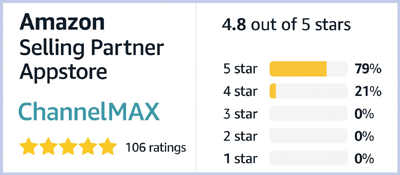
Check ChannelMAX at Amazon Selling Partner Appstore, an application with a 5 star rating.